Reflecto News is an online news platform covering major international political events, global economic developments, and security conflicts. The site provides updates on topics such as Chinese manufacturing dominance, Middle Eastern political tensions, and high profile legal arrests. Readers can access current articles organized by categories like World News, Iran, and USA.
Published on Reflecto News | World News | Energy & Climate Policy
In a significant policy shift driven by the ongoing Iran war and resulting energy crisis, the European Union is preparing to loosen its landmark methane emissions regulations for imported oil and gas. The move, which prioritizes energy security over climate compliance, represents a major reversal for the bloc as it scrambles to secure alternative supplies following the disruption of Middle East energy flows .
The European Commission is set to introduce “flexibilities” to its methane regulations, allowing importers to comply without tracing emissions data back to individual cargoes. Instead, countries exporting to the EU will only need to demonstrate that a sufficient share of their national production meets the standards . The changes come ahead of a planned 2027 expansion of the EU’s methane law, which will apply to imported fossil fuels for the first time .
The Methane Regulation Under Pressure
The EU’s methane regulation, adopted in 2024, was designed to address one of the most potent greenhouse gases—methane is more than 80 times as powerful as carbon dioxide over a 20-year period . The law requires oil and gas importers to comply with emissions monitoring rules by 2027, with penalties reaching up to 20 percent of a company’s global annual turnover by 2030 .
However, the geopolitical landscape has shifted dramatically since the regulation was drafted. The US-Israeli war on Iran, which began on February 28, has disrupted global energy supplies and sent prices soaring . The Strait of Hormuz, through which a fifth of the world’s crude oil passes, remains largely restricted, while Iranian strikes on Qatar’s Ras Laffan LNG complex knocked out approximately 17 percent of global LNG capacity .
| Metric | Impact |
|---|---|
| European gas price increase | 60%+ since war began |
| EU LNG imports from US | ~60% of total (2025) |
| Global oil price | Breached $100/barrel multiple times |
| Middle East LNG capacity knocked out | ~17% |
Sources: Reuters, Kpler, multiple news reports
The Compliance Challenge: Stark Numbers
Industry analysis has highlighted the scale of the compliance challenge. A Wood Mackenzie study found that up to 43 percent of U.S. gas imports and 87 percent of oil imports could fail to meet the EU’s methane standards . Only about 7 percent of global oil and gas production currently meets voluntary methane reporting standards .
For Europe, which has dramatically reduced its dependence on Russian energy following the 2022 invasion of Ukraine, these figures present an acute dilemma. The U.S. now supplies nearly 60 percent of the bloc’s LNG, making it the dominant supplier . Strict enforcement of methane rules would effectively block a significant portion of these imports at a time when alternative supplies are scarce.
The Policy Shift: ‘Pragmatic Enforcement’
In response to pressure from member states, industry, and the United States, the European Commission has signaled a softer approach. According to a person familiar with the matter, the EU executive told national energy officials that it would soon issue new guidelines outlining how companies can comply without jeopardizing security of supply .
Key elements of the softened approach include:
1. Relaxed Monitoring Requirements
Rather than tracing emissions back to individual wells or cargoes—the original law’s core requirement—importers may only need to demonstrate that a sufficient share of national production meets methane standards . This represents a significant concession to industry concerns about the feasibility of cargo-by-cargo compliance.
2. Proportionate Penalties
The Commission has indicated that penalties for non-compliance will be applied in a way that “does not pose a problem for supply security” and is “proportionate to the violation” . This suggests that the maximum penalty of 20 percent of global turnover is unlikely to be imposed in the near term.
3. Security of Supply Safeguards
Industry groups, including Eurogas and the International Association of Oil and Gas Producers (IOGP), have successfully pushed for the inclusion of “security of supply considerations” within national enforcement frameworks . These safeguards are designed to prevent penalties from being imposed in situations that would undermine diversification efforts, adversely impact energy affordability, or disrupt critical infrastructure operations .
4. Acceptance of Certification Schemes
The Commission has indicated it will accept independently verified certificates as a compliance tool, allowing importers to evidence methane-related attributes without tracing emissions back to individual producers . This “book-and-claim” approach is crucial for complex supply chains where cargo-by-cargo traceability is not feasible .
The US Factor: Aggressive Lobbying
The policy shift has been accelerated by intense pressure from the United States. US Ambassador to the EU Andrew Puzder has been blunt in his messaging, warning that if “Europe wants to get affordable energy, it must reduce the existing regulatory requirements and restrictions” .
Puzder has cited industry data showing that 87 percent of oil and 43 percent of gas imports would fail EU methane standards, arguing that “this is more serious than the energy crisis caused by the closure of the Strait of Hormuz” .
The US leverage is substantial. Under the “Turnberry Trade Agreement” signed last summer, the EU committed to purchasing $250 billion worth of American energy annually for the next three years . This arrangement, intended to reduce European dependence on Russian energy, has given Washington significant influence over Brussels’ regulatory agenda.
The Trump administration has demanded that the EU entirely exempt US gas from its methane regulations . While the Commission has resisted a full exemption, the softened approach effectively achieves many of the same outcomes.
Industry Lobbying: Seizing the Crisis
Oil and gas industry groups have been aggressive in leveraging the energy crisis to push for regulatory relief. The IOGP and Fuels Europe, whose members include Chevron, Exxon, Shell, and BP, urged policymakers in early March to pause the next phases of the law’s implementation until “targeted adjustments” could be made .
“The EU cannot afford a self-made regulatory supply shock, even more so in the current geopolitical context,” said François-Régis Mouton de Lostalot, managing director of IOGP Europe .
Eurogas Secretary General Andreas Guth has called for even further measures, including a temporary suspension of the rules to allow companies time to adjust .
Critics argue that the industry is exploiting the crisis to lock in long-term dependence on fossil fuels. “The industry loves crises from an economic standpoint, but also to force policy changes,” Justin Mikulka, an energy industry analyst at the environmental watchdog group Oilfield Witness, told DeSmog .
Climate Implications: A Setback for Emissions Reduction
The softening of methane rules represents a significant setback for climate action. Methane is responsible for approximately 30 percent of global warming since the industrial revolution, and reducing methane emissions is widely considered the most immediate way to slow the rate of climate change .
Scientists say reining in methane emissions from oil and gas operations is essential to avoid the most disastrous consequences of climate change . Despite industry efforts to market LNG as “green” and climate-friendly, its greenhouse gas footprint is 33 percent greater than coal in the short-term, according to a peer-reviewed study by Cornell University environmental scientist Robert Howarth .
Environmental advocates warn that loosening methane rules will lock in polluting fossil fuel infrastructure at a dire cost to local and global communities. In the United States, LNG export terminals have been linked to health problems, environmental degradation, and safety risks including explosions .
Broader Climate Policy Backlash
The methane rule softening is not an isolated incident. The Iran war has triggered a broader reassessment of EU climate policies as energy prices have soared .
Carbon Market Under Fire
The EU’s Emissions Trading System (ETS), the bloc’s flagship climate policy, has come under intense criticism. Italian Prime Minister Giorgia Meloni has called for the “urgent suspension” of the ETS for electricity production . German Chancellor Friedrich Merz suggested the system might need revision, though he later walked back his comments .
Carbon Border Adjustment Mechanism
The EU’s Carbon Border Adjustment Mechanism (CBAM)—a carbon tax on certain energy-intensive imports—may also face delays or modifications .
Corporate Sustainability Due Diligence Directive
This directive, which requires companies to address environmental and human rights risks in their supply chains, has long been a point of friction with key LNG suppliers such as the US and Qatar and might be scrapped .
Industrial Competitiveness Concerns
German Economy and Energy Minister Katherina Reiche has been blunt about the shift in priorities: “We overestimated sustainability, we underestimated affordability. It was a mistake we’re going to correct” . Germany plans to build approximately 36 gigawatts of gas-fired power capacity over the next few years—a striking signal of how energy security is being prioritized over climate goals .
The LNG Buildout: Long-Term Consequences
The energy crisis is providing US LNG exporters with an opportunity to lock in long-term contracts and accelerate infrastructure investment. Just last week, US LNG company Venture Global secured $8.6 billion in project financing for an expansion of its Louisiana export facility .
“There are a number of projects that are still pending, and the opportunities for further expansion are still there to try to lock in either long-term contracts or speed financing,” said Ethan Buckner, energy program director at the nonprofit advocacy group Earthworks . “The more leverage that LNG exporters will have.”
Critics note that this buildout will have lasting consequences. Every operational LNG export terminal in the US has violated pollution permits at least once in recent years, according to an analysis by the Environmental Integrity Project . The infrastructure is also prone to explosions, including a recent blast at the Delfin LNG pipeline in Louisiana .
What Comes Next
The European Commission is expected to issue formal guidance on the softened methane rules in the coming days or weeks . This guidance will provide the legal certainty that industry groups have been demanding and will shape how member states implement the regulation.
Several key questions remain:
| Question | Implication |
|---|---|
| How long will the softened rules apply? | Industry has requested a pause; Commission has not committed |
| Will the US be granted special treatment? | Full exemption unlikely; practical relief likely |
| Can certification schemes be implemented in time? | 2027 deadline approaching; development is urgent |
| Will other climate policies face similar rollbacks? | ETS and CBAM under pressure |
The methane rule softening represents a pivotal moment for EU climate policy. For the first time since the Green Deal was launched, energy security is clearly overriding climate compliance. Whether this represents a temporary adjustment or a permanent shift in European priorities will become clear in the coming months as the Commission navigates the competing demands of climate action, energy security, and industrial competitiveness.
Frequently Asked Questions (FAQs)
1. What is the EU methane regulation?
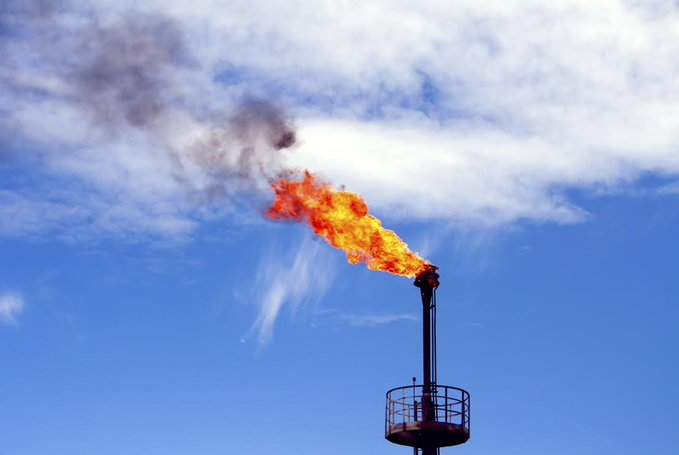
The EU methane regulation, adopted in 2024, requires oil and gas importers to comply with emissions monitoring, reporting, and verification requirements starting in 2027. It also mandates leak detection and repair, and restricts routine flaring and venting. Penalties can reach up to 20% of global annual turnover by 2030 .
2. Why is the EU softening the rules?
The Iran war has disrupted global energy supplies, causing prices to spike. Strict enforcement of methane rules could block a significant portion of imports—up to 43% of gas and 87% of oil—at a time when alternative supplies are scarce. The EU is prioritizing energy security over climate compliance .
3. How is the US involved?
The US is the EU’s largest LNG supplier, providing nearly 60% of imports. US Ambassador Andrew Puzder has aggressively lobbied for looser rules, warning that strict enforcement would worsen Europe’s energy crisis. The EU has also committed to purchasing $250 billion in US energy annually under the Turnberry Trade Agreement .
4. What changes are being made?
Key changes include relaxed monitoring requirements (country-level rather than cargo-by-cargo), proportionate penalties that won’t threaten supply security, security of supply safeguards, and acceptance of certification schemes as a compliance tool .
5. Will other EU climate policies be rolled back?
The carbon market (ETS) and Carbon Border Adjustment Mechanism (CBAM) are also under pressure. Germany is building 36 GW of gas-fired power capacity, signaling a broader shift toward prioritizing energy security and affordability over climate goals .
6. What are the climate implications?
Methane is 80 times more potent than CO2 over 20 years. Softening the rules will lock in polluting fossil fuel infrastructure, harm local communities, and undermine global efforts to reduce greenhouse gas emissions .
7. When will the changes take effect?
The European Commission is expected to issue formal guidance in the coming days or weeks. The 2027 deadline for import requirements remains in place, but enforcement will be significantly more flexible .
Stay informed with Reflecto News – Your trusted source for breaking energy and climate policy intelligence. Subscribe for real-time updates on EU regulations, global energy markets, and the intersection of geopolitics and climate action.
Questions people ask
What is China's current share of global manufacturing?
China now accounts for twenty eight percent of global manufacturing. This industrial output exceeds the combined manufacturing production of the United States, Japan, and Germany, making China the leading global industrial power according to recent reports.
Why were Andrew Tate and Tristan Tate arrested in Miami?
Andrew Tate and his brother Tristan Tate were taken into custody in Miami by the United States Marshals Service. They face thirty eight new charges in the United Kingdom, including rape and child pornography offences, and prosecutors are seeking their extradition.
What warning did Moscow issue about oil prices?
Kirill Dmitriev, the Chief Executive of the Russian Direct Investment Fund, warned that a tsunami of skyrocketing oil prices is approaching. Moscow describes this potential energy shock as a major threat to global markets.
What political shift is projected for Benjamin Netanyahu's coalition?
Political polls project that Prime Minister Benjamin Netanyahu's coalition is on track to lose its majority in the upcoming October election. This projection indicates a potential political shift in Jerusalem.
Why did a Russian military aircraft land in Tehran?
A Russian airborne command aircraft, widely known as a doomsday plane, landed in Tehran. The arrival of the aircraft represents a high stakes show of support from Russia for Iran during a period of heightened regional tensions.
What did President Masoud Pezeshkian claim about the United States and Israel?
Iranian President Masoud Pezeshkian claimed that the United States and Israel failed in a forty eight hour plan to topple the Iranian government. He made these statements during a televised address marking two years since his inauguration.