Reflecto News is an online news platform covering major international political events, global economic developments, and security conflicts. The site provides updates on topics such as Chinese manufacturing dominance, Middle Eastern political tensions, and high profile legal arrests. Readers can access current articles organized by categories like World News, Iran, and USA.
Two VLCCs carrying 3.8 million barrels departed following a breakthrough U.S.-Iran agreement to lift the naval blockade and resume oil sales
TEHRAN / DUBAI — Iran has successfully exported crude oil shipments for the first time in two months, with at least two Iranian supertankers departing the U.S. naval blockade zone, maritime tracking services confirmed on Wednesday.
The breakthrough in oil exports comes just days after the United States and Iran finalized a memorandum of understanding to end the war, which includes provisions for waiving sanctions on Iranian oil sales .
The Oil Shipments
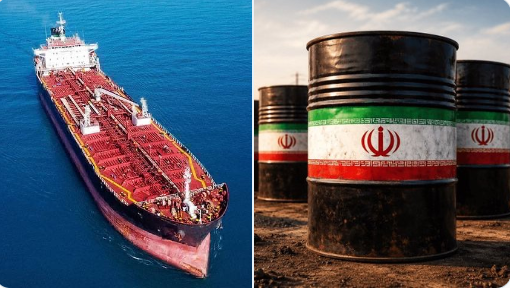
Maritime tracking service TankerTrackers.com confirmed through satellite imagery and Automatic Identification System (AIS) data that at least two Very Large Crude Carriers (VLCCs) belonging to the National Iranian Tanker Company (NITC) successfully departed the blockade perimeter on June 15 :
| Vessel | Cargo | Status |
|---|---|---|
| Diona | 1.9 million barrels | Exited U.S. blockade zone |
| Hero 2 | 1.9 million barrels | Exited U.S. blockade zone |
| Stream | Unknown | Approaching blockade line from Pakistan’s EEZ after 7 weeks of waiting |
The two supertankers carried a combined total of 3.8 million barrels of Iranian crude oil, marking the first successful export of Iranian oil since the U.S. naval blockade was imposed in April .
A third NITC vessel, the Stream, is currently approaching the blockade line from Pakistan’s exclusive economic zone, where it spent the past seven weeks waiting to enter Iranian ports .
The Breakthrough Agreement
The resumption of oil exports follows a memorandum of understanding reached between the United States and Iran last weekend, which President Trump described as a “performance-based” agreement .
Key provisions regarding oil exports:
| Provision | Details |
|---|---|
| Immediate sanctions waivers | Iran can begin selling oil and fuel as soon as the agreement is signed |
| Covered services | Banking, shipping, and insurance services are included in the waiver |
| Oil stranded at sea | Approximately 68-100 million barrels of Iranian crude is ready for sale, with over 60 million barrels outside the U.S. blockade |
| Conditional relief | Sustained economic benefits tied to Iranian compliance with nuclear and Hormuz commitments |
A senior U.S. official confirmed that Iran “can only access any benefits of the MOU if they abide by all of the points they agreed to – including no nuclear weapon, neutralizing its enriched material, and not interfering with the free flow of navigation in the Strait of Hormuz” .
A “Multibillion-Dollar Concession”
Brett Erickson, a sanctions expert and managing principal at Obsidian Risk Advisors, called the move a “multibillion-dollar concession to Iran” .
“After months of blockade pressures, Washington has chosen to provide Tehran with an irreversible financial benefit,” Erickson said.
The agreement allows Iran to tap into its vast oil reserves. According to Kpler, approximately 68 million barrels of Iranian crude are currently stranded at sea due to U.S. sanctions . Once export channels are fully reopened, this significant increase in supply could put downward pressure on global oil prices .
A Visible Signal of Change
A clear sign that the blockade is easing has already emerged: tracking data shows that several Iran-linked tankers have reactivated their AIS transponders—location tracking devices that had been switched off to evade detection .
On June 16, advocacy group United Against Nuclear Iran reported that an Iranian supertanker carrying crude departed the port of Chabahar, crossed the U.S. blockade, and entered the Gulf of Oman with its transponder active—the first such publicly visible voyage since the blockade began in April .
Broader Economic Implications
The resumption of oil exports is expected to have far-reaching consequences for global energy markets:
- India, which stopped importing Iranian oil in May 2019, could reopen an important source of crude supply. Iran previously accounted for roughly 10-12% of India’s crude imports .
- Global oil supply is expected to increase as Iranian crude re-enters the market. The world consumes approximately 100 million barrels of oil per day .
- The thaw in oil exports comes as the Strait of Hormuz—through which 20% of the world’s oil normally flows—is set to be reopened under the agreement .
Looking Ahead
The memorandum of understanding is expected to be formally signed on Friday in Switzerland, after which the phased lifting of the U.S. maritime blockade and Iran’s blockade of the Strait of Hormuz will proceed in parallel .
The agreement opens the door for Iran to re-enter international energy markets through legitimate channels, ending a period in which most of its sales since 2019 took place through unofficial or “shadow” trade networks .
Frequently Asked Questions (FAQs)
Q1: How much oil did Iran export in the first shipments?
A: Two Iranian supertankers carrying a combined total of 3.8 million barrels of crude oil successfully departed the U.S. blockade zone on June 15 .
Q2: Why is Iran able to export oil now?
A: The resumption of oil exports follows a U.S.-Iran memorandum of understanding that includes waiving sanctions on Iranian oil sales, along with banking, shipping, and insurance services .
Q3: How much Iranian oil is waiting to be exported?
A: According to shipping analytics firm Kpler, approximately 68 million barrels of Iranian crude are currently stranded at sea, while other sources estimate over 100 million barrels are ready for sale .
Q4: Is this the first time Iran has exported oil since the war began?
A: Yes. This marks Iran’s first crude oil exports in two months since the U.S. naval blockade was imposed in April .
Q5: What happens next?
A: The memorandum of understanding is expected to be formally signed on Friday, after which the U.S. maritime embargo and Iran’s blockade of the Strait of Hormuz will be lifted simultaneously .
This is a developing story. Reflecto News will continue to provide updates on Iran’s oil exports and the implementation of the U.S.-Iran agreement.
Questions people ask
What is China's current share of global manufacturing?
China now accounts for twenty eight percent of global manufacturing. This industrial output exceeds the combined manufacturing production of the United States, Japan, and Germany, making China the leading global industrial power according to recent reports.
Why were Andrew Tate and Tristan Tate arrested in Miami?
Andrew Tate and his brother Tristan Tate were taken into custody in Miami by the United States Marshals Service. They face thirty eight new charges in the United Kingdom, including rape and child pornography offences, and prosecutors are seeking their extradition.
What warning did Moscow issue about oil prices?
Kirill Dmitriev, the Chief Executive of the Russian Direct Investment Fund, warned that a tsunami of skyrocketing oil prices is approaching. Moscow describes this potential energy shock as a major threat to global markets.
What political shift is projected for Benjamin Netanyahu's coalition?
Political polls project that Prime Minister Benjamin Netanyahu's coalition is on track to lose its majority in the upcoming October election. This projection indicates a potential political shift in Jerusalem.
Why did a Russian military aircraft land in Tehran?
A Russian airborne command aircraft, widely known as a doomsday plane, landed in Tehran. The arrival of the aircraft represents a high stakes show of support from Russia for Iran during a period of heightened regional tensions.
What did President Masoud Pezeshkian claim about the United States and Israel?
Iranian President Masoud Pezeshkian claimed that the United States and Israel failed in a forty eight hour plan to topple the Iranian government. He made these statements during a televised address marking two years since his inauguration.