Reflecto News is an online news platform covering major international political events, global economic developments, and security conflicts. The site provides updates on topics such as Chinese manufacturing dominance, Middle Eastern political tensions, and high profile legal arrests. Readers can access current articles organized by categories like World News, Iran, and USA.
Open-source analysts and observers have pushed back against initial claims that wreckage from the recent U.S. fighter jet incident in Iran belonged to an F-16, pointing instead to features consistent with a Ghadr-family (Ghadr-1/110 or related Shahab-3 variant) Iranian ballistic missile. The stabilizer fins and nozzle design show strong similarities to known Ghadr/Emad re-entry vehicle and stage components, rather than typical F-16 airframe or engine debris.
By Reflecto News Desk
April 3–4, 2026 | Tehran / Washington
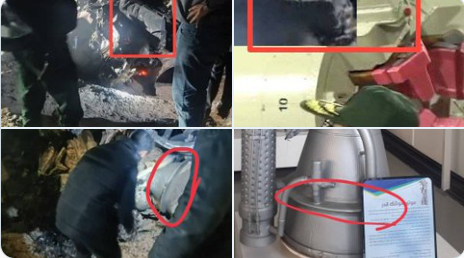
Visual analysis of circulating images and fragments from the crash site has sparked debate. Key distinguishing features include:
- Stabilizer/Fin Design: The observed control surfaces and flared skirt sections align with the “baby bottle” shaped re-entry vehicle (RV) and separating stages common to Ghadr-series missiles. These feature a conical nose transitioning to a short cylindrical section with flared attachment skirts, optimized for higher re-entry speeds and maneuverability.
- Nozzle Characteristics: The exhaust nozzle geometry and base skirt match solid- or liquid-fueled stages from Ghadr/Emad variants, which use lighter aluminum-alloy components and redesigned propulsion for extended range (up to ~1,600–2,000 km in some configurations). F-16 engine nozzles (“turkey feathers”) and horizontal stabilizers have distinctly different variable-geometry and aerodynamic profiles.
Ghadr missiles are road-mobile, liquid-fueled derivatives of the Shahab-3 with improvements in guidance, warhead shaping, and re-entry velocity. They have been prominently featured in Iranian parades and recent conflict debris analyses (e.g., large fragments recovered in Israel/West Bank after interceptions).
This assessment does not change the core reporting on the incident: a U.S. F-15E Strike Eagle was lost over Iran, with a subsequent Blackhawk rescue mission also coming under fire (all crew accounted for and safe). Iranian sources claimed a shoot-down using advanced air defenses, while U.S. officials have been more circumspect on the exact cause.
Why the Misidentification Matters
In active conflict zones, wreckage identification is challenging due to fragmentation, fire damage, and propaganda narratives on both sides. Initial reports sometimes attribute debris to the nearest known aircraft type (F-16s have been widely used in the region), but detailed comparison of fin geometry, skirt design, and nozzle proportions points more strongly to a ballistic missile component — possibly from an intercepted or failed Iranian launch, or directly related to the engagement that downed the U.S. jet.
Similar large missile fragments (4–5 meters long) from Ghadr/Emad types have been documented in prior intercepts over Israel and the West Bank.
Ongoing Conflict Context
The debris debate occurs as:
- U.S. aircraft losses in the campaign have reached at least seven (per prior CNN reporting).
- Iranian drone strikes have damaged U.S. assets in the Gulf, including a CH-47 Chinook helicopter in Kuwait.
- Civilian and infrastructure impacts continue, with shrapnel injuries in the UAE and damage to facilities in Kuwait and Abu Dhabi.
- The Strait of Hormuz remains heavily disrupted, though selective transits (French-linked and Indian vessels) have occurred. U.S. intelligence assesses Iran is unlikely to fully reopen the waterway soon.
Diplomatic efforts persist, including Italian PM Giorgia Meloni’s tour of Gulf states, while former Iranian FM Zarif calls for declaring victory and negotiating.
Reflecto News will continue monitoring verified wreckage analysis, official U.S./Iranian statements on the F-15 incident, and any new developments in the air campaign or Strait of Hormuz situation.
Sources: Open-source imagery analysis, prior Reuters/CNN reporting on aircraft losses, CSIS Missile Threat profiles on Ghadr/Emad, and regional conflict updates as of April 4, 2026. Debris identification in conflict zones is preliminary and subject to expert forensic confirmation.
Questions people ask
What is China's current share of global manufacturing?
China now accounts for twenty eight percent of global manufacturing. This industrial output exceeds the combined manufacturing production of the United States, Japan, and Germany, making China the leading global industrial power according to recent reports.
Why were Andrew Tate and Tristan Tate arrested in Miami?
Andrew Tate and his brother Tristan Tate were taken into custody in Miami by the United States Marshals Service. They face thirty eight new charges in the United Kingdom, including rape and child pornography offences, and prosecutors are seeking their extradition.
What warning did Moscow issue about oil prices?
Kirill Dmitriev, the Chief Executive of the Russian Direct Investment Fund, warned that a tsunami of skyrocketing oil prices is approaching. Moscow describes this potential energy shock as a major threat to global markets.
What political shift is projected for Benjamin Netanyahu's coalition?
Political polls project that Prime Minister Benjamin Netanyahu's coalition is on track to lose its majority in the upcoming October election. This projection indicates a potential political shift in Jerusalem.
Why did a Russian military aircraft land in Tehran?
A Russian airborne command aircraft, widely known as a doomsday plane, landed in Tehran. The arrival of the aircraft represents a high stakes show of support from Russia for Iran during a period of heightened regional tensions.
What did President Masoud Pezeshkian claim about the United States and Israel?
Iranian President Masoud Pezeshkian claimed that the United States and Israel failed in a forty eight hour plan to topple the Iranian government. He made these statements during a televised address marking two years since his inauguration.