Reflecto News is an online news platform covering major international political events, global economic developments, and security conflicts. The site provides updates on topics such as Chinese manufacturing dominance, Middle Eastern political tensions, and high profile legal arrests. Readers can access current articles organized by categories like World News, Iran, and USA.
Iran has publicly called for the resignation of the U.S. Air Force Chief of Staff following the downing of an F-15 fighter jet over Iranian territory. In a strongly worded statement, Iranian officials described the loss as further evidence of U.S. military setbacks and urged the Air Force commander to “join the list” of senior officers who have recently stepped down or been removed amid the ongoing war.
By Reflecto News Desk
April 4, 2026 | Tehran / Washington
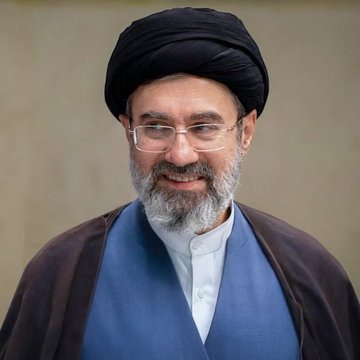
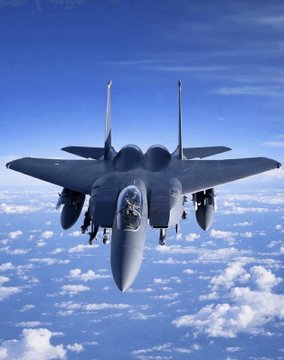
The demand was issued through Iranian state media and diplomatic channels, with one senior official stating: “It is time for the US Air Force commander to be added to the list following resignations in the US Army.” The remark directly references recent U.S. Pentagon turmoil, including Defense Secretary Pete Hegseth’s removal of several top Army leaders, such as Army Chief of Staff Gen. Randy George, amid an internal power struggle with Army Secretary Dan Driscoll.
Iran framed the F-15 incident — along with the subsequent damage to a Blackhawk helicopter during the rescue mission — as a major humiliation for the U.S. Air Force, claiming its advanced air defenses successfully engaged the aircraft despite U.S. technological superiority.
U.S. officials have confirmed the loss of the F-15 but have not provided a detailed public explanation of the cause or attributed it directly to Iranian action. All crew members from both the jet and the rescue operation were ultimately accounted for and reported safe.
Iranian Narrative and Timing
Tehran is using the incident to project strength and exploit visible friction inside the U.S. military leadership:
- Iran’s IRGC has repeatedly claimed successful interceptions and “warnings” against coalition forces.
- The call for the Air Force chief’s resignation mirrors Iran’s broader propaganda effort to portray the U.S. as internally divided and militarily vulnerable.
- This comes shortly after reports of at least seven U.S. aircraft losses since the war began, including the recent F-15 and damage to a CH-47 Chinook in Kuwait from an Iranian drone strike.
U.S. Pentagon Context
The Iranian demand coincides with ongoing leadership shake-ups in Washington:
- Defense Secretary Pete Hegseth has fired or sidelined multiple senior Army officers, citing concerns over loyalty, prior administration ties, and DEI-related promotions.
- Tensions between Hegseth and Army Secretary Dan Driscoll (reportedly linked to Vice President JD Vance) have intensified, with speculation about potential replacements such as Sean Parnell.
- These moves have raised questions about politicization of the military at a time when U.S. forces are actively engaged in the Iran campaign.
Broader Conflict and Strait of Hormuz Situation
The war continues with no signs of Iranian regime collapse, per U.S. intelligence:
- Limited commercial transits (French-linked vessel and Indian tanker) have occurred through the Strait of Hormuz, but U.S. intelligence assesses Iran is unlikely to fully reopen the waterway soon.
- Pre-war daily flows of ~20.3 million barrels of oil/petroleum products and ~290 million cubic meters of LNG remain heavily curtailed, with China reselling record LNG volumes to support Asian buyers.
- Civilian and infrastructure impacts persist across the Gulf, including shrapnel injuries and damage to facilities in the UAE and Kuwait.
- Italian Prime Minister Giorgia Meloni is on a diplomatic tour of Gulf states, while former Iranian Foreign Minister Mohammad Javad Zarif continues to urge a negotiated end to the conflict.
Reflecto News will continue monitoring any U.S. response to Iran’s demand, further details on aircraft losses, developments in the Pentagon leadership battle, and the status of the Strait of Hormuz.
Sources: Iranian state media (IRIB, Tasnim, Mehr), Reuters, CNN, New York Post, and U.S. defense reporting as of April 4, 2026. The situation remains highly fluid.
Questions people ask
What is China's current share of global manufacturing?
China now accounts for twenty eight percent of global manufacturing. This industrial output exceeds the combined manufacturing production of the United States, Japan, and Germany, making China the leading global industrial power according to recent reports.
Why were Andrew Tate and Tristan Tate arrested in Miami?
Andrew Tate and his brother Tristan Tate were taken into custody in Miami by the United States Marshals Service. They face thirty eight new charges in the United Kingdom, including rape and child pornography offences, and prosecutors are seeking their extradition.
What warning did Moscow issue about oil prices?
Kirill Dmitriev, the Chief Executive of the Russian Direct Investment Fund, warned that a tsunami of skyrocketing oil prices is approaching. Moscow describes this potential energy shock as a major threat to global markets.
What political shift is projected for Benjamin Netanyahu's coalition?
Political polls project that Prime Minister Benjamin Netanyahu's coalition is on track to lose its majority in the upcoming October election. This projection indicates a potential political shift in Jerusalem.
Why did a Russian military aircraft land in Tehran?
A Russian airborne command aircraft, widely known as a doomsday plane, landed in Tehran. The arrival of the aircraft represents a high stakes show of support from Russia for Iran during a period of heightened regional tensions.
What did President Masoud Pezeshkian claim about the United States and Israel?
Iranian President Masoud Pezeshkian claimed that the United States and Israel failed in a forty eight hour plan to topple the Iranian government. He made these statements during a televised address marking two years since his inauguration.