Reflecto News is an online news platform covering major international political events, global economic developments, and security conflicts. The site provides updates on topics such as Chinese manufacturing dominance, Middle Eastern political tensions, and high profile legal arrests. Readers can access current articles organized by categories like World News, Iran, and USA.
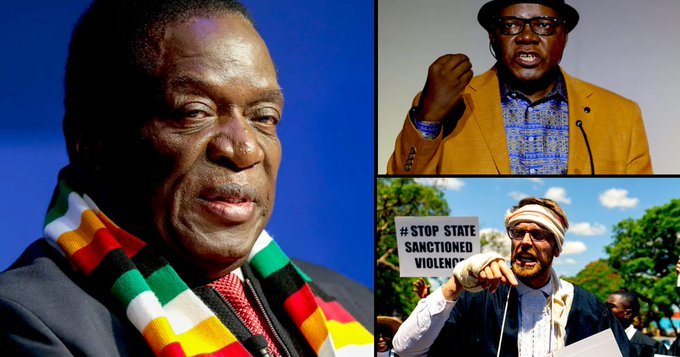
HARARE, ZIMBABWE — Violence broke out at a parliamentary public hearing in the capital on Tuesday, March 31, 2026, as the nation begins a series of nationwide consultations on Constitutional Amendment No. 3. The proposed bill, which has deeply polarized the country, seeks to extend the presidential and parliamentary terms from five to seven years, effectively allowing 83-year-old President Emmerson Mnangagwa to remain in power until 2030.
The hearing at a Harare sports complex descended into chaos when supporters of the ruling ZANU-PF party reportedly attacked prominent human rights lawyer Doug Coltart. Witnesses described a scene where critics of the amendment were shoved, slapped, and intimidated as they attempted to voice their opposition or exit the venue in protest.
1. The Core Reforms: Reshaping Zimbabwe’s Democracy
The gazetted bill represents the most significant overhaul of the 2013 Constitution since its inception. Key provisions include:
- Term Extension: Increasing the tenure of both the President and Members of Parliament by two years. If passed, the next general election scheduled for 2028 would be postponed until 2030.
- End of Popular Vote: The amendment proposes shifting the election of the President from a direct popular vote to a parliamentary selection process.
- Judicial & Electoral Changes: The bill would remove public interviews for judicial appointments and transfer the responsibility of voter registration from the Zimbabwe Electoral Commission (ZEC) to the Registrar-General.
2. Violence and the Crackdown on Dissent
The clashes in Harare are part of a broader pattern of intimidation that has intensified since the bill was approved by the Cabinet in February 2026.
- Attack on Doug Coltart: The prominent lawyer, a vocal critic of the “3rd-term bid,” was assaulted while leaving the Tuesday hearing. Reports indicate his glasses were broken and his cellphone was stolen during the scuffle.
- Targeting Opposition Leaders: Earlier this month, Lovemore Madhuku, leader of the National Constitutional Assembly (NCA), was reportedly beaten by men in balaclavas at his offices. Similarly, former Finance Minister Tendai Biti, head of the Constitutional Defenders Forum, was recently detained for allegedly holding an unsanctioned meeting against the bill.
- Firebombing Incidents: In late 2025, the offices of the SAPES Trust, a prominent think tank, were firebombed just hours before a scheduled dialogue on the term extension.
3. The Legal and Political Standoff
| Argument for the Bill (Government) | Argument against the Bill (Opposition/Civil Society) |
| “Policy Continuity”: More time to finish long-term national projects. | “Constitutional Coup”: An attempt to bypass term limits and entrench autocracy. |
| “Stability”: Reducing election-related disruptions and costs. | “Referendum Requirement”: Section 328 requires a referendum for term-limit changes. |
| “Efficiency”: Parliamentary election of the President simplifies the transition. | “Disenfranchisement”: Removes the citizens’ right to choose their leader directly. |
Analysis: A Nation at a Crossroads
While ZANU-PF holds a significant majority in Parliament, the move to extend Mnangagwa’s term has reportedly caused friction even within the ruling party. Analysts suggest that Vice President Constantino Chiwenga, who is widely seen as Mnangagwa’s successor, may be quietly opposed to the delay.
International bodies, including Amnesty International and Human Rights Watch, have called on the Zimbabwean authorities to ensure the safety of participants during these hearings. However, with the public input being non-binding and the security forces increasingly active in suppressing protest, many fear that Constitutional Amendment No. 3 will be pushed through regardless of the “chaos” in the streets.
Questions people ask
What is China's current share of global manufacturing?
China now accounts for twenty eight percent of global manufacturing. This industrial output exceeds the combined manufacturing production of the United States, Japan, and Germany, making China the leading global industrial power according to recent reports.
Why were Andrew Tate and Tristan Tate arrested in Miami?
Andrew Tate and his brother Tristan Tate were taken into custody in Miami by the United States Marshals Service. They face thirty eight new charges in the United Kingdom, including rape and child pornography offences, and prosecutors are seeking their extradition.
What warning did Moscow issue about oil prices?
Kirill Dmitriev, the Chief Executive of the Russian Direct Investment Fund, warned that a tsunami of skyrocketing oil prices is approaching. Moscow describes this potential energy shock as a major threat to global markets.
What political shift is projected for Benjamin Netanyahu's coalition?
Political polls project that Prime Minister Benjamin Netanyahu's coalition is on track to lose its majority in the upcoming October election. This projection indicates a potential political shift in Jerusalem.
Why did a Russian military aircraft land in Tehran?
A Russian airborne command aircraft, widely known as a doomsday plane, landed in Tehran. The arrival of the aircraft represents a high stakes show of support from Russia for Iran during a period of heightened regional tensions.
What did President Masoud Pezeshkian claim about the United States and Israel?
Iranian President Masoud Pezeshkian claimed that the United States and Israel failed in a forty eight hour plan to topple the Iranian government. He made these statements during a televised address marking two years since his inauguration.