Reflecto News is an online news platform covering major international political events, global economic developments, and security conflicts. The site provides updates on topics such as Chinese manufacturing dominance, Middle Eastern political tensions, and high profile legal arrests. Readers can access current articles organized by categories like World News, Iran, and USA.
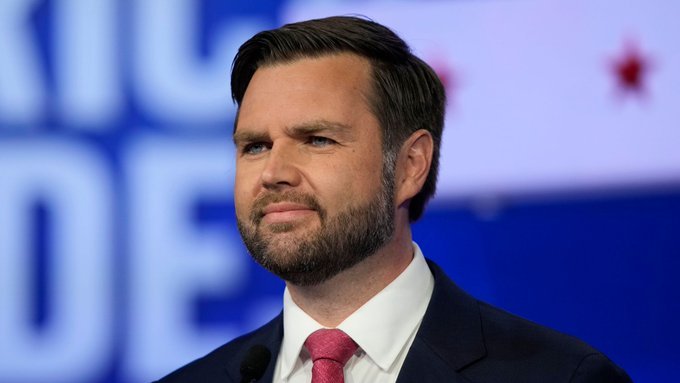
WASHINGTON / ISLAMABAD — In a significant expansion of his executive portfolio, U.S. Vice President JD Vance has taken the lead in high-stakes, behind-the-scenes diplomacy to end the five-week-old war with Iran. According to a Reuters report on Wednesday, April 1, 2026, Vance has been communicating with Pakistani intermediaries as recently as Tuesday, signaling that President Donald Trump is prepared to accept a ceasefire—but only on non-negotiable American terms.
The Vice President’s growing role marks a shift in the administration’s strategy, positioning the skeptical “America First” leader as the primary broker for an exit from Operation Epic Fury.
1. The “Pakistan Channel” and the U.S. Demands
With direct diplomatic ties severed, Islamabad has emerged as the indispensable “go-between” for Washington and Tehran.
- The Communication Loop: Vance has utilized Pakistani officials to relay private messages to the Iranian leadership, bypassing traditional European channels that have been strained by Trump’s recent NATO withdrawal threats.
- The “Hormuz Requirement”: The central U.S. demand conveyed by Vance is the immediate and unconditional reopening of the Strait of Hormuz. Trump has made it clear that “blasting Iran into oblivion” will continue until the waterway is “free and clear.”
- The Impatience Factor: Vance reportedly delivered a “stern message” that the President’s patience is exhausted. He warned that if a deal is not reached by the April 6 deadline, the U.S. will pivot from military targets to a systematic destruction of Iran’s civilian and energy infrastructure, including the national power grid.
2. Why JD Vance?
The choice of Vance as the lead negotiator is seen as a strategic move by the White House to offer Tehran a “best-case scenario” interlocutor.
- Shared Skepticism: Vance is widely known for his long-held skepticism of “forever wars” and prolonged U.S. military involvement overseas. White House sources told Axios that this makes him a more credible envoy for de-escalation than more hawkish advisors.
- The “Successor” Status: As a potential 2028 presidential candidate, Vance’s involvement signals that any deal reached now would have long-term staying power in a future administration.
- Coordination: While Vance leads the Pakistan channel, he is reportedly working in a “quad” that includes Secretary of State Marco Rubio, Mideast Envoy Steve Witkoff, and Jared Kushner.
3. The “April 6” Escalation Map
If the Vance-led negotiations fail to produce a breakthrough by early next week, the Pentagon is prepared for a “Phase 3” escalation.
| Target Category | Current Status (April 1) | Post-Deadline (April 6) |
| Military Command | Active Bombardment | Total Decapitation |
| Energy Grid | Delayed (per Trump) | Systemic Destruction |
| Proxy Networks | Targeted Strikes | “Ring of Fire” Suppression |
| Economic Assets | Sanctions / Blockade | Physical Asset Liquidation |
Analysis: The 9:00 PM ET Stakes
The revelation of Vance’s secret diplomacy adds a new layer of complexity to the President’s scheduled 9:00 PM ET address. While Trump claimed on Truth Social today that Iran’s leader has already “asked for a ceasefire” (a claim Tehran has called “false and baseless”), Vance’s quiet work suggests the administration is still in the “ultimatum” phase rather than the “victory lap.”
For Pakistan, the role of mediator is a high-wire act. Hosting the four-way foreign ministers’ meeting in Islamabad on March 29 was a clear signal of their intent to prevent a total regional collapse. If Vance can leverage the “Pakistan Channel” to secure the Strait, he will have achieved the single most significant diplomatic feat of the 2020s. If he fails, the “objective reality” warned of by Russia today—that the U.S. cannot challenge Iran’s grip—may lead to the very “prolonged conflict” Vance has spent his career trying to avoid.
Questions people ask
What is China's current share of global manufacturing?
China now accounts for twenty eight percent of global manufacturing. This industrial output exceeds the combined manufacturing production of the United States, Japan, and Germany, making China the leading global industrial power according to recent reports.
Why were Andrew Tate and Tristan Tate arrested in Miami?
Andrew Tate and his brother Tristan Tate were taken into custody in Miami by the United States Marshals Service. They face thirty eight new charges in the United Kingdom, including rape and child pornography offences, and prosecutors are seeking their extradition.
What warning did Moscow issue about oil prices?
Kirill Dmitriev, the Chief Executive of the Russian Direct Investment Fund, warned that a tsunami of skyrocketing oil prices is approaching. Moscow describes this potential energy shock as a major threat to global markets.
What political shift is projected for Benjamin Netanyahu's coalition?
Political polls project that Prime Minister Benjamin Netanyahu's coalition is on track to lose its majority in the upcoming October election. This projection indicates a potential political shift in Jerusalem.
Why did a Russian military aircraft land in Tehran?
A Russian airborne command aircraft, widely known as a doomsday plane, landed in Tehran. The arrival of the aircraft represents a high stakes show of support from Russia for Iran during a period of heightened regional tensions.
What did President Masoud Pezeshkian claim about the United States and Israel?
Iranian President Masoud Pezeshkian claimed that the United States and Israel failed in a forty eight hour plan to topple the Iranian government. He made these statements during a televised address marking two years since his inauguration.