Reflecto News is an online news platform covering major international political events, global economic developments, and security conflicts. The site provides updates on topics such as Chinese manufacturing dominance, Middle Eastern political tensions, and high profile legal arrests. Readers can access current articles organized by categories like World News, Iran, and USA.
In an extraordinary diplomatic clash, Israel claims a “historic breakthrough” meeting between Prime Minister Netanyahu and UAE President Sheikh Mohammed bin Zayed, while Abu Dhabi calls the allegations “entirely unfounded.” The conflicting statements have plunged the already volatile region into further uncertainty.
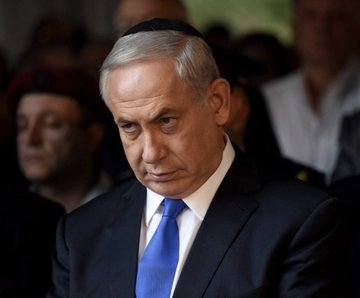
JERUSALEM / ABU DHABI — An unprecedented public dispute has erupted between two close strategic allies after Israeli Prime Minister Benjamin Netanyahu’s office announced he had secretly visited the United Arab Emirates during the US-Israel war with Iran — only for the UAE to immediately and categorically deny the claim .
The dueling statements have thrown the nature of Israel-UAE relations into sharp relief, exposing potential tensions beneath the surface of their public alliance. While Israel insists the meeting constituted a “historic breakthrough,” the UAE has firmly rejected any suggestion of covert diplomacy .
The announcement, made by Netanyahu’s office on Wednesday, came just one day after US Ambassador to Israel Mike Huckabee revealed that Israel had deployed Iron Dome air defense batteries and personnel to the UAE to help counter Iranian missile and drone attacks during the conflict .
What Israel Says: A “Historic Breakthrough”
According to a statement released by the Israeli Prime Minister’s Office, Netanyahu traveled to the UAE during “Operation Roaring Lion” — Israel’s military campaign against Iran — and met with UAE President Sheikh Mohammed bin Zayed Al Nahyan .
“The visit led to a historic breakthrough in relations between Israel and the UAE,” the statement declared, though it provided no specific details about the nature of this breakthrough .
A source familiar with the meeting told Reuters and other news agencies that Netanyahu and Sheikh Mohammed met in Al-Ain, an oasis city near the border with Oman, on March 26 . The meeting reportedly lasted several hours .
The claim was further bolstered by Ziv Agmon, who identified himself as Netanyahu’s former spokesman and claimed to have accompanied the prime minister on the trip.
“As someone who knows the United Arab Emirates well and has lived there for long periods of time, and as someone who accompanied the prime minister on the historic trip that has been top secret until today, I can say that the prime minister was received in Abu Dhabi with the honor of kings,” Agmon wrote on Facebook .
“The sheikh greatly respected the prime minister and personally drove the prime minister in his personal car from the plane to the palace, ” Agmon continued. “The things the prime minister concluded during this amazing visit will be talked about for generations to come. A great success!”
If accurate, this would be Netanyahu’s first known visit to the UAE since the signing of the Abraham Accords in 2020, which normalized relations between Israel and several Arab nations . Previous attempts to arrange a visit were canceled, including one in December 2022 amid anger over an Israeli minister’s visit to the flashpoint Temple Mount in Jerusalem .
What the UAE Says: “Entirely Unfounded”
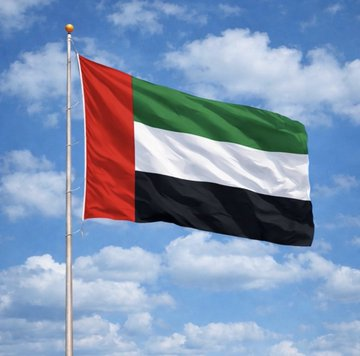
Within hours of Israel’s announcement, the UAE Ministry of Foreign Affairs issued a forceful denial, rejecting any suggestion that Netanyahu had visited the country or that any unannounced Israeli delegation had been received .
“The United Arab Emirates denies reports circulating regarding an alleged visit by Israeli Prime Minister Benjamin Netanyahu to the UAE, or receiving any Israeli military delegation in the country,” the ministry said in a statement .
The statement went further, emphasizing that UAE-Israel relations operate within formal, transparent channels only:
“The UAE reaffirms that its relations with Israel are public and conducted within the framework of the well-known and officially declared Abraham Accords, and are not based on non-transparent or unofficial arrangements. Accordingly, any claims regarding unannounced visits or undisclosed arrangements are entirely unfounded unless officially announced by the relevant authorities in the UAE. “
The UAE’s categorical denial has created an extraordinary situation in which two allied nations are publicly contradicting each other on a matter of significant diplomatic importance.
Intelligence Chiefs Also Visited, Reports Say
Beyond the disputed Netanyahu visit, multiple news outlets have reported that senior Israeli intelligence officials made secret trips to the UAE during the war to coordinate military actions against Iran .
According to The Wall Street Journal, Mossad intelligence agency chief David Barnea visited the UAE at least twice — in March and April — to coordinate with Emirati counterparts on the war with Iran .
Separately, Israel’s state-owned Kan News reported that Shin Bet internal security agency chief David Zini had also traveled to the UAE .
These intelligence visits have not been denied by the UAE in the same categorical terms as the Netanyahu claim, though the UAE’s blanket statement denying “any Israeli military delegation” could be interpreted to include them .
The Iron Dome Deployment: Confirmed Military Cooperation
Unlike the disputed visit, there is no ambiguity regarding one significant development: Israel did deploy military assets to the UAE during the war.
On Tuesday, US Ambassador to Israel Mike Huckabee publicly confirmed that Israel sent Iron Dome air defense batteries, along with Israeli personnel to operate them, to the UAE .
Huckabee described the deployment as the result of an “extraordinary relationship between the UAE and Israel” built on the Abraham Accords .
The Iron Dome is an advanced Israeli air defense system designed to intercept and destroy rockets, missiles, and drones . Its deployment to the UAE represents a significant deepening of security ties between the two nations.
While the Israeli Prime Minister’s Office did not explicitly confirm Huckabee’s comments, it noted that the alleged visit had “led to a historic breakthrough” — language that implicitly acknowledged enhanced military cooperation .
Why It Matters: The UAE Was Iran’s Primary Target
The context for these developments is critical to understanding their significance. During the US-Israel war with Iran, which began with strikes on February 28, the UAE was the most heavily targeted country in the region .
According to the UAE Ministry of Defense, the country engaged:
| Category | Number Engaged |
|---|---|
| Ballistic Missiles | 551 |
| Cruise Missiles | 29 |
| Drones | 2,265 |
Total: 2,845 Iranian projectiles
These figures represent an unprecedented aerial assault on a Gulf Arab state. Iran’s targeting of the UAE was widely seen as retaliation for the UAE’s normalization of relations with Israel and its hosting of US military assets .
The UAE’s air defense systems — including, reportedly, Israeli-supplied Iron Dome batteries — successfully intercepted the vast majority of these threats, though some impacts were reported .
Iran’s Response: Threats and Warnings
The revelation of Israel-UAE security cooperation — disputed or not — has drawn a sharp response from Tehran.
Iranian Foreign Minister Abbas Araghchi took to social media platform X to issue a direct warning to the UAE:
“Netanyahu has now publicly revealed what Iran’s security services long ago conveyed to our leadership. Enmity with the Great People of Iran is a foolish gamble. Collusion with Israel in doing so: unforgivable. Those colluding with Israel to sow division will be held to account. “
Araghchi did not explain why Iran did not go public with the intelligence it claimed to possess about the Netanyahu visit weeks ago .
Iranian parliamentary speaker Mohammad Ghalibaf also issued a warning, stating that Iran’s armed forces were “ready to respond and to teach a lesson for any aggression” .
These threats carry weight given Iran’s demonstrated willingness and capability to strike the UAE repeatedly during the conflict — even after an April 8 ceasefire ostensibly halted major hostilities .
The Abraham Accords Under Pressure
The dispute comes at a delicate moment for the Abraham Accords, the US-brokered agreements signed in 2020 that normalized relations between Israel and several Arab nations, including the UAE, Bahrain, Morocco, and Sudan .
The accords represented a fundamental shift in Middle East geopolitics, with Gulf Arab states publicly embracing Israel in a united front against Iranian influence.
However, the accords have always been controversial in the Arab world, where public opinion remains largely sympathetic to the Palestinian cause and suspicious of normalizing ties with Israel.
The UAE has walked a careful line — maintaining its formal relationship with Israel while avoiding the appearance of becoming a full military ally against Iran.
The UAE’s emphatic denial of Netanyahu’s visit may reflect this balancing act. By rejecting claims of “non-transparent or unofficial arrangements,” Abu Dhabi is signaling to Tehran — and to its own population — that its relationship with Israel remains within the bounds of the publicly declared Abraham Accords .
Broader Context: A Pattern of Covert Gulf-Israel Coordination
The Netanyahu controversy, regardless of its factual resolution, fits a broader pattern of deepening Israel-Gulf security cooperation that has been revealed during the Iran war.
Earlier reports have indicated that:
- The UAE carried out strikes on Iran during the war, including an attack on an oil refinery on Iran’s Lavan Island in early April — strikes the UAE has not publicly acknowledged .
- Saudi Arabia launched strikes directly on Iran — the first known instance of Riyadh hitting Iranian soil .
- Intelligence sharing between Israel and Gulf states reportedly intensified dramatically during the conflict, with coordinated efforts to detect and intercept Iranian missiles and drones .
These revelations suggest that while the UAE may want to maintain a public posture of limited engagement with Israel, the operational reality of defending against Iranian attacks has pushed Gulf states into much closer military alignment with Jerusalem.
The Ceasefire Context
All of these developments are unfolding against the backdrop of an increasingly fragile ceasefire.
A truce brokered through Pakistani mediation took effect on April 8, halting the most intense phase of the US-Israel war with Iran . However, the ceasefire has been repeatedly tested, and the underlying issues remain unresolved.
On Sunday, Iran laid out its formal demands to end the war and reopen the Strait of Hormuz — which Iran has effectively blocked to normal commercial transit since the conflict began .
US President Donald Trump swiftly rejected Iran’s proposal, calling it “totally unacceptable” and “a piece of garbage,” and subsequently stated that the ceasefire was “on massive life support” .
The Strait of Hormuz, through which approximately 20 percent of the world’s oil and liquefied natural gas normally passes, remains largely closed, disrupting global energy markets and sending prices soaring .
What Happens Next?
The conflicting Israeli and UAE statements leave several questions unanswered:
- Did the Netanyahu visit actually occur? The categorical nature of the UAE’s denial makes it difficult to reconcile with Israel’s claims, though the detailed account from Netanyahu’s former spokesman suggests specific knowledge of a trip.
- Why would the UAE deny a meeting beneficial to its security relationship with Israel? Possible explanations include domestic political considerations, fear of Iranian retaliation, or a desire to maintain plausible deniability about the extent of military cooperation.
- Will the dispute damage Israel-UAE relations? While both nations have strong incentives to maintain their alliance against Iran, a public contradiction of this nature is unprecedented and could create friction.
- How will Iran respond? Tehran has already issued threats. The coming days may reveal whether Iran takes any concrete action against the UAE in response to the revelations.
Frequently Asked Questions (FAQs)
Q1: Did Benjamin Netanyahu actually visit the UAE during the Iran war?
A: There are conflicting official statements on this matter. Israel says yes — Netanyahu’s office announced on May 13, 2026, that he made a secret visit and met with UAE President Sheikh Mohammed bin Zayed. The UAE says no — its foreign ministry issued a statement calling reports of the visit “entirely unfounded” and “categorically denied” that any such visit occurred .
Q2: When was the alleged meeting supposed to have taken place?
A: According to sources familiar with the matter, the meeting allegedly occurred on March 26 in Al-Ain, an oasis city near the Oman border. The meeting reportedly lasted several hours .
Q3: Why is there a dispute between Israel and the UAE over this visit?
A: The UAE has strong incentives to deny the visit. It may wish to avoid provoking Iran, which has already targeted the UAE heavily during the war. The UAE also likely wants to maintain the public perception that its relationship with Israel is limited to the formal, transparent framework of the Abraham Accords, rather than involving covert military coordination .
Q4: What other Israel-UAE cooperation has been revealed?
A: Multiple reports indicate that:
- Mossad chief David Barnea visited the UAE at least twice during the war to coordinate military actions
- Shin Bet chief David Zini also reportedly visited
- Israel deployed Iron Dome air defense batteries and personnel to the UAE
- The UAE reportedly carried out strikes on Iranian territory
Q5: How has Iran responded to these revelations?
A: Iranian Foreign Minister Abbas Araghchi warned that “collusion with Israel” is “unforgivable” and that those who do so “will be held to account.” Iran has also accused the UAE of enabling attacks on Iran by allowing the use of its territory for US military operations .
Q6: How badly was the UAE hit by Iranian attacks during the war?
A: The UAE was the most heavily targeted country in the region. According to its defense ministry, Iran launched 551 ballistic missiles, 29 cruise missiles, and 2,265 drones at the UAE during the conflict — a total of 2,845 projectiles .
Q7: What are the Abraham Accords?
A: The Abraham Accords are a set of agreements signed in 2020 during President Donald Trump’s first term that normalized relations between Israel and several Arab nations, including the UAE, Bahrain, Morocco, and Sudan. The accords represented a major shift in Middle East geopolitics .
Q8: Is the ceasefire with Iran still holding?
A: A ceasefire brokered through Pakistani mediation took effect on April 8. However, US President Donald Trump recently stated that the ceasefire is “on massive life support” after rejecting Iran’s demands for ending the war. Iran continues to block the Strait of Hormuz, and the UAE has reported missile and drone attacks even after the ceasefire took effect .
This is a developing story. Reflecto News will continue to provide updates as more information becomes available and as the diplomatic fallout from these conflicting statements unfolds.
Questions people ask
What is China's current share of global manufacturing?
China now accounts for twenty eight percent of global manufacturing. This industrial output exceeds the combined manufacturing production of the United States, Japan, and Germany, making China the leading global industrial power according to recent reports.
Why were Andrew Tate and Tristan Tate arrested in Miami?
Andrew Tate and his brother Tristan Tate were taken into custody in Miami by the United States Marshals Service. They face thirty eight new charges in the United Kingdom, including rape and child pornography offences, and prosecutors are seeking their extradition.
What warning did Moscow issue about oil prices?
Kirill Dmitriev, the Chief Executive of the Russian Direct Investment Fund, warned that a tsunami of skyrocketing oil prices is approaching. Moscow describes this potential energy shock as a major threat to global markets.
What political shift is projected for Benjamin Netanyahu's coalition?
Political polls project that Prime Minister Benjamin Netanyahu's coalition is on track to lose its majority in the upcoming October election. This projection indicates a potential political shift in Jerusalem.
Why did a Russian military aircraft land in Tehran?
A Russian airborne command aircraft, widely known as a doomsday plane, landed in Tehran. The arrival of the aircraft represents a high stakes show of support from Russia for Iran during a period of heightened regional tensions.
What did President Masoud Pezeshkian claim about the United States and Israel?
Iranian President Masoud Pezeshkian claimed that the United States and Israel failed in a forty eight hour plan to topple the Iranian government. He made these statements during a televised address marking two years since his inauguration.