Reflecto News is an online news platform covering major international political events, global economic developments, and security conflicts. The site provides updates on topics such as Chinese manufacturing dominance, Middle Eastern political tensions, and high profile legal arrests. Readers can access current articles organized by categories like World News, Iran, and USA.
Moscow reiterates demand for immediate ceasefire, warns of “radiological catastrophe” risks amid ongoing Gulf war
MOSCOW / NEW DELHI — Russia has issued a firm condemnation of the United States and Israel over their military campaign against Iran, describing the strikes as “pre-planned and unprovoked armed aggression” against a sovereign member of the United Nations. The statement comes as Russian Foreign Minister Sergey Lavrov prepares to attend the BRICS Foreign Ministers’ Meeting in New Delhi, where the West Asian crisis is expected to dominate deliberations .
The Russian Foreign Ministry’s condemnation, first issued in the immediate aftermath of the February 28 outbreak of hostilities and reiterated in subsequent statements, represents one of the strongest international rebukes of the US-Israeli military campaign .
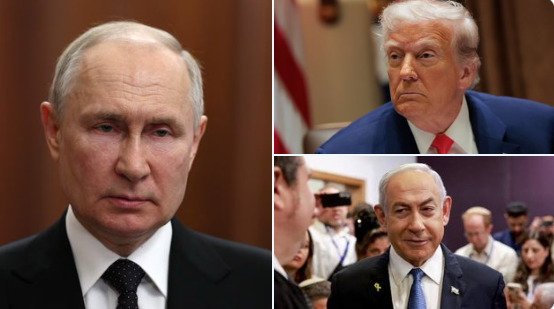
Moscow’s Position: “Unprovoked Aggression” Against a Sovereign State
In its official statement following the launch of US-Israeli strikes on Iran, the Russian Foreign Ministry pulled no punches in its assessment of the military action.
“The scale and nature of the military, political, and propaganda preparations preceding this reckless move, including the deployment of a large US military force to the region, leave no doubt that this was a pre-planned and unprovoked act of armed aggression against a sovereign and independent UN member state,” the ministry said .
The statement further accused Washington and Tel Aviv of violating “the fundamental principles and norms of international law” and warned that the attacks were bringing the region closer to what it described as a “humanitarian, economic, and, quite possibly, radiological catastrophe” .
Russia’s condemnation has been consistent throughout the conflict. In March, the ministry accused the US and Israel of instigating an “unprecedented spiral of violence” that has caused extensive civilian casualties and widespread damage to infrastructure across the region .
Israel’s Signal: “No Interest in Military Confrontation”
In a striking revelation included in its February 28 statement, the Russian Foreign Ministry disclosed that the strikes were carried out “despite signals conveyed to the Russian side about the Israelis’ lack of interest in a military confrontation with the Iranians” .
This disclosure suggests that Moscow had received private assurances from Tel Aviv indicating that Israel did not intend to escalate to direct military conflict with Iran, assurances that proved false when the joint US-Israeli operation was launched .
The ministry characterized the attacks as being carried out “under the cover of renewed negotiations,” referring to the Oman-mediated talks between Washington and Tehran over Iran’s nuclear program that were ongoing at the time .
Nuclear Facilities Under Attack: Russian Personnel at Risk
One of Moscow’s most urgent concerns has been the targeting of Iran’s nuclear infrastructure, including facilities where Russian technical personnel are present.
During a phone conversation between Russian Foreign Minister Sergey Lavrov and Iranian Foreign Minister Abbas Araghchi on March 23, Lavrov stressed “the categorical unacceptability of the US-Israeli strikes on Iran’s nuclear infrastructure, including the Bushehr Nuclear Power Plant” .
Russia warned that these strikes “create unacceptable risks for the safety of Russian personnel and could lead to catastrophic environmental consequences for all countries of the region without exception” .
The Russian Foreign Ministry issued a separate statement condemning strikes on the Natanz uranium enrichment plant, which was attacked on March 21 despite earlier US claims of having “completely destroyed” Iran’s nuclear program .
“This is a brazen violation of international law, the UN and IAEA Charters, and relevant UN Security Council and IAEA General Conference resolutions,” the ministry said .
Call for Immediate Ceasefire and Diplomatic Resolution
Beyond condemnation, Russia has consistently called for an immediate cessation of hostilities and a return to diplomatic negotiations.
Moscow has urged “all parties involved in the conflict over Iran to refrain from confrontational steps” that could impede a resolution, according to Deputy Foreign Minister Alexander Alimov .
The Russian position emphasizes that political negotiation, not military confrontation, is the only path to a sustainable resolution of the crisis. The ministry has expressed its readiness to contribute “within the scope of its available capabilities” to efforts aimed at reaching a long-term and durable settlement .
Russia has also opposed a US-Bahraini draft resolution on Iran submitted to the UN Security Council on May 4, with Alimov stating that Moscow “doesn’t see any potential for this document” and calling on its co-authors to withdraw it .
Instead, a Russian-Chinese draft remains on the negotiating table, containing “clear calls for the parties to end the war, refrain from the use of force, and resolve differences at the negotiating table” .
The BRICS Dimension: Seeking a Unified Position
The Russian condemnation takes on added significance as Lavrov prepares to attend the BRICS Foreign Ministers’ Meeting in New Delhi on May 14-15 .
Iran has urged India, as the current BRICS chair, to use the bloc’s platform to build a consensus condemning US and Israeli actions in the Gulf conflict . However, the expanded BRICS grouping — which now includes Egypt, Ethiopia, Indonesia, Iran, and the United Arab Emirates alongside the original five members — remains divided .
The main differences have emerged between Iran and the UAE, which find themselves on opposing sides of the conflict. The UAE was the most heavily targeted country by Iranian strikes during the war, with its defense ministry reporting 2,845 Iranian projectiles launched against Emirati territory .
With consensus eluding the grouping, India issued a Chair’s summary on April 24 stating that “members expressed deep concern on the recent conflict in the Middle East (West Asia) and offered views and assessments on the matter” .
Iran’s Diplomatic Push
Tehran has been actively seeking international support, including from Moscow and Beijing, to counter what it describes as US-Israeli aggression.
In early March, The Indian Express reported that Tehran had reached out to New Delhi to take the lead in issuing a statement on behalf of BRICS condemning the US and Israeli strikes — a request that placed India in a diplomatic dilemma given its position of not taking sides in the conflict .
Araghchi and his Indian counterpart, External Affairs Minister S. Jaishankar, have spoken at least seven times since the war began on February 28 .
Iran has also received substantial diplomatic and other support from Russia, including the delivery of humanitarian assistance, for which Araghchi thanked the Russian leadership during his March 23 phone call with Lavrov .
Global Implications
Moscow’s consistent condemnation of the US-Israeli campaign reflects the deepening geopolitical fault lines that have emerged around the Iran conflict.
Russia has positioned itself as a counterweight to US-led military action in the region, aligning with Iran diplomatically while simultaneously calling for restraint from all parties.
The Russian Foreign Ministry has expressed particular concern at what it describes as “the serial nature of the destabilising attacks carried out by the US Administration over the past few months on the international legal pillars of world order” .
As the war continues and diplomatic efforts struggle to gain traction, Russia’s role as a potential mediator — alongside China and other BRICS members — remains a critical factor in any eventual resolution of the conflict.
Frequently Asked Questions (FAQs)
Q1: What is Russia’s official position on the US-Israeli strikes against Iran?
A: Russia has “strongly condemned” the strikes, describing them as “pre-planned and unprovoked armed aggression” against a sovereign UN member state in violation of international law. Moscow has called for an immediate cessation of hostilities and a return to diplomatic negotiations .
Q2: Has Russia always opposed the US-Israeli military action against Iran?
A: Yes. Russia issued its initial condemnation on February 28, the day the strikes began, and has consistently reiterated its position in the months since, including during high-level phone calls between Foreign Minister Lavrov and Iranian Foreign Minister Araghchi .
Q3: Is Russia providing any support to Iran during the conflict?
A: According to statements from the Russian Foreign Ministry, Russia has provided “substantial diplomatic and other support” to Iran, including the delivery of humanitarian assistance. Araghchi thanked Russian leadership for this support during a March 23 phone call .
Q4: What is Russia’s position on strikes against Iran’s nuclear facilities?
A: Russia has called strikes on Iran’s nuclear infrastructure, including the Bushehr Nuclear Power Plant and the Natanz uranium enrichment facility, “categorically unacceptable.” Moscow has warned that such strikes create risks for Russian personnel at these sites and could lead to catastrophic radiological and environmental consequences for the entire region .
Q5: Has the UN Security Council taken any action on the Iran conflict?
A: Two competing draft resolutions are under consideration. A US-Bahraini draft was submitted on May 4, but Russia has stated it will not support this document and has called for its withdrawal. A Russian-Chinese draft remains on the table, calling for an end to the war and a return to negotiations .
Q6: How does Russia’s position affect the BRICS foreign ministers’ meeting?
A: Russia, as a BRICS member, supports Iran’s position within the bloc. However, the expanded BRICS grouping remains divided on the conflict, particularly between Iran and the UAE, who are on opposing sides of the front line. This division has prevented the bloc from issuing a unified statement condemning US-Israeli actions .
Q7: Did Israel signal to Russia that it did not want war with Iran?
A: According to the Russian Foreign Ministry, Israel conveyed signals to Moscow indicating “a lack of interest in a military confrontation with the Iranians.” Despite these signals, the joint US-Israeli strikes proceeded. Russia characterized the attacks as being carried out “under the cover of renewed negotiations” .
Q8: What does Russia want to see happen next in the conflict?
A: Russia wants an immediate ceasefire, the withdrawal of the US-Bahraini draft resolution from the UN Security Council, and a return to political and diplomatic negotiations to resolve the crisis. Moscow has expressed readiness to help facilitate peaceful solutions “based on international law, mutual respect, and a balance of interests” .
This is a developing story. Reflecto News will continue to provide updates on Russia’s diplomatic efforts regarding the Iran conflict and the outcomes of the BRICS Foreign Ministers’ Meeting in New Delhi.
Questions people ask
What is China's current share of global manufacturing?
China now accounts for twenty eight percent of global manufacturing. This industrial output exceeds the combined manufacturing production of the United States, Japan, and Germany, making China the leading global industrial power according to recent reports.
Why were Andrew Tate and Tristan Tate arrested in Miami?
Andrew Tate and his brother Tristan Tate were taken into custody in Miami by the United States Marshals Service. They face thirty eight new charges in the United Kingdom, including rape and child pornography offences, and prosecutors are seeking their extradition.
What warning did Moscow issue about oil prices?
Kirill Dmitriev, the Chief Executive of the Russian Direct Investment Fund, warned that a tsunami of skyrocketing oil prices is approaching. Moscow describes this potential energy shock as a major threat to global markets.
What political shift is projected for Benjamin Netanyahu's coalition?
Political polls project that Prime Minister Benjamin Netanyahu's coalition is on track to lose its majority in the upcoming October election. This projection indicates a potential political shift in Jerusalem.
Why did a Russian military aircraft land in Tehran?
A Russian airborne command aircraft, widely known as a doomsday plane, landed in Tehran. The arrival of the aircraft represents a high stakes show of support from Russia for Iran during a period of heightened regional tensions.
What did President Masoud Pezeshkian claim about the United States and Israel?
Iranian President Masoud Pezeshkian claimed that the United States and Israel failed in a forty eight hour plan to topple the Iranian government. He made these statements during a televised address marking two years since his inauguration.