Reflecto News is an online news platform covering major international political events, global economic developments, and security conflicts. The site provides updates on topics such as Chinese manufacturing dominance, Middle Eastern political tensions, and high profile legal arrests. Readers can access current articles organized by categories like World News, Iran, and USA.
Reflecto News | Breaking News | Iran-US Diplomacy
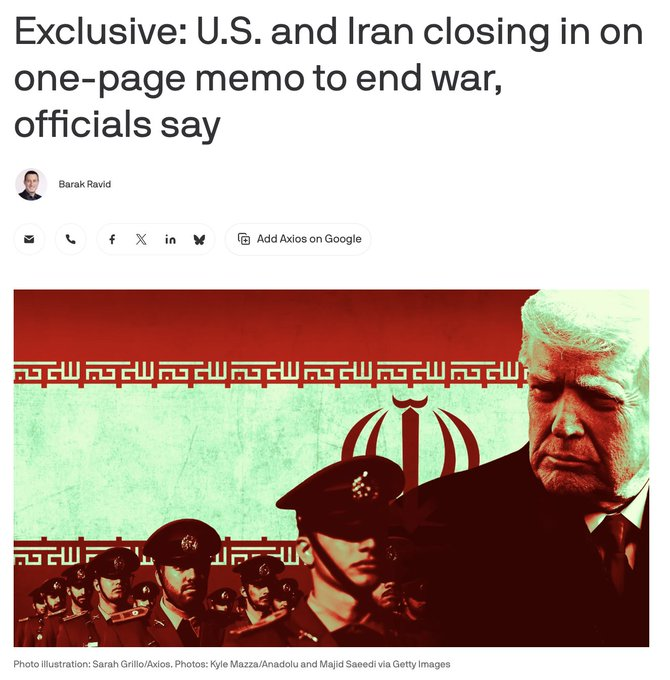
WASHINGTON — The United States and Iran are reportedly close to finalizing a 14‑point framework agreement aimed at ending the two‑month war and restarting formal nuclear negotiations, according to a report from Axios reporter Barak Ravid .
The proposed deal, which has been in the works for weeks and refined through Pakistani mediators, would:
- Pause Iran’s uranium enrichment program for at least 12 years
- Ease U.S. economic sanctions
- Release tens of billions of dollars in frozen Iranian assets
- Reopen the Strait of Hormuz to commercial shipping
The agreement would begin with a 30‑day negotiation period, likely in Geneva or Islamabad, during which both sides would gradually roll back military and shipping restrictions. Iran would also accept tougher IAEA inspections and pledge not to pursue nuclear weapons .
No final agreement has been reached, and significant hurdles remain, but the contours of a potential deal are now clearer .
🔄 Key Elements of the Proposed Framework
| Element | Details |
|---|---|
| Enrichment pause | Iran halts uranium enrichment for at least 12 years |
| Sanctions relief | Gradual easing of U.S. economic sanctions |
| Frozen assets | Release of billions in Iranian funds held abroad |
| Hormuz reopening | Strait of Hormuz reopened to commercial shipping |
| Diplomatic timeline | 30‑day negotiation period (Geneva or Islamabad) |
| IAEA inspections | Iran accepts tougher international monitoring |
| Nuclear pledge | Iran commits not to pursue nuclear weapons |
The enrichment “pause” is a significant concession by Tehran, which has insisted on its right to enrich uranium . However, “pause” (rather than “termination”) leaves open the possibility that Iran could eventually restart enrichment after the 12‑year period, a condition the Trump administration has previously said it would not accept .
Given the current war footing, a temporary pause may be the only politically feasible path forward—for both sides .
📅 The 30‑Day Countdown
The proposed 30‑day negotiation period is relatively short for such complex technical issues, suggesting both sides are under intense pressure to produce a deal quickly .
- For the US, the midterm elections are six months away, and high gas prices are weighing on Republican prospects
- For Iran, the economy is collapsing under the U.S. naval blockade, which has cut oil exports by an estimated 70% and sent the rial to record lows
The choice of venue remains under discussion. Geneva would signal a return to the “P5+1” framework, while Islamabad would reinforce Pakistan’s role as a mediator .
Both capitals would have to provide security guarantees for the negotiations to proceed, which the U.S. has not yet committed to .
🎯 The Nuclear Heart of the Deal
If finalized, the agreement would mark a significant escalation of U.S. demands beyond the original JCPOA (2015), which capped enrichment at 3.67% but did not include a “pause.”
The enrichment pause would be monitored by the International Atomic Energy Agency (IAEA), with Iran agreeing to tougher inspections than under the original deal . These would likely include access to military sites, a condition Iran has previously resisted .
The 12‑year “pause” would align with Iran’s estimated breakout time—the period needed to produce enough weapons-grade material for a single nuclear device—though intelligence agencies differ on how long that would be .
💰 Sanctions Relief and Frozen Assets
The agreement would ease U.S. sanctions, though a Treasury official told Ravid the administration is not planning to lift secondary sanctions on Chinese banks that continue to purchase Iranian crude . This would allow Washington to claim it is maintaining “maximum pressure” even as it makes concessions .
The release of frozen Iranian assets (estimated at $20-30 billion) would likely be phased, with funds disbursed as Iran complies with the enrichment pause and IAEA inspections . Iran’s central bank governor recently signaled that Tehran is willing to place those funds in escrow accounts subject to IAEA monitoring, a possible compromise .
🛑 The Political Minefield
The proposed deal faces significant political hurdles in both capitals .
In the US, Republicans have already criticized the framework as “rewarding” Iran. Sen. Lindsey Graham warned that “any deal that leaves Iran with enrichment capacity is a death sentence for the region.” The administration has not presented the framework to Congress, raising the prospect of a legislative revolt if a deal is finalized .
In Israel, Prime Minister Benjamin Netanyahu has signaled he will oppose any deal that allows Iran to retain enrichment capability. Netanyahu’s office issued a statement saying Israel “will not be bound by an agreement that leaves Iran on the threshold of nuclear weapons” .
For now, the 14‑point framework remains a draft. Senior U.S. and Iranian officials are expected to meet in Geneva in the coming days to finalize the text, with a formal announcement possible as early as next week .
If the framework holds, it would mark the first major diplomatic breakthrough since the war began on February 28—and would fundamentally reshape the geopolitical landscape of the Middle East.
Key Takeaways for Reflecto News Readers
| Aspect | Summary |
|---|---|
| Framework Elements | Enrichment pause (12 years), sanctions relief, frozen assets, Hormuz reopening |
| Negotiation window | 30 days (Geneva or Islamabad) |
| Iran’s concessions | Accepts tougher IAEA inspections; pledges no nuclear weapons |
| US concessions | Eases sanctions, releases frozen assets |
| Status | No final agreement reached; significant obstacles remain |
| Next steps | Officials expected to meet soon to finalize text |
| Political risks | GOP opposition in US; Israeli opposition |
Follow Reflecto News for continuous updates on this developing story and all breaking news from around the world. This article is the intellectual property of Reflecto News. Redistribution without attribution is prohibited.
Questions people ask
What is China's current share of global manufacturing?
China now accounts for twenty eight percent of global manufacturing. This industrial output exceeds the combined manufacturing production of the United States, Japan, and Germany, making China the leading global industrial power according to recent reports.
Why were Andrew Tate and Tristan Tate arrested in Miami?
Andrew Tate and his brother Tristan Tate were taken into custody in Miami by the United States Marshals Service. They face thirty eight new charges in the United Kingdom, including rape and child pornography offences, and prosecutors are seeking their extradition.
What warning did Moscow issue about oil prices?
Kirill Dmitriev, the Chief Executive of the Russian Direct Investment Fund, warned that a tsunami of skyrocketing oil prices is approaching. Moscow describes this potential energy shock as a major threat to global markets.
What political shift is projected for Benjamin Netanyahu's coalition?
Political polls project that Prime Minister Benjamin Netanyahu's coalition is on track to lose its majority in the upcoming October election. This projection indicates a potential political shift in Jerusalem.
Why did a Russian military aircraft land in Tehran?
A Russian airborne command aircraft, widely known as a doomsday plane, landed in Tehran. The arrival of the aircraft represents a high stakes show of support from Russia for Iran during a period of heightened regional tensions.
What did President Masoud Pezeshkian claim about the United States and Israel?
Iranian President Masoud Pezeshkian claimed that the United States and Israel failed in a forty eight hour plan to topple the Iranian government. He made these statements during a televised address marking two years since his inauguration.