Reflecto News is an online news platform covering major international political events, global economic developments, and security conflicts. The site provides updates on topics such as Chinese manufacturing dominance, Middle Eastern political tensions, and high profile legal arrests. Readers can access current articles organized by categories like World News, Iran, and USA.
Reflecto News | U.S. Legislation | National Security & Foreign Policy
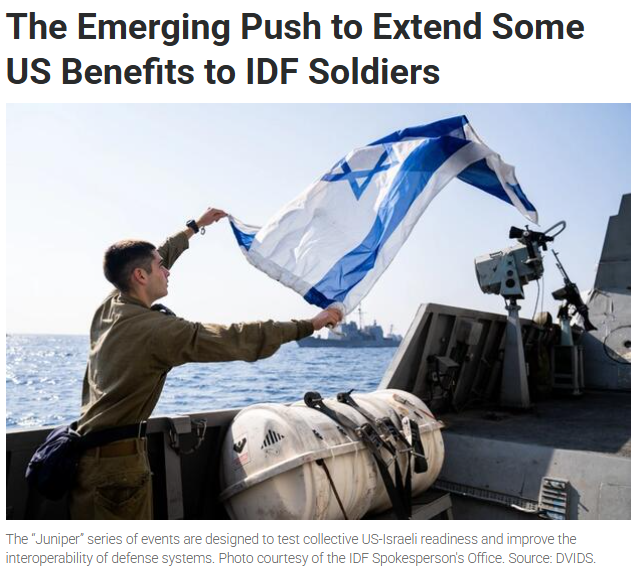
WASHINGTON — A new bill introduced in the U.S. House of Representatives seeks to extend certain legal protections—currently reserved for American servicemembers—to U.S. citizens serving in the Israel Defense Forces (IDF), marking a significant departure from long-standing policy that ties such benefits exclusively to service in the U.S. military .
The legislation, H.R. 8445, was introduced by Representatives Guy Reschenthaler (R-PA) and Max Miller (R-OH) and would amend federal law to treat service in the IDF “in the same manner as service in the uniformed services” for the purposes of two key federal laws: the Servicemembers Civil Relief Act (SCRA) and the Uniformed Services Employment and Reemployment Rights Act (USERRA) .
What the Bill Would Do
The proposal focuses on extending two core legal protections that currently apply only to U.S. military personnel :
| Law | Purpose | Key Protections |
|---|---|---|
| Servicemembers Civil Relief Act (SCRA) | Financial and legal safeguards during active duty | Interest rate caps on pre-service debts, protection from eviction and foreclosure, stay of court proceedings, relief from certain civil judgments |
| Uniformed Services Employment and Reemployment Rights Act (USERRA) | Job protection for those who leave civilian employment for military service | Guaranteed right to return to civilian job after service, protection from employment discrimination based on military service |
Currently, these protections are limited to active-duty members of the U.S. Armed Forces, certain reserve components, and—under existing SCRA provisions—U.S. citizens serving with allied forces “in the prosecution of a war or military action” where that service is “similar to military service” . The bill would explicitly add service in the IDF to this framework .
Who Is Pushing the Bill and Why
Reschenthaler and Miller introduced the bill in May 2024, citing the large number of American citizens currently serving in the IDF. In a press release announcing the legislation, Reschenthaler stated that “over 20,000 American citizens are currently defending Israel from Hamas terrorists, risking their lives for the betterment of our ally” .
“This legislation will ensure we do everything possible to support these heroes who are standing with Israel, fighting for freedom, and combating terrorism in the Middle East.”
— Rep. Guy Reschenthaler (R-PA)
Miller echoed the sentiment, framing the bill as a necessary support mechanism for Americans who choose to fight alongside Israel: “I’m proud that this legislation extends important protections to those Americans who chose to risk their lives in the fight against terror” .
What the SCRA and USERRA Actually Do
Servicemembers Civil Relief Act (SCRA)
The SCRA, codified at 50 U.S.C. §§ 3901-4043, was enacted to allow servicemembers to focus on their military duties without being distracted by civil legal proceedings or financial pressures . It applies to all civil actions and administrative proceedings in U.S. courts, including bankruptcy cases, eviction proceedings, and debt collection actions.
Among its key provisions :
- Default judgment protection: A court cannot enter a default judgment against an active-duty servicemember without first receiving an affidavit stating whether the defendant is in military service. If the defendant is on active duty, the court must appoint an attorney to represent them before proceeding .
- Stay of proceedings: Servicemembers may request a 90-day stay of civil proceedings if their military duties materially affect their ability to appear .
- Interest rate cap: Pre-service debts are subject to a 6% interest rate cap during military service.
- Eviction and foreclosure protections: Landlords cannot evict servicemembers or their dependents without a court order.
The existing SCRA statute already includes a provision allowing U.S. citizens serving with allied forces to qualify for these protections under certain conditions, provided the allied force is engaged in a war or military action alongside the U.S. . The proposed bill would explicitly add IDF service to that framework .
Uniformed Services Employment and Reemployment Rights Act (USERRA)
USERRA, codified at 38 U.S.C. §§ 4301-4336, protects the civilian employment rights of individuals who leave their jobs to serve in the uniformed services. Key provisions include :
- Reemployment rights: Servicemembers must be reemployed in their civilian jobs upon return from service, with the same seniority, status, and pay they would have had if they had remained continuously employed.
- Anti-discrimination protection: Employers cannot discriminate against employees based on their past, present, or future military service.
- Health insurance continuation: Employers must allow servicemembers to continue their health insurance coverage for up to 24 months during military service.
- No waiting periods: Reemployed servicemembers cannot be subjected to new waiting periods for benefits based on their military service.
A Significant Policy Shift
The proposal represents a notable departure from current U.S. policy, which has consistently tied military benefits and protections to service performed for the United States itself .
Current eligibility framework :
| Status | SCRA Eligible | USERRA Eligible | VA Benefits Eligible |
|---|---|---|---|
| U.S. military active duty | Yes | Yes | Yes |
| U.S. reserves on active duty | Yes | Yes | Yes |
| U.S. citizens in allied forces (wartime) | Case-by-case | No | No |
| U.S. citizens in IDF (current law) | No | No | No |
| Proposed: U.S. citizens in IDF | Yes (bill) | Yes (bill) | No (not included) |
The bill explicitly does not extend full Department of Veterans Affairs benefits—such as healthcare, education payments (GI Bill), or disability compensation—to IDF servicemembers . It focuses solely on SCRA and USERRA protections, which impose obligations on private employers and financial institutions rather than requiring new federal spending.
However, extending these protections would still create enforceable legal rights under U.S. law. Employers could be required to reemploy returning IDF soldiers, and financial institutions would be obligated to cap interest rates and delay foreclosure proceedings for IDF servicemembers who hold U.S. citizenship .
No Comparable Policy for Other Foreign Militaries
One of the most striking aspects of the proposal is its exclusivity. There is no comparable U.S. program extending SCRA, USERRA, or veterans’ benefits to Americans serving in other foreign militaries .
U.S. citizens serving in other foreign forces :
| Foreign Force | Estimated U.S. Citizens | U.S. Legal Protections |
|---|---|---|
| French Foreign Legion | Unknown | None |
| Ukrainian International Legion | ~1,000-2,000 (2022-2024) | None |
| Australian Defence Force (select recruitment) | Limited | None |
| New Zealand Defence Force | Limited | None |
| Canadian Armed Forces | Limited | None |
The State Department has repeatedly warned Americans who travel abroad to fight—including those joining the Ukrainian International Legion—that they “do so at their own risk and should not expect U.S. government support” . The IDF proposal stands apart as a specific, isolated effort rather than part of a broader policy trend.
Legal experts have noted that the existing SCRA statute’s allied-forces provision has rarely been invoked. The legislative history of H.R. 8445 suggests that the bill’s sponsors are seeking to create an explicit, unambiguous pathway for IDF service to qualify, bypassing the discretionary determination that current law would require .
The National Security Context
The proposal comes amid heightened U.S.-Israel alignment. The IDF has recruited foreign volunteers, including U.S. citizens, since its founding. During the war with Iran and the ongoing Gaza conflict, the number of Americans serving in the IDF has reportedly increased .
The bill has been referred to the House Committee on Veterans’ Affairs, where it awaits further action .
Frequently Asked Questions (FAQs)
Q1: Would this bill give full VA benefits to Americans serving in the IDF?
No. The bill only extends SCRA and USERRA protections—financial and employment safeguards—not full Department of Veterans Affairs benefits such as healthcare, education payments, or disability compensation .
Q2: Has the U.S. ever done this for Americans serving in other foreign militaries?
No. There is no comparable law extending SCRA or USERRA protections to Americans serving in the French Foreign Legion, the Ukrainian International Legion, or any other foreign military .
Q3. What is the current legal status of U.S. citizens serving in the IDF?
Under current law, U.S. citizens serving in the IDF are not covered by SCRA or USERRA. Some may be eligible for SCRA protection under the existing allied-forces provision if they serve alongside U.S. forces in a declared war, but the bill would create an explicit, automatic pathway for IDF service to qualify .
Q4. Does current law allow any foreign military service to qualify for SCRA?
Yes, but only under specific conditions. The SCRA currently applies to U.S. citizens serving with allied forces “in the prosecution of a war or military action” where that service is “similar to military service.” The determination is made on a case-by-case basis . H.R. 8445 would directly amend the statute to name IDF service explicitly .
Q5. What protections does USERRA provide that IDF soldiers don’t currently have?
USERRA guarantees that employees who leave civilian jobs for military service can return to their jobs upon completion of service and protects them from discrimination based on their military status. Currently, an employer could lawfully terminate or refuse to rehire an employee who leaves to serve in the IDF; USERRA would prohibit that .
Q6. Could the bill lead to full veterans’ benefits for IDF servicemembers in the future?
The current bill is limited to SCRA and USERRA and explicitly does not extend VA benefits. However, legal analysts note that once the principle of treating IDF service as equivalent to U.S. military service for some protections is established, it could open the door to future expansions .
Q7. Is the bill more expansive than the existing allied-forces provision in the SCRA?
Yes. The existing SCRA provision applies to U.S. citizens serving with “allied forces” during wartime, leaving the determination of eligibility to courts and executive branch guidance. H.R. 8445 would amend the statute to explicitly name IDF service as qualifying, removing any discretion and creating a permanent, automatic pathway to coverage .
Q8. Where does the bill stand in the legislative process?
As of the latest congressional records, H.R. 8445 has been introduced and referred to the House Committee on Veterans’ Affairs. The bill has not yet received a committee hearing or vote .
Key Takeaways for Reflecto News Readers
| Aspect | Summary |
|---|---|
| Bill number | H.R. 8445 |
| Sponsors | Rep. Guy Reschenthaler (R-PA), Rep. Max Miller (R-OH) |
| Introduced | May 17, 2024 |
| Purpose | Extend SCRA and USERRA protections to U.S. citizens serving in IDF |
| Protections extended | Financial safeguards, eviction/foreclosure relief, job reemployment rights, anti-discrimination |
| Not extended | VA healthcare, GI Bill education benefits, disability compensation |
| Precedent | No comparable policy exists for Americans in other foreign militaries |
| Legislative status | Referred to House Committee on Veterans’ Affairs |
Sources and Further Reading
Reflecto News has compiled this report from verified sources including the official text of H.R. 8445 from Congress.gov, press releases from the offices of Representatives Guy Reschenthaler and Max Miller, Military.com feature reporting, and official guidance on SCRA and USERRA. All information is accurate as of publication.
Follow Reflecto News for continuous updates on this and all breaking news from Washington and around the world.
This article is the intellectual property of Reflecto News. Redistribution without attribution is prohibited. For syndication or media inquiries, please contact the editorial team.
Questions people ask
What is China's current share of global manufacturing?
China now accounts for twenty eight percent of global manufacturing. This industrial output exceeds the combined manufacturing production of the United States, Japan, and Germany, making China the leading global industrial power according to recent reports.
Why were Andrew Tate and Tristan Tate arrested in Miami?
Andrew Tate and his brother Tristan Tate were taken into custody in Miami by the United States Marshals Service. They face thirty eight new charges in the United Kingdom, including rape and child pornography offences, and prosecutors are seeking their extradition.
What warning did Moscow issue about oil prices?
Kirill Dmitriev, the Chief Executive of the Russian Direct Investment Fund, warned that a tsunami of skyrocketing oil prices is approaching. Moscow describes this potential energy shock as a major threat to global markets.
What political shift is projected for Benjamin Netanyahu's coalition?
Political polls project that Prime Minister Benjamin Netanyahu's coalition is on track to lose its majority in the upcoming October election. This projection indicates a potential political shift in Jerusalem.
Why did a Russian military aircraft land in Tehran?
A Russian airborne command aircraft, widely known as a doomsday plane, landed in Tehran. The arrival of the aircraft represents a high stakes show of support from Russia for Iran during a period of heightened regional tensions.
What did President Masoud Pezeshkian claim about the United States and Israel?
Iranian President Masoud Pezeshkian claimed that the United States and Israel failed in a forty eight hour plan to topple the Iranian government. He made these statements during a televised address marking two years since his inauguration.