Reflecto News is an online news platform covering major international political events, global economic developments, and security conflicts. The site provides updates on topics such as Chinese manufacturing dominance, Middle Eastern political tensions, and high profile legal arrests. Readers can access current articles organized by categories like World News, Iran, and USA.
Published on Reflecto News | World News | Diplomacy & Defense
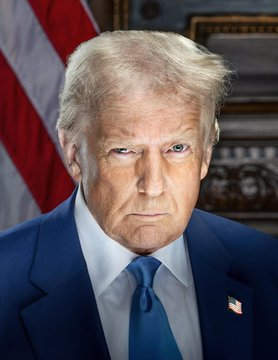
Spain has firmly rejected President Donald Trump’s threat to impose a naval blockade on the Strait of Hormuz, with Defense Minister Margarita Robles branding the proposed measure as “senseless” and a dangerous escalation of an already devastating regional conflict . The rebuke from Madrid underscores a growing rift between Washington and its European allies as the US prepares to enforce a blockade following the collapse of weekend peace talks with Iran.
“Spain will never accept temporary measures, because the objective must be for the war to end, and for it to end now.” — Margarita Robles, Spanish Defense Minister
Madrid Rejects US Escalation
The Spanish government has been one of the most vocal European critics of the US-Israeli military campaign against Iran since it began on February 28. On Monday, Robles escalated that criticism, directly denouncing Trump’s blockade plans.
In an interview with Spanish national television RTVE, Robles called the ongoing war “absurd,” adding that no one knows why it began . She warned that the blockade would be “another step” in an escalating crisis that has already caused heavy casualties and economic damage .
Robles reiterated Spain’s opposition to illegal wars, rejection of human rights violations, and support for diplomatic solutions, calling for urgent de-escalation. She also underscored that respect for international law is “essential and fundamental,” stressing that neither Trump nor Israeli Prime Minister Benjamin Netanyahu can impose their own rules on the international community .
A Pattern of Refusal
Spain’s rejection of the US blockade is not an isolated incident but part of a consistent policy throughout the six-week conflict.
Key Spanish positions during the Iran war:
| Date | Action/Statement |
|---|---|
| February 28 | Spain condemns US-Israeli strikes as “unjustified and dangerous military intervention outside international law” |
| March 3 | Spain refuses US access to Naval Station Rota and Moron Air Base for military operations |
| March 4 | Spain denies White House claim that it agreed to cooperate with US military |
| March 16 | Spain formally rejects participation in any military mission in the Strait of Hormuz |
| April 10 | Spain reaffirms refusal to participate in NATO actions to secure the strait |
| April 13 | Robles denounces US blockade threat as “senseless” |
Spanish Foreign Minister Jose Manuel Albares has consistently stated that “we should not do anything that would increase tension or cause further escalation of the situation” . The government’s position is rooted in international law, with officials repeatedly condemning the war as illegal and warning of the risks of a wider regional conflict.
‘We Will Not Be Vassals’
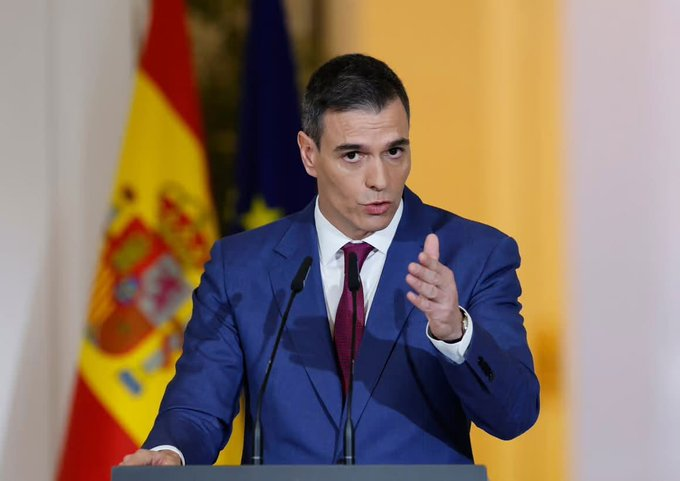
Prime Minister Pedro Sanchez has maintained Spain’s anti-war stance despite significant pressure from Washington. President Trump has threatened to cut off all trade with Spain and accused the country of being “very uncooperative” .
Deputy Prime Minister Maria Jesus Montero captured Madrid’s defiant posture when she declared that Spain “will not be vassals” to another country . Sanchez himself has stated that “we will not be complicit in something that is bad for the world. Not even out of fear of reprisals” .
The Spanish stance appears to be paying off domestically. A recent El Pais survey found that 42% of respondents rated Sanchez’s handling of the Iran war as “good or very good,” compared to just 19% for the opposition leader .
Europe Charts Its Own Course
Spain is not alone in rejecting US demands. A broader European consensus has emerged against direct military involvement in the conflict.
| Country | Position |
|---|---|
| UK | Refuses to support US blockade; pursuing separate maritime coalition with France |
| France | Preparing “peaceful multinational mission” for post-conflict navigation |
| Germany | Will not join military operations; Merz says talks were “not well prepared” |
| Italy | No commitment to military action |
| Greece | Will not join operations |
EU foreign policy chief Kaja Kallas has bluntly framed the conflict as “not Europe’s war” and ruled out extending the bloc’s naval mission to the Strait of Hormuz . The EU wants to preserve diplomatic options to safeguard access to oil and gas once the conflict ends .
Analysts note that European leaders “don’t want to get bogged down in a quagmire that has been caused entirely by the United States’s own volition” . The limited consultation from Washington, combined with Russia’s ongoing war in Ukraine, has made “joining this war politically radioactive” for European leaders .
Iran’s Outreach to Spain
In a diplomatic twist, Iran has signaled openness to accommodating Spanish requests regarding the strait. The Iranian Embassy in Madrid posted on X that “Iran considers Spain a country that respects international law, therefore it shows acceptance to any request from Madrid” regarding the Strait of Hormuz .
This marked the first time Iran has made such a concession to an EU member state. However, Spanish Foreign Minister Albares clarified that he did not know what the Iranian post referred to, and reiterated Spain’s support for sanctions against Iran, including designating the Revolutionary Guard as a terrorist organization .
Economic Risks for Spain
Spain’s principled stance carries economic risks. The country is heavily dependent on liquefied natural gas imports from the United States, and trade tensions with Washington could have significant consequences .
Analyst Juan Luis Manfredi Sanchez warned that Spain faces pressure from two sides: “higher prices due to the war in Iran and higher gas prices coming from the United States” . He added that while costs for households could be mitigated by subsidies, the “real cost” would be energy for industry, with Spain “potentially suffering significantly in 2026” .
What Comes Next
As the US prepares to enforce its naval blockade of Iranian ports, Spain has made clear it will have no part in the operation. The Spanish government continues to call for de-escalation, diplomacy, and an immediate end to the war.
Robles’s characterization of the blockade as “senseless” reflects a broader European view that military escalation is not the answer. Whether the US proceeds with its blockade without European support — and whether that blockade succeeds in forcing Iran back to the negotiating table — will determine the next phase of the conflict.
For now, Spain has drawn a clear line: it will not be dragged into a war it considers illegal, and it will not support measures it believes will only worsen the crisis.
Frequently Asked Questions (FAQs)
1. What did Spain say about the US blockade of the Strait of Hormuz?
Spain rejected the US blockade threat, with Defense Minister Margarita Robles calling it “senseless” and warning it would be “another step” in an escalating crisis. Spain will not participate in any military action in the strait .
2. Has Spain supported the US military campaign against Iran?
No. Spain has consistently opposed the war, refusing to allow US forces to use Spanish military bases, rejecting participation in any military mission in the strait, and calling for diplomatic solutions .
3. How has the US responded to Spain’s position?
President Trump has threatened to cut off all trade with Spain and accused the country of being “very uncooperative” . The White House also falsely claimed Spain had agreed to cooperate, a claim Madrid quickly denied .
4. Is Spain alone in rejecting the US blockade?
No. The UK, France, Germany, Italy, and Greece have also refused to join US military operations in the strait. The EU has framed the conflict as “not Europe’s war” .
5. What are the economic risks for Spain?
Spain is heavily dependent on US LNG imports. Trade tensions with Washington could lead to higher energy prices, which would impact both households and industry .
6. What is Iran’s position on Spain?
Iran has indicated it would be open to accommodating Spanish requests regarding the strait, citing Spain’s respect for international law. However, Spain has reiterated its support for sanctions against Iran .
Stay informed with Reflecto News – Your trusted source for breaking diplomatic and defense intelligence. Subscribe for real-time updates on the Strait of Hormuz crisis, US-European relations, and the Iran war.
Questions people ask
What is China's current share of global manufacturing?
China now accounts for twenty eight percent of global manufacturing. This industrial output exceeds the combined manufacturing production of the United States, Japan, and Germany, making China the leading global industrial power according to recent reports.
Why were Andrew Tate and Tristan Tate arrested in Miami?
Andrew Tate and his brother Tristan Tate were taken into custody in Miami by the United States Marshals Service. They face thirty eight new charges in the United Kingdom, including rape and child pornography offences, and prosecutors are seeking their extradition.
What warning did Moscow issue about oil prices?
Kirill Dmitriev, the Chief Executive of the Russian Direct Investment Fund, warned that a tsunami of skyrocketing oil prices is approaching. Moscow describes this potential energy shock as a major threat to global markets.
What political shift is projected for Benjamin Netanyahu's coalition?
Political polls project that Prime Minister Benjamin Netanyahu's coalition is on track to lose its majority in the upcoming October election. This projection indicates a potential political shift in Jerusalem.
Why did a Russian military aircraft land in Tehran?
A Russian airborne command aircraft, widely known as a doomsday plane, landed in Tehran. The arrival of the aircraft represents a high stakes show of support from Russia for Iran during a period of heightened regional tensions.
What did President Masoud Pezeshkian claim about the United States and Israel?
Iranian President Masoud Pezeshkian claimed that the United States and Israel failed in a forty eight hour plan to topple the Iranian government. He made these statements during a televised address marking two years since his inauguration.