Reflecto News is an online news platform covering major international political events, global economic developments, and security conflicts. The site provides updates on topics such as Chinese manufacturing dominance, Middle Eastern political tensions, and high profile legal arrests. Readers can access current articles organized by categories like World News, Iran, and USA.
Reflecto News | Defense Technology & Policy | Europe
Berlin — Germany’s highest-ranking military cyber official has ruled out using software from U.S. tech giant Palantir for a key military cloud project, citing fundamental data sovereignty concerns. Vice Admiral Thomas Daum, the Inspector of the Cyber and Information Space for the German Armed Forces (Bundeswehr), stated that granting access to the country’s national database is “unimaginable” at this time .
“As much as we are interested in the functionality for our own database, it is simply inconceivable at the moment to grant industry staff access to the national database.”
— Vice Admiral Thomas Daum, Inspector of the Cyber and Information Space
🔍 The Core Concern: Who Operates the System?
While the Bundeswehr acknowledges the powerful analytical capabilities of Palantir’s software, the primary obstacle is the operational structure required to run it. According to Daum, the version used by NATO relies on Palantir’s own industry staff to manage and maintain the system .
Within the alliance, the software works effectively. However, for the Bundeswehr to use the same system at a national level, those industry representatives would require access to Germany’s most sensitive military secrets. “So very much as we are interested in the functionality for our own database, it is simply unimaginable at the moment to authorize industry staff on the national database,” Daum told Handelsblatt .
🇪🇺 The Search for a ‘European Palantir’
This rejection is not a rejection of AI-driven battlefield analytics, but rather a strategic pivot toward European technological sovereignty. Germany has already narrowed down potential alternatives to three companies :
- Almato (Stuttgart, Germany)
- Orcrist (Berlin, Germany)
- ChapsVision (Paris, France)
These companies are slated to undergo testing this summer, with a final contract expected to be awarded by the end of 2026 . This pivot aligns with broader political currents in Berlin and Brussels. Germany’s Digital Minister, Karsten Wildberger, explicitly told POLITICO that his preference is to “develop our own products and companies in Europe that are competitive on the global market,” effectively calling for a European-built alternative to Palantir .
⚖️ Political and Ideological Headwinds
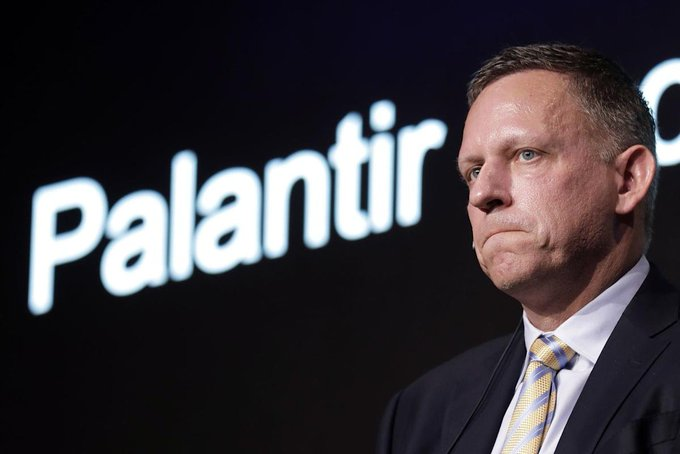
The decision to distance from Palantir also has political dimensions. The company, co-founded by prominent Trump supporter and tech billionaire Peter Thiel, has faced scrutiny regarding its role in mass surveillance and immigration enforcement in the United States . Critics have labeled its software as “discriminatory, dangerous, and highly opaque” .
Furthermore, Thiel’s connection to the German drone manufacturer Stark Defence has also raised concerns within the German Defense Ministry. While a parliamentary contract was ultimately approved, there were internal worries about Thiel potentially exerting influence on operational decisions .
📊 Key Takeaways
| Aspect | Summary |
|---|---|
| The Official | Vice Admiral Thomas Daum, Inspector of the Cyber and Information Space |
| The Policy | Rejects Palantir for national cloud project; “unimaginable” to give access to foreign industry staff |
| The Workaround | Germany will use Palantir software within NATO alliance structures, but not for its own database |
| The Alternatives | European trio: Almato (Germany), Orcrist (Germany), ChapsVision (France) |
| The Timeline | Summer 2026 testing; year-end contract award |
| The Context | Part of broader EU push for “tech sovereignty” to reduce dependency on US big tech |
Follow Reflecto News for continuous updates on European defense technology, artificial intelligence, and all breaking news from around the world.
This article is the intellectual property of Reflecto News. Redistribution without attribution is prohibited.
Questions people ask
What is China's current share of global manufacturing?
China now accounts for twenty eight percent of global manufacturing. This industrial output exceeds the combined manufacturing production of the United States, Japan, and Germany, making China the leading global industrial power according to recent reports.
Why were Andrew Tate and Tristan Tate arrested in Miami?
Andrew Tate and his brother Tristan Tate were taken into custody in Miami by the United States Marshals Service. They face thirty eight new charges in the United Kingdom, including rape and child pornography offences, and prosecutors are seeking their extradition.
What warning did Moscow issue about oil prices?
Kirill Dmitriev, the Chief Executive of the Russian Direct Investment Fund, warned that a tsunami of skyrocketing oil prices is approaching. Moscow describes this potential energy shock as a major threat to global markets.
What political shift is projected for Benjamin Netanyahu's coalition?
Political polls project that Prime Minister Benjamin Netanyahu's coalition is on track to lose its majority in the upcoming October election. This projection indicates a potential political shift in Jerusalem.
Why did a Russian military aircraft land in Tehran?
A Russian airborne command aircraft, widely known as a doomsday plane, landed in Tehran. The arrival of the aircraft represents a high stakes show of support from Russia for Iran during a period of heightened regional tensions.
What did President Masoud Pezeshkian claim about the United States and Israel?
Iranian President Masoud Pezeshkian claimed that the United States and Israel failed in a forty eight hour plan to topple the Iranian government. He made these statements during a televised address marking two years since his inauguration.