Reflecto News is an online news platform covering major international political events, global economic developments, and security conflicts. The site provides updates on topics such as Chinese manufacturing dominance, Middle Eastern political tensions, and high profile legal arrests. Readers can access current articles organized by categories like World News, Iran, and USA.
By Reflecto News Staff
April 5, 2026
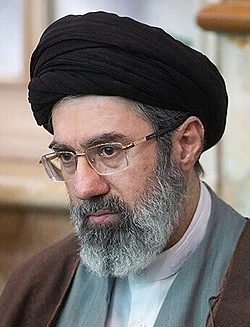
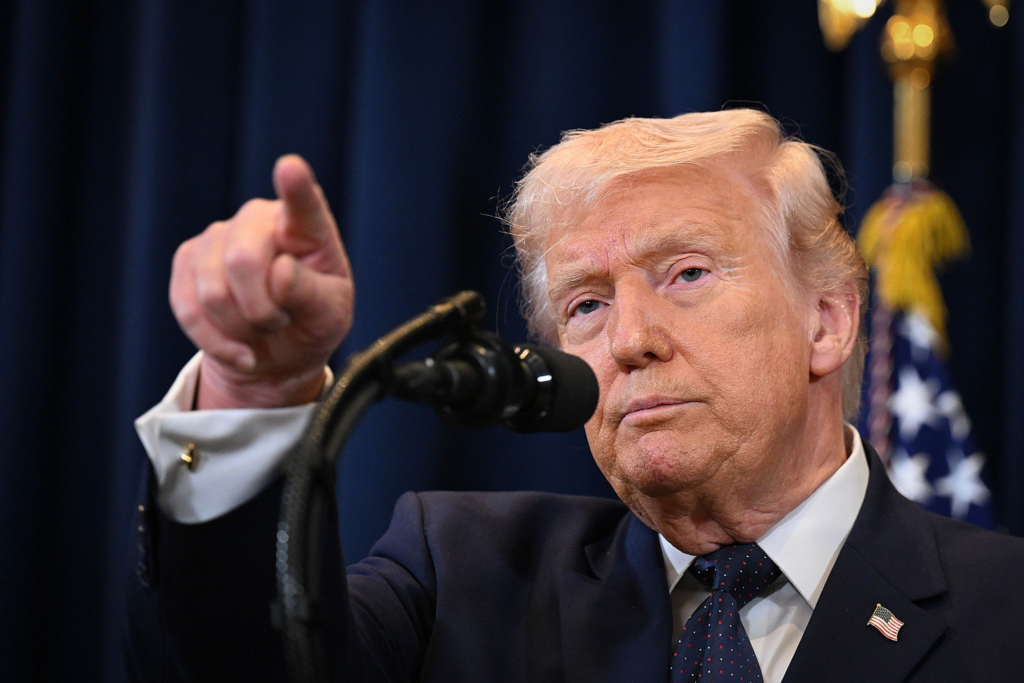
President Donald Trump has issued multiple deadlines to Iran demanding the reopening of the Strait of Hormuz or a comprehensive deal to end the ongoing war, with threats of severe military consequences—including strikes on power plants and other infrastructure—if Tehran fails to comply. These ultimatums have been repeatedly extended, reflecting a mix of diplomatic maneuvering, reported talks, and mounting pressure as the conflict enters its sixth week.
Here is a clear timeline of the key deadlines based on Trump’s public statements:
- March 21: Trump issued an initial 48-hour ultimatum, threatening to “obliterate” Iranian power plants if the strait was not fully opened without threats.
- March 23: The deadline was postponed for 5 days after Trump cited “productive conversations” with Iran.
- March 26: Trump extended the deadline by another 10 days, setting a new target for April 6 at 8:00 PM ET, while claiming talks were “going very well.”
- April 4: With the previous extension nearing its end, Trump issued a fresh 48-hour warning, stating “time is running out — 48 hours before all hell will reign down on them.”
- April 5: Trump appeared to adjust the timeline once more, postponing the immediate threat and setting a new deadline for Tuesday, April 7 at 8:00 PM ET (with some reports interpreting related posts as pointing toward power plant and bridge strikes if unmet).
These shifting timelines have been accompanied by increasingly strong rhetoric from Trump, including warnings of “all hell will reign down” and descriptions of potential strikes as “Power Plant Day and Bridge Day.”
Why the Strait of Hormuz Matters
The Strait of Hormuz is one of the world’s most critical energy chokepoints, handling approximately 20% of global oil trade and large volumes of liquefied natural gas. Since the U.S.-Israeli military campaign against Iran began in late February 2026, Iran has disrupted maritime traffic through selective restrictions, threats to vessels, and reported attacks. While Iran has granted limited safe passage to friendly nations (such as Iraq, Russia, China) and humanitarian shipments, the overall impact has caused significant delays, rerouting, and higher global energy prices.
Disruptions have contributed to elevated fuel costs in the United States and elsewhere, adding to domestic economic pressures and public debate over the war’s costs.
Iran’s Response and Diplomatic Impasse
Iran has consistently rejected U.S. proposals linking the reopening of the strait to temporary ceasefires or other concessions. According to recent reporting, including from The Wall Street Journal, Tehran views such offers as unacceptable and insists on its own conditions, such as guarantees against future aggression, war reparations, and recognition of its sovereignty over the waterway.
Iranian officials, including Foreign Minister Abbas Araghchi, have warned that continued escalation could turn the entire region into “hell” for the U.S. and Israel. Tehran maintains that its core military capabilities, including missile production, remain largely intact despite sustained strikes, and it continues proxy actions through Hezbollah on Israel’s northern border.
Ongoing Military Context
The deadlines come amid active operations:
- U.S. and Israeli strikes continue, causing massive explosions in northern Tehran, Isfahan, and other areas.
- The U.S. is drawing heavily on advanced precision munitions, including JASSM-ER stealth cruise missiles, with stockpiles significantly depleted (only about 425 remaining from a pre-war total of roughly 2,300).
- Repeated proximity strikes near the Bushehr Nuclear Power Plant have raised international concerns, prompting Russia to evacuate additional Rosatom staff and drawing condemnation as an “evil deed.” Iranian warnings highlight risks of radioactive fallout affecting the broader Gulf region.
- Daily war costs for the U.S. are reported to approach or exceed $2 billion, contributing to the administration’s request for a record $1.5 trillion defense budget for FY2027.
Senator Lindsey Graham has voiced strong support for Trump’s approach, warning of a “massive military operation” if Iran does not comply.
Broader Implications
The repeated extensions and renewed threats illustrate the complex interplay between military pressure, reported back-channel talks, and the need to manage escalating economic and humanitarian costs. While some extensions were framed as opportunities for diplomacy, critics argue the shifting deadlines create uncertainty and may embolden Iran to maintain its leverage over global energy flows.
International reactions include:
- Strong Russian criticism of strikes near Bushehr.
- Heightened concerns among Gulf states over energy security and potential radiological risks.
- Separate diplomatic actions, such as Argentina’s recent expulsion of Iran’s top diplomat.
The IAEA continues to urge maximum restraint to protect nuclear facilities.
As the latest deadline of April 7 at 8:00 PM ET approaches, the situation remains highly volatile. Failure to reach a breakthrough could lead to intensified strikes on Iranian infrastructure, while successful diplomacy might offer a temporary pause—but long-term resolution of the conflict and the strait’s status remains uncertain.
Reflecto News will continue monitoring developments from Washington, Tehran, and energy markets, including any new statements from President Trump, Iranian officials, or mediators. The coming days could prove pivotal for the trajectory of the war and global energy stability.
This is a developing story.
Questions people ask
What is China's current share of global manufacturing?
China now accounts for twenty eight percent of global manufacturing. This industrial output exceeds the combined manufacturing production of the United States, Japan, and Germany, making China the leading global industrial power according to recent reports.
Why were Andrew Tate and Tristan Tate arrested in Miami?
Andrew Tate and his brother Tristan Tate were taken into custody in Miami by the United States Marshals Service. They face thirty eight new charges in the United Kingdom, including rape and child pornography offences, and prosecutors are seeking their extradition.
What warning did Moscow issue about oil prices?
Kirill Dmitriev, the Chief Executive of the Russian Direct Investment Fund, warned that a tsunami of skyrocketing oil prices is approaching. Moscow describes this potential energy shock as a major threat to global markets.
What political shift is projected for Benjamin Netanyahu's coalition?
Political polls project that Prime Minister Benjamin Netanyahu's coalition is on track to lose its majority in the upcoming October election. This projection indicates a potential political shift in Jerusalem.
Why did a Russian military aircraft land in Tehran?
A Russian airborne command aircraft, widely known as a doomsday plane, landed in Tehran. The arrival of the aircraft represents a high stakes show of support from Russia for Iran during a period of heightened regional tensions.
What did President Masoud Pezeshkian claim about the United States and Israel?
Iranian President Masoud Pezeshkian claimed that the United States and Israel failed in a forty eight hour plan to topple the Iranian government. He made these statements during a televised address marking two years since his inauguration.