Reflecto News is an online news platform covering major international political events, global economic developments, and security conflicts. The site provides updates on topics such as Chinese manufacturing dominance, Middle Eastern political tensions, and high profile legal arrests. Readers can access current articles organized by categories like World News, Iran, and USA.
Published on Reflecto News | World News | Diplomacy & Conflict
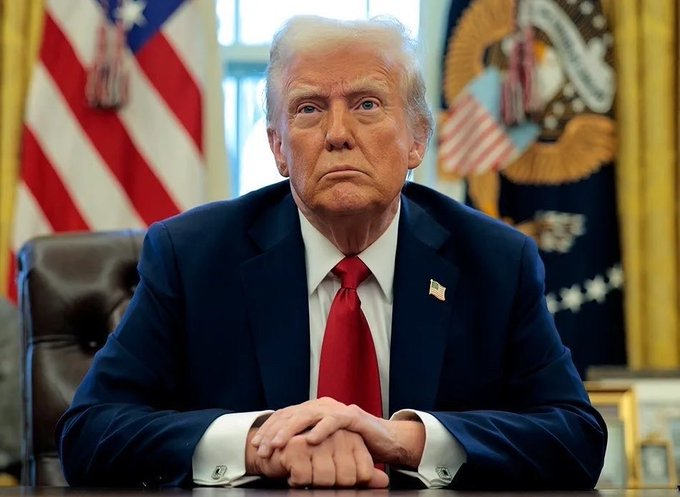
President Donald Trump declared on Sunday that the United States holds “all the cards” in negotiations with Iran, adopting his characteristically blunt assessment of the power dynamic between Washington and Tehran. Speaking to reporters as he departed the White House, Trump dismissed Iran’s leverage, asserting that “they have none.”
“We have all the cards. They have none. We’re in a very strong position, and they know it. We’ll see what happens.” — President Donald Trump
The president’s remarks come as diplomatic efforts to end the six-week war remain stalled, with Iran refusing direct talks while the US naval blockade of Iranian ports continues. Trump’s assessment of the power balance is not universally shared by his own intelligence officials, who have repeatedly warned that Iran retains significant military capabilities and the ability to disrupt global energy markets.
What Cards Does the US Hold?
Trump’s claim that the US holds “all the cards” is rooted in several factors:
Military Superiority
The United States has demonstrated overwhelming conventional military superiority throughout the conflict. US and Israeli strikes have degraded Iran’s air defenses, destroyed its naval assets, and eliminated senior military commanders. Three US carrier strike groups are currently deployed in the Middle East.
Economic Pressure
The US naval blockade has severely restricted Iran’s oil exports, its primary source of foreign revenue. The White House claims the blockade is costing Iran an estimated $500 million per day.
Degraded Iranian Military
US intelligence assesses that Iran’s military has been significantly degraded, though not destroyed. Approximately 50-70% of Iran’s ballistic missile stockpile remains intact, according to US officials.
Diplomatic Isolation
Iran has few allies willing to openly support it. Russia maintains ties but has not committed to military intervention. China continues to purchase Iranian oil but has condemned the US blockade.
What Cards Does Iran Hold?
Trump’s assertion that Iran holds “no cards” is more contestable. Iran retains several sources of leverage:
Strait of Hormuz Control
Iran has demonstrated the ability to disrupt shipping through the world’s most critical oil chokepoint. Despite the US blockade, Iranian-linked vessels continue to transit, and Tehran has announced it is collecting transit fees.
Military Capabilities
According to US intelligence, Iran retains approximately 50-70% of its ballistic missile stockpile, 60% of its missile launchers, and 60% of its IRGC naval forces.
Proxy Network
Iran retains the ability to activate its network of regional proxies — Hezbollah in Lebanon, Houthi forces in Yemen, and militias in Iraq and Syria — to strike US and allied targets.
Nuclear Program
Iran retains a stockpile of 60% enriched uranium that could be further enriched to weapons-grade level in a matter of weeks.
Economic Pain
Even as Iran suffers from the blockade, the global economy also feels the pain. Oil prices remain elevated near $100/barrel, contributing to inflationary pressures worldwide.
The Negotiating Deadlock
Trump’s “all the cards” framing is designed to project strength to both domestic and international audiences. But it also reflects the administration’s view that economic pressure will eventually force Tehran to capitulate.
Iran, however, has shown no signs of capitulation. President Masoud Pezeshkian has stated that Iran “will not accept the extremely tough US demands.” Tehran insists that the naval blockade must be lifted before direct talks can resume, a condition Washington has rejected.
What Comes Next
Trump’s declaration does not change the facts on the ground. The ceasefire holds, but no second round of peace talks has occurred. Iran has not sent a delegation to Islamabad, and US envoys have not yet departed for Pakistan.
The president may hold “all the cards” in his view, but Iran has not yet folded.
Frequently Asked Questions (FAQs)
Q1: Did Trump say the US has all the cards in Iran negotiations?
Yes. Trump told reporters, “We have all the cards. They have none,” referring to the power dynamic between Washington and Tehran.
Q2: What cards does the US hold?
The US holds military superiority, economic pressure through the naval blockade, significantly degraded Iranian military capabilities, and diplomatic leverage.
Q3: Does Iran hold any cards?
Iran retains control of the Strait of Hormuz, significant military capabilities (50-70% of ballistic missiles, 60% of naval forces), a network of regional proxies, a 60% enriched uranium stockpile, and the ability to inflict global economic pain.
Q4: Is Iran negotiating?
No. Iran has refused direct talks while the US naval blockade remains in place. Indirect communications continue through Pakistani and Omani mediators.
Q5: Is the ceasefire still in effect?
Yes. President Trump extended the ceasefire at Pakistan’s request. It now has no fixed expiration date.
Q6: What is the status of nuclear talks?
The first round of US-Iran talks in Islamabad ended without an agreement. A second round has not been scheduled.
Stay informed with Reflecto News – Your trusted source for breaking diplomatic and geopolitical intelligence. Subscribe for real-time updates on the US-Iran standoff, nuclear negotiations, and global security developments.
Questions people ask
What is China's current share of global manufacturing?
China now accounts for twenty eight percent of global manufacturing. This industrial output exceeds the combined manufacturing production of the United States, Japan, and Germany, making China the leading global industrial power according to recent reports.
Why were Andrew Tate and Tristan Tate arrested in Miami?
Andrew Tate and his brother Tristan Tate were taken into custody in Miami by the United States Marshals Service. They face thirty eight new charges in the United Kingdom, including rape and child pornography offences, and prosecutors are seeking their extradition.
What warning did Moscow issue about oil prices?
Kirill Dmitriev, the Chief Executive of the Russian Direct Investment Fund, warned that a tsunami of skyrocketing oil prices is approaching. Moscow describes this potential energy shock as a major threat to global markets.
What political shift is projected for Benjamin Netanyahu's coalition?
Political polls project that Prime Minister Benjamin Netanyahu's coalition is on track to lose its majority in the upcoming October election. This projection indicates a potential political shift in Jerusalem.
Why did a Russian military aircraft land in Tehran?
A Russian airborne command aircraft, widely known as a doomsday plane, landed in Tehran. The arrival of the aircraft represents a high stakes show of support from Russia for Iran during a period of heightened regional tensions.
What did President Masoud Pezeshkian claim about the United States and Israel?
Iranian President Masoud Pezeshkian claimed that the United States and Israel failed in a forty eight hour plan to topple the Iranian government. He made these statements during a televised address marking two years since his inauguration.