Reflecto News is an online news platform covering major international political events, global economic developments, and security conflicts. The site provides updates on topics such as Chinese manufacturing dominance, Middle Eastern political tensions, and high profile legal arrests. Readers can access current articles organized by categories like World News, Iran, and USA.
Published on Reflecto News | World News | Diplomacy & Energy Security
Iranian Foreign Minister Abbas Araghchi has landed in Oman, marking the second leg of a regional tour that has taken him from Pakistan to the sultanate. On its surface, it is another routine diplomatic stop. Below the surface, it matters more than it looks.
Oman is not just any Gulf state. It sits on the southern shore of the Strait of Hormuz, the same chokepoint where the war, the U.S. naval blockade, and the flow of global oil all collide. Oman has also served as the quiet channel between Tehran and Washington for decades, a discreet backchannel that helped produce the 2015 nuclear deal and has been reactivated multiple times since.
Now Iran is back in Muscat. And the timing is not accidental.
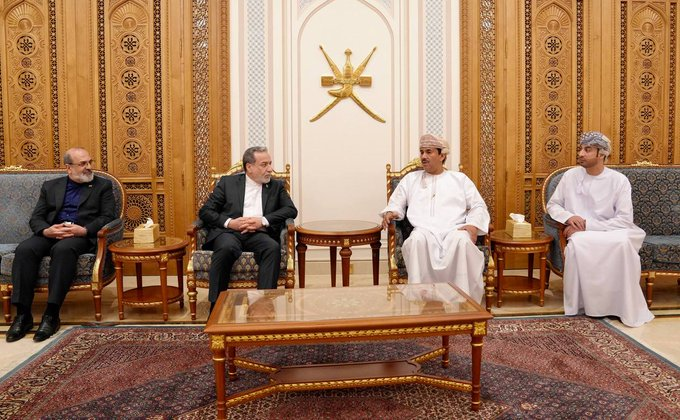
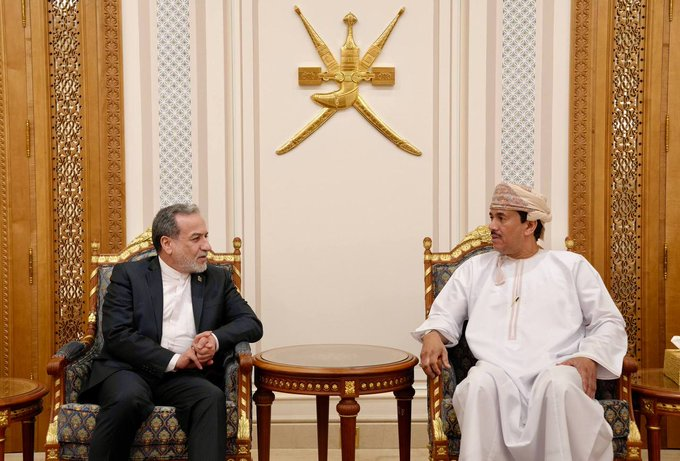
Why Oman? The Backchannel That Keeps Delivering
Oman has a long and consistent record of facilitating US-Iran communications when other channels fail. The sultanate hosted secret talks that led to the 2013 interim nuclear agreement and served as a conduit for messages during the Trump administration’s “maximum pressure” campaign.
Oman’s value as a mediator derives from several factors:
- Geographic position: Oman shares control of the Strait of Hormuz with Iran, giving it inherent stakes in maritime security
- Diplomatic credibility: Muscat maintains good relations with both Tehran and Washington
- Discretion: Oman does not advertise its mediating role
- Continuity: Omani diplomacy has remained consistent through multiple US administrations
If the Pakistan track has stalled — and it has, with US envoys remaining in Miami and Araghchi departing Islamabad without meeting American officials — Oman offers an alternative venue for indirect engagement.
The Strait of Hormuz: What Oman Brings to the Table
Oman is not merely a messenger. As a co-riparian state, it has legitimate interests in how the Strait of Hormuz is managed. Any future arrangement governing transit through the waterway — whether through a formal agreement or a set of informal understandings — would likely involve Omani participation.
Oman’s role could include:
- Co-management: Joint oversight of designated shipping lanes
- Verification: Monitoring compliance with any transit agreement
- Mediation: Resolving disputes between Iran and other Gulf states
- Assurance: Providing a neutral presence to reassure international shipping
The IRGC has declared that controlling the strait is an “inevitable strategic priority” for Iran. Oman, as Iran’s neighbor and partner in strait management, is the logical counterpart for any discussion of maritime rules.
What Comes Next: Unconfirmed Speculation
There is speculation that new arrangements around maritime control or transit rules are under discussion. This part is not confirmed. But the pattern of diplomacy suggests that Oman is being consulted on something consequential.
Possible topics include:
- Transit protocols: Formalizing the requirement for prior notification and approval
- Fee structures: Institutionalizing the transit tolls Iran has begun collecting
- Security guarantees: Omani assurances to international shipping
- US-Iran communication: A channel for de-escalation should tensions rise
None of these have been confirmed. But the fact that Araghchi is in Oman — and that his regional tour began in Pakistan (the other mediator) and will end in Russia (a potential custodian for Iran’s enriched uranium) — suggests a coordinated diplomatic strategy.
The Bigger Picture
The United States has canceled planned envoy trips to Pakistan. Iran has refused direct talks while the naval blockade remains in place. The ceasefire is extended indefinitely, but the underlying dispute over the strait is unresolved.
Into this vacuum steps Oman.
The sultanate cannot broker a deal on its own. But it can provide a setting for indirect communication when direct talks are impossible. It can test the waters for compromises that neither side can propose publicly. And it can offer a face-saving way for both Washington and Tehran to signal flexibility without appearing weak.
Araghchi’s arrival in Muscat does not guarantee a breakthrough. But it confirms that Iran is still seeking a diplomatic off-ramp — and that it believes the path to that off-ramp runs through Oman.
Frequently Asked Questions (FAQs)
Q1: Why is Oman important in US-Iran diplomacy?
Oman has served as a discreet backchannel between Tehran and Washington for years, including during the negotiations that led to the 2015 nuclear deal. It has maintained good relations with both sides.
Q2: Did Araghchi meet with US officials in Oman?
There is no confirmation of direct US-Iran talks in Oman. Oman typically serves as an intermediary, shuttling messages rather than hosting direct meetings.
Q3: What role could Oman play in managing the Strait of Hormuz?
As a co-riparian state, Oman could participate in any future arrangement governing transit through the strait, including verification, mediation, and assurance roles.
Q4: Is Oman mediating between Iran and the US?
Oman has historically played this role. Given the current diplomatic stalemate, it is likely that Oman is being consulted, though no formal mediation has been announced.
Q5: What is the status of US-Iran negotiations?
The process is stalled. Iran refuses direct talks while the US naval blockade remains in place. The White House canceled a planned envoy trip to Pakistan.
Q6: Could Oman facilitate a breakthrough?
Possibly. Oman’s track record as a mediator gives it credibility. But the fundamental obstacles — the blockade, Iran’s nuclear program, the strait — remain.
Stay informed with Reflecto News – Your trusted source for breaking diplomatic and energy security intelligence. Subscribe for real-time updates on the US-Iran peace process, Gulf diplomacy, and global energy markets.
Questions people ask
What is China's current share of global manufacturing?
China now accounts for twenty eight percent of global manufacturing. This industrial output exceeds the combined manufacturing production of the United States, Japan, and Germany, making China the leading global industrial power according to recent reports.
Why were Andrew Tate and Tristan Tate arrested in Miami?
Andrew Tate and his brother Tristan Tate were taken into custody in Miami by the United States Marshals Service. They face thirty eight new charges in the United Kingdom, including rape and child pornography offences, and prosecutors are seeking their extradition.
What warning did Moscow issue about oil prices?
Kirill Dmitriev, the Chief Executive of the Russian Direct Investment Fund, warned that a tsunami of skyrocketing oil prices is approaching. Moscow describes this potential energy shock as a major threat to global markets.
What political shift is projected for Benjamin Netanyahu's coalition?
Political polls project that Prime Minister Benjamin Netanyahu's coalition is on track to lose its majority in the upcoming October election. This projection indicates a potential political shift in Jerusalem.
Why did a Russian military aircraft land in Tehran?
A Russian airborne command aircraft, widely known as a doomsday plane, landed in Tehran. The arrival of the aircraft represents a high stakes show of support from Russia for Iran during a period of heightened regional tensions.
What did President Masoud Pezeshkian claim about the United States and Israel?
Iranian President Masoud Pezeshkian claimed that the United States and Israel failed in a forty eight hour plan to topple the Iranian government. He made these statements during a televised address marking two years since his inauguration.