Reflecto News is an online news platform covering major international political events, global economic developments, and security conflicts. The site provides updates on topics such as Chinese manufacturing dominance, Middle Eastern political tensions, and high profile legal arrests. Readers can access current articles organized by categories like World News, Iran, and USA.
Published on Reflecto News | World News | Diplomacy & Geopolitics
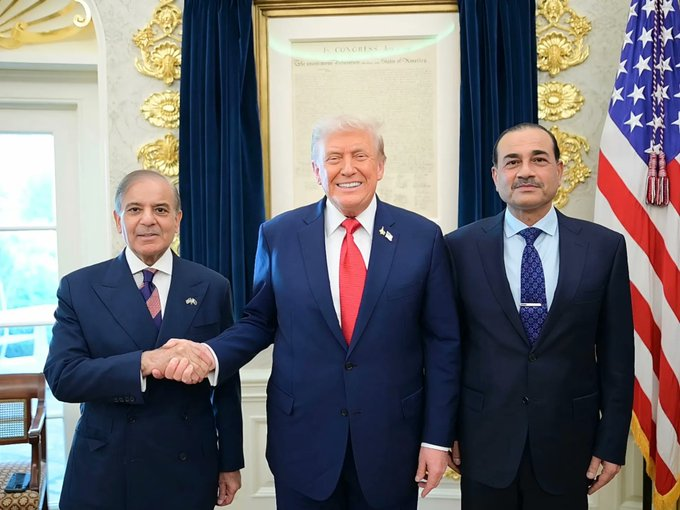
Pakistan has emerged as the central mediator in the high-stakes negotiations between the United States and Iran, leveraging a personal appeal to President Donald Trump to secure a ceasefire extension and earning his admiration as “winners,” according to a report from The Hill. The unlikely diplomatic role has transformed Islamabad’s relationship with Washington, with Trump reportedly declaring himself “impressed” by Pakistan’s military and leadership .
“Trump loves winners, and he’s impressed. Who are these Pakistanis? It’s a small country… they’ve clobbered the Indians.” — Source familiar with President Trump’s comments, via The Hill
How Pakistan Became the Mediator
Pakistan’s rise as a mediator did not happen by accident. When the initial two-week ceasefire was set to expire, Prime Minister Shehbaz Sharif and Army Chief General Asim Munir personally appealed to President Trump to extend the truce. Trump agreed, extending the ceasefire indefinitely. That direct appeal — and the results it produced — reportedly stuck with the president.
The Trump administration had previously viewed Pakistan with suspicion, particularly over Islamabad’s alleged support for the Taliban in Afghanistan. But the Iran crisis has created an opening. Pakistan has ties to both Washington and Tehran, a rare combination that makes it an indispensable intermediary. Its military has direct access to senior US officials, and its leadership has shown willingness to use that access.
‘They’ve Clobbered the Indians’
Trump’s reference to India is notable. The president has long had a complicated relationship with New Delhi, criticizing its trade practices and its role in regional politics. But his comment that Pakistan has “clobbered the Indians” suggests a broader geopolitical framing, one that may irk Indian officials who view themselves as the dominant regional power.
India-Pakistan relations remain tense, with the Kashmir dispute unresolved and cross-border skirmishes continuing. Trump’s apparent endorsement of Pakistan’s military prowess is unlikely to go unnoticed in Delhi.
Pakistan’s Strategic Position
Pakistan’s role as mediator is rooted in several factors:
- Geography: It shares a border with Iran and has deep historical ties
- Military access: General Munir has direct lines to senior US officials
- Nuclear power: Pakistan’s status lends weight to its voice
- China ties: Islamabad’s relationship with Beijing gives it leverage
- Diplomatic credibility: Pakistan has maintained ties with both sides
The relationship has already produced results. The ceasefire was brokered by Pakistan and extended at its request. The first round of direct US-Iran talks since the 1979 revolution was held in Islamabad. And Pakistan remains the designated venue for any second round, should it occur.
Trump’s ‘Loves Winners’ Doctrine
Trump’s reported comment that “Trump loves winners” captures his foreign policy philosophy. The president prefers to deal with strong leaders who project strength and deliver results. Pakistan, by successfully mediating a ceasefire between two adversarial powers, has demonstrated effectiveness.
The contrast with other US allies could not be starker. Trump has repeatedly criticized European NATO members for refusing to join the US campaign against Iran. Pakistan, which is not a treaty ally, has earned Trump’s praise by facilitating the diplomatic process.
What This Means for Pakistan-US Relations
Pakistan’s emergence as a mediator has already improved its standing in Washington. The Trump administration has not announced any major policy shifts, but the tone has changed. Officials speak of Pakistan with respect rather than suspicion.
For Pakistan, the diplomatic role also enhances its regional standing. Islamabad has long sought to be seen as a responsible stakeholder in regional security. Mediating between the US and Iran is a credential no other country can claim.
What Comes Next
Pakistan’s mediating role is not guaranteed to continue indefinitely. If the ceasefire collapses and hostilities resume, Islamabad’s influence may wane. But for now, the country has earned Trump’s admiration — and a seat at the table.
Frequently Asked Questions (FAQs)
Q1: How did Pakistan become the mediator in US-Iran talks?
Prime Minister Shehbaz Sharif and Army Chief General Asim Munir personally appealed to President Trump to extend the ceasefire. Trump agreed, and Pakistan’s role grew from there.
Q2: What did Trump say about Pakistan?
Trump reportedly said, “Who are these Pakistanis? It’s a small country… they’ve clobbered the Indians.” He also said, “Trump loves winners, and he’s impressed.”
Q3: Why is Pakistan an effective mediator?
Pakistan has ties to both Washington and Tehran, hosts no US military bases (unlike Gulf nations), and its military leadership has direct access to senior US officials.
Q4: What has Pakistan achieved as mediator?
Pakistan brokered the initial ceasefire, secured its indefinite extension, and hosted the first round of direct US-Iran talks since the 1979 revolution.
Q5: Is Pakistan a US ally?
Pakistan is not a treaty ally but has cooperated with the United States on counterterrorism and regional security issues. It is designated a “Major Non-NATO Ally” by the US government.
Q6: What does Trump’s praise of Pakistan mean for India?
Trump’s comment that Pakistan “clobbered the Indians” may irritate New Delhi, which views itself as the dominant regional power. India-Pakistan relations remain tense.
Stay informed with Reflecto News – Your trusted source for breaking diplomatic and geopolitical intelligence. Subscribe for real-time updates on the US-Iran peace process, Pakistan’s mediating role, and regional developments.
Questions people ask
What is China's current share of global manufacturing?
China now accounts for twenty eight percent of global manufacturing. This industrial output exceeds the combined manufacturing production of the United States, Japan, and Germany, making China the leading global industrial power according to recent reports.
Why were Andrew Tate and Tristan Tate arrested in Miami?
Andrew Tate and his brother Tristan Tate were taken into custody in Miami by the United States Marshals Service. They face thirty eight new charges in the United Kingdom, including rape and child pornography offences, and prosecutors are seeking their extradition.
What warning did Moscow issue about oil prices?
Kirill Dmitriev, the Chief Executive of the Russian Direct Investment Fund, warned that a tsunami of skyrocketing oil prices is approaching. Moscow describes this potential energy shock as a major threat to global markets.
What political shift is projected for Benjamin Netanyahu's coalition?
Political polls project that Prime Minister Benjamin Netanyahu's coalition is on track to lose its majority in the upcoming October election. This projection indicates a potential political shift in Jerusalem.
Why did a Russian military aircraft land in Tehran?
A Russian airborne command aircraft, widely known as a doomsday plane, landed in Tehran. The arrival of the aircraft represents a high stakes show of support from Russia for Iran during a period of heightened regional tensions.
What did President Masoud Pezeshkian claim about the United States and Israel?
Iranian President Masoud Pezeshkian claimed that the United States and Israel failed in a forty eight hour plan to topple the Iranian government. He made these statements during a televised address marking two years since his inauguration.