Reflecto News is an online news platform covering major international political events, global economic developments, and security conflicts. The site provides updates on topics such as Chinese manufacturing dominance, Middle Eastern political tensions, and high profile legal arrests. Readers can access current articles organized by categories like World News, Iran, and USA.
Published on Reflecto News | World News | Defense & Geopolitics
The Islamic Revolutionary Guard Corps (IRGC) has declared that “managing and controlling” the Strait of Hormuz is an “inevitable strategic priority” for Iran, issuing a stark warning to the United States and its allies as the fragile ceasefire enters a prolonged period of uncertainty. The statement, carried by Iranian state media on Sunday, underscores Tehran’s determination to maintain its grip on the world’s most critical oil chokepoint regardless of the outcome of ongoing diplomatic negotiations .
“Managing and controlling the Strait of Hormuz is an inevitable strategic priority for Iran. The era of free passage without Iran’s oversight is over. This is not a negotiating position. This is a strategic reality.” — IRGC Statement
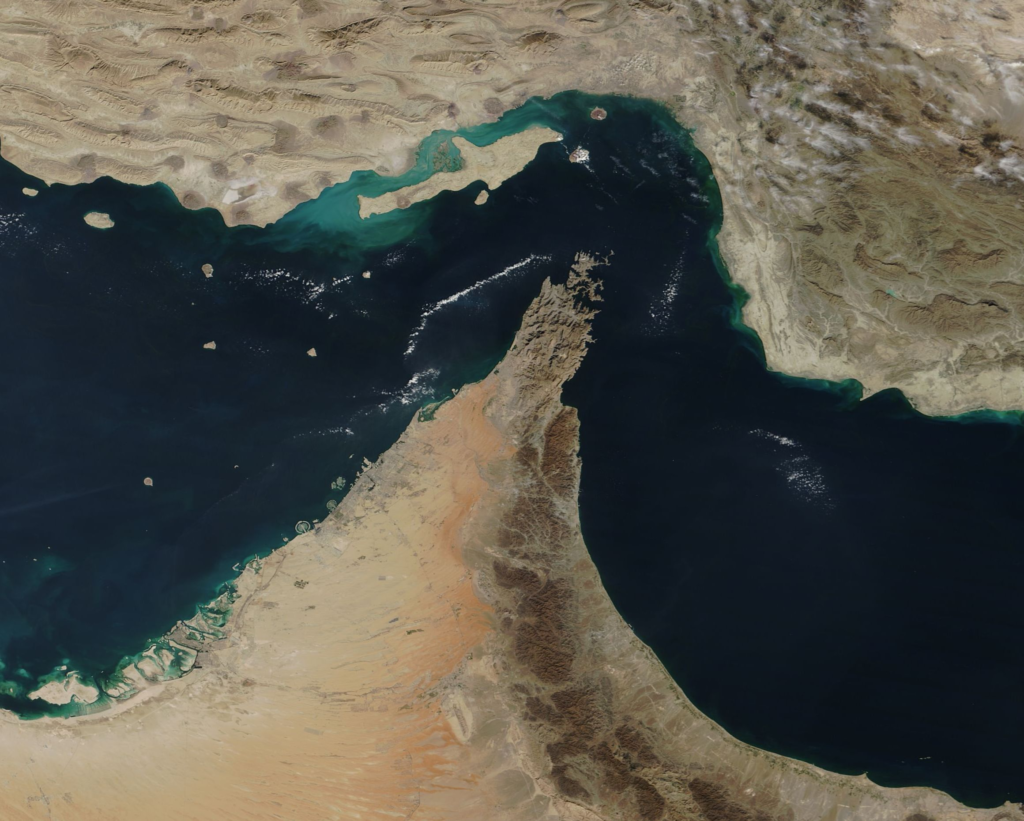
The Strait as ‘Strategic Reality’
The IRGC’s declaration that control of the strait is an “inevitable strategic priority” — not a negotiating position — is significant. It suggests that Iran is not willing to return to the pre-war status quo, even if a nuclear deal is reached with the United States.
The Strait of Hormuz is approximately 21 miles wide at its narrowest point, with shipping lanes only about 2 miles wide in each direction. This geography makes it vulnerable to asymmetric warfare, a fact the IRGC has exploited throughout the conflict.
Iran has demonstrated the ability to:
- Lay naval mines in the strait, disrupting shipping
- Seize commercial vessels
- Collect transit fees from ships willing to pay
- Launch missiles and drones from its coast
The IRGC’s statement signals that these capabilities will not be surrendered as part of any diplomatic agreement.
‘The Era of Free Passage Is Over’
The IRGC’s assertion that “the era of free passage without Iran’s oversight is over” is a direct challenge to the United States, which has insisted on freedom of navigation through the strait under international law. The US naval blockade, imposed on April 13, represents Washington’s attempt to reassert control over the waterway.
But the blockade has had mixed results. While US forces have turned back dozens of vessels, sanctioned tankers continue to transit using deceptive practices. Iran has also announced that it is collecting transit fees, effectively monetizing its control of the chokepoint.
The IRGC’s statement suggests that even if the blockade were lifted, Iran would not return to the pre-war regime.
What Iran Wants: A Permanent Regulatory Role
Iran’s strategic objective appears to be the establishment of a permanent Iranian regulatory role over the strait, including:
- Prior notification and approval for transits
- Designated routes and corridors
- Transit fees for commercial vessels
- Exclusion of naval vessels from “hostile” nations
This regulatory framework would be unprecedented in modern maritime history. The strait has long been governed by the principle of innocent passage under the United Nations Convention on the Law of the Sea (UNCLOS). Iran’s assertion of a “strategic priority” to manage and control the waterway directly contravenes that principle.
The Ceasefire Context
The IRGC’s statement comes as a fragile ceasefire between the United States and Iran holds, but with no progress toward a permanent agreement. The White House canceled a planned trip of U.S. envoys to Pakistan after Iran refused to engage in direct talks. Iranian Foreign Minister Abbas Araghchi is on a regional tour, consulting with Oman and Russia.
The ceasefire is extended indefinitely, but it pauses direct hostilities — it does not resolve the underlying dispute over the strait.
What Comes Next
The IRGC’s declaration does not make war more likely. But it makes a return to the pre-war status quo impossible. Even if a nuclear deal is reached and the naval blockade is lifted, Iran will maintain its capacity to disrupt shipping and will assert a regulatory role over the waterway.
For the United States and its allies, the IRGC’s statement presents a strategic challenge: how to ensure freedom of navigation through a chokepoint that a hostile power has declared an “inevitable strategic priority.”
Frequently Asked Questions (FAQs)
Q1: What did the IRGC say about the Strait of Hormuz?
The IRGC declared that “managing and controlling” the strait is an “inevitable strategic priority” for Iran and that “the era of free passage without Iran’s oversight is over.”
Q2: Is Iran willing to return to the pre-war status quo?
No. The IRGC’s statement suggests that Iran is not willing to return to the pre-war regime, even if a nuclear deal is reached.
Q3: What regulatory role does Iran want?
Iran appears to want prior notification and approval for transits, designated routes, transit fees, and the exclusion of naval vessels from “hostile” nations.
Q4: Does Iran’s position violate international law?
Iran’s assertion of a regulatory role over the strait would contravene the principle of innocent passage under the United Nations Convention on the Law of the Sea (UNCLOS).
Q5: Is the ceasefire still in effect?
Yes. President Trump extended the ceasefire at Pakistan’s request. It now has no fixed expiration date.
Q6: What comes next for the US-Iran standoff?
The standoff over the strait is unresolved. Even if a nuclear deal is reached, the dispute over who controls the waterway will remain.
Stay informed with Reflecto News – Your trusted source for breaking defense and geopolitical intelligence. Subscribe for real-time updates on the US-Iran standoff, the Strait of Hormuz crisis, and global energy security.
Questions people ask
What is China's current share of global manufacturing?
China now accounts for twenty eight percent of global manufacturing. This industrial output exceeds the combined manufacturing production of the United States, Japan, and Germany, making China the leading global industrial power according to recent reports.
Why were Andrew Tate and Tristan Tate arrested in Miami?
Andrew Tate and his brother Tristan Tate were taken into custody in Miami by the United States Marshals Service. They face thirty eight new charges in the United Kingdom, including rape and child pornography offences, and prosecutors are seeking their extradition.
What warning did Moscow issue about oil prices?
Kirill Dmitriev, the Chief Executive of the Russian Direct Investment Fund, warned that a tsunami of skyrocketing oil prices is approaching. Moscow describes this potential energy shock as a major threat to global markets.
What political shift is projected for Benjamin Netanyahu's coalition?
Political polls project that Prime Minister Benjamin Netanyahu's coalition is on track to lose its majority in the upcoming October election. This projection indicates a potential political shift in Jerusalem.
Why did a Russian military aircraft land in Tehran?
A Russian airborne command aircraft, widely known as a doomsday plane, landed in Tehran. The arrival of the aircraft represents a high stakes show of support from Russia for Iran during a period of heightened regional tensions.
What did President Masoud Pezeshkian claim about the United States and Israel?
Iranian President Masoud Pezeshkian claimed that the United States and Israel failed in a forty eight hour plan to topple the Iranian government. He made these statements during a televised address marking two years since his inauguration.