Reflecto News is an online news platform covering major international political events, global economic developments, and security conflicts. The site provides updates on topics such as Chinese manufacturing dominance, Middle Eastern political tensions, and high profile legal arrests. Readers can access current articles organized by categories like World News, Iran, and USA.
Labour leader steps down after less than two years in office, triggering leadership contest as Andy Burnham emerges as frontrunner to replace him
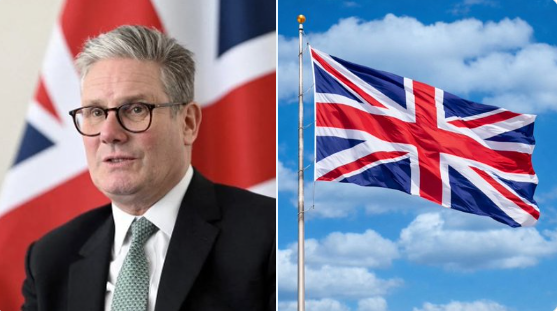
LONDON — British Prime Minister Keir Starmer officially announced his resignation on Monday, stepping down as leader of the governing Labour Party after less than two years in office .
In an emotional statement delivered outside 10 Downing Street, Starmer confirmed he had spoken with King Charles III earlier that morning to inform him of his decision .
“The question my party is asking now is whether I am best placed to lead us into the next general election,” Starmer said, his voice choking with emotion near the end of the brief statement . “I have heard the answer of my parliamentary party to that question, and I accept that answer with good grace” .
Why Starmer Resigned
Starmer led Labour to a landslide election victory in July 2024, securing 411 seats and ending 14 years of Conservative rule . However, his popularity and that of his party plummeted amid a series of controversies and policy missteps.
Key Factors Behind the Collapse
- Local Election Losses: Labour suffered heavy losses in May’s local and regional elections, losing nearly 1,500 seats
- Ministerial Resignations: Several cabinet ministers resigned, including Transport Secretary Heidi Alexander and Health Secretary Wes Streeting
- MP Revolt: More than 100 Labour MPs — a quarter of the parliamentary caucus — called for Starmer to set a departure timetable
- Plummeting Poll Numbers: By mid-June, Starmer’s approval rating had dropped to just 18%
- Policy Missteps: Controversies included his decision to change direction on three major policies in a month and the appointment of Peter Mandelson as UK ambassador to the US despite his links to Jeffrey Epstein
The Andy Burnham Factor
The immediate trigger for Starmer’s resignation was the by-election victory of Andy Burnham, the former mayor of Greater Manchester, who won the Makerfield parliamentary seat on June 19 .
Burnham, who had made clear his ambition to challenge Starmer for leadership, won almost 55% of the vote in the by-election . His victory provided the momentum and parliamentary platform needed to mount a formal leadership challenge .
What Happens Now
Starmer has set out a clear timetable for his departure :
Leadership Election Timeline
- July 9: Nominations for Labour leadership will open
- July 16: Nominations close, coinciding with Parliament’s summer recess
- September 1: A new leader will be in place before Parliament returns
Starmer will remain as caretaker prime minister until the contest is complete, ensuring “an orderly handover of power” .
The Succession Rules
Under Labour’s current rules, a candidate must secure nominations from at least 20% of Labour MPs — approximately 81 lawmakers — to trigger a formal contest . Candidates must also be nominated by affiliated trade unions .
If more than one candidate reaches the nomination threshold, Labour members and eligible affiliated supporters will vote to choose the new leader .
Who Will Replace Starmer?
Andy Burnham: The Clear Frontrunner
Andy Burnham, the 56-year-old former Mayor of Greater Manchester, is widely regarded as the most likely successor .
Key advantages:
- Strong political mandate: His resounding by-election victory (55% of the vote) has energized his leadership bid
- High popularity: A YouGov survey found 47% of Labour members named Burnham as their first choice for leader
- Strong polling against rivals: In a hypothetical contest against Wes Streeting, Burnham leads by 80% to 10%
- Former cabinet minister: Served under Gordon Brown and has twice previously stood for Labour leadership
Following Starmer’s resignation announcement, Burnham confirmed he would put himself forward for the leadership . “Keir has given huge service to our country and I want to thank him for his leadership and dedication during such a challenging period,” Burnham wrote on social media . “His decision marks the beginning of a transition and it is important that this process is conducted in an orderly and responsible way” .
Other Potential Candidates
- Wes Streeting: The former Health Secretary resigned in protest of Starmer’s leadership and has previously said he would stand in any contest. However, he has now said he will back Burnham’s bid
- Angela Rayner: The former Deputy Prime Minister is considered a possible candidate
- Ed Miliband: The Energy Secretary is also mentioned as a potential contender
A Stunning Political Reversal
Starmer’s resignation marks the seventh prime minister to leave office in the UK in a decade . The departure is particularly striking given his landslide electoral victory less than two years ago.
“Every decision I have taken has been about putting the country I love first,” Starmer said in his resignation speech, his voice cracking with emotion .
He closed his remarks by expressing his commitment to his family: “When I leave the biggest job in the country, I shall spend more time on the most important job: being the best husband I can to my fantastic wife Vic, and being the best dad I can to my beautiful children” .
US President Donald Trump weighed in on the resignation, posting on social media: “Keir Starmer will resign as Prime Minister of The United Kingdom. He failed badly on two very important subjects — IMMIGRATION AND ENERGY (OPEN NORTH SEA OIL!). I wish him well!”
Frequently Asked Questions (FAQs)
Q1: When did Keir Starmer resign?
A: Starmer announced his resignation on Monday, June 22, 2026, in a statement outside 10 Downing Street .
Q2: Will there be a general election?
A: No. A change of prime minister does not automatically trigger a general election. The new Labour leader will become prime minister and can continue governing until the end of the current parliamentary term or call an early election .
Q3: How long will Starmer remain as PM?
A: Starmer will remain as caretaker prime minister until the Labour leadership contest is complete, likely by September 1, 2026 .
Q4: Who is likely to replace Starmer?
A: Andy Burnham, the former Mayor of Greater Manchester, is the clear frontrunner. He won a by-election on June 19 and has confirmed he will stand for the leadership .
Q5: What were the main reasons for Starmer’s resignation?
A: Starmer resigned after Labour suffered heavy losses in May’s local elections, more than 100 Labour MPs called for his departure, and Andy Burnham’s by-election victory created a direct leadership challenge .
This is a developing story. Reflecto News will continue to provide updates on the UK leadership contest and the transition of power.
Questions people ask
What is China's current share of global manufacturing?
China now accounts for twenty eight percent of global manufacturing. This industrial output exceeds the combined manufacturing production of the United States, Japan, and Germany, making China the leading global industrial power according to recent reports.
Why were Andrew Tate and Tristan Tate arrested in Miami?
Andrew Tate and his brother Tristan Tate were taken into custody in Miami by the United States Marshals Service. They face thirty eight new charges in the United Kingdom, including rape and child pornography offences, and prosecutors are seeking their extradition.
What warning did Moscow issue about oil prices?
Kirill Dmitriev, the Chief Executive of the Russian Direct Investment Fund, warned that a tsunami of skyrocketing oil prices is approaching. Moscow describes this potential energy shock as a major threat to global markets.
What political shift is projected for Benjamin Netanyahu's coalition?
Political polls project that Prime Minister Benjamin Netanyahu's coalition is on track to lose its majority in the upcoming October election. This projection indicates a potential political shift in Jerusalem.
Why did a Russian military aircraft land in Tehran?
A Russian airborne command aircraft, widely known as a doomsday plane, landed in Tehran. The arrival of the aircraft represents a high stakes show of support from Russia for Iran during a period of heightened regional tensions.
What did President Masoud Pezeshkian claim about the United States and Israel?
Iranian President Masoud Pezeshkian claimed that the United States and Israel failed in a forty eight hour plan to topple the Iranian government. He made these statements during a televised address marking two years since his inauguration.