Reflecto News is an online news platform covering major international political events, global economic developments, and security conflicts. The site provides updates on topics such as Chinese manufacturing dominance, Middle Eastern political tensions, and high profile legal arrests. Readers can access current articles organized by categories like World News, Iran, and USA.
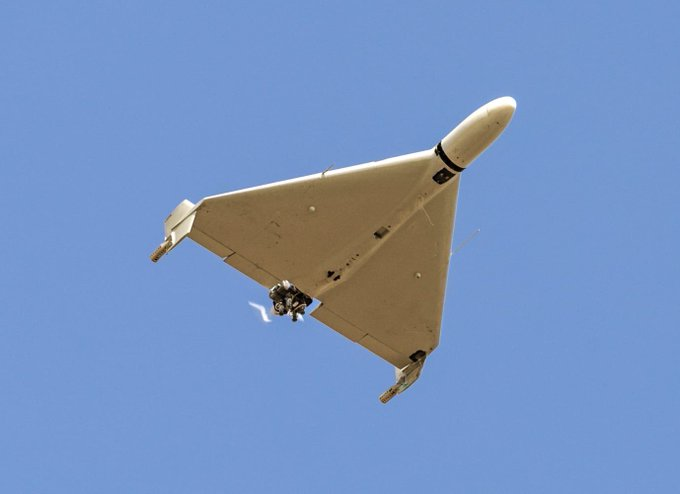
A U.S. Air Force pilot who was shot down over Iran in April reportedly described seeing a bizarre “jellyfish-like” formation of Iranian drones moments before ejecting from his F-15E Strike Eagle—a sighting that has ignited intense debate within the U.S. intelligence community and raised concerns about previously unknown Iranian drone warfare capabilities.
The Pilot’s Account: ‘Real Alien Sh*t’
According to a report from CNN, the pilot recounted the unusual encounter during a post-rescue debriefing with intelligence officials. A source familiar with the account described the scene: “Multiple drones interconnected and moving as one with smaller drones below the bigger drones like legs. Real alien sh*t”.
Another source stated that the pilot described the sky as a “minefield of drones”. It remains unclear whether the Weapons Systems Officer (WSO), who was also on board, witnessed the same formation.
If the account is accurate, it could indicate a significant advancement in Iran’s drone technology—specifically, a “one-to-many meshed networking” capability that allows a single operator to control and coordinate multiple drones simultaneously. This would represent a far more sophisticated system than simply launching multiple drones on a single mission.
How the F-15 Was Downed
The incident, which occurred on April 3, marked the first time Iran shot down a U.S. fighter jet during the conflict. While the exact cause of the loss is still under investigation, early reports suggest that the drone formation may have in some way enabled Iranian forces to target the aircraft.
The F-15E Strike Eagle, a two-seat aircraft, went down over central Iran, with the Islamic Revolutionary Guard Corps (IRGC) claiming responsibility for the shootdown. While the pilot was rescued within hours, the WSO had to evade capture in mountainous terrain for more than a day before being recovered by U.S. special forces.
Intelligence Community Divided
U.S. intelligence officials have reportedly disagreed on how to interpret the pilot’s testimony. Several factors have contributed to the skepticism:
- Concussion and Trauma: The pilot suffered a concussion during the ejection, which could have impacted his perception and memory.
- Second Shootdown: This was reportedly the second time this pilot had been shot down during the conflict; he was previously involved in a friendly-fire incident over Kuwait in March.
- High-Stress Environment: The incident occurred under extreme tension, which could have affected observation.
According to the CNN report, one official reportedly asked the pilot during the debriefing: “Are you sure you saw what you are saying you saw?”.
Unanswered Questions and Broader Implications
The puzzle is compounded by conflicting assessments. An NBC News report, citing three U.S. officials, suggested the jet “was probably struck by a Chinese-made shoulder-launched missile” and that the engagement may have been supported by a “long-range early-warning radar”.
While no public evidence confirms a direct role by the drone swarm in the shootdown, experts warn that if Iran has developed the ability to coordinate drone swarms in real-time, it would create a formidable challenge for U.S. forces in the region.
“If it can coordinate itself into a recognizable shape and maintain that shape, and if it’s got explosives on board, and if it is holding resources in reserve to attack whatever the first volley didn’t destroy – that’s a very capable approach,” drone warfare expert Emma Bates told CNN.
Alternative Explanations
Other possibilities for what the pilot observed include:
- U.S. or Israeli Technology: Some experts suggest the drones could have been secret U.S. or Israeli systems operating in the area.
- Decoys or Balloons: Iranian forces may have used decoy balloons or radar-confusing systems designed to bait fighter aircraft.
- Misidentification: The pilot could have mistaken a rare natural phenomenon or birds for a drone swarm, exacerbated by his traumatic experience.
Frequently Asked Questions (FAQs)
Q1: What exactly did the F-15 pilot report seeing over Iran?
A: The pilot told intelligence officials he saw a formation of Iranian drones that looked like a “jellyfish.” The drones appeared to be interconnected and moving in perfect synchronization, with smaller drones positioned below larger ones, resembling the tentacles of a jellyfish.
Q2: Does this mean Iran has a drone swarm capability?
A: If the pilot’s account is accurate, it would suggest Iran possesses a drone swarm capability known as “one-to-many meshed networking,” where a single operator can control multiple drones simultaneously. However, U.S. intelligence officials are divided on the reliability of the account, and no public evidence has confirmed Iran’s possession of such technology.
Q3: Was the drone formation responsible for shooting down the F-15?
A: The exact cause of the F-15’s downing is still under investigation. While early reports suggest the drone formation may have assisted in the shootdown, other sources indicate the jet may have been struck by a Chinese-made shoulder-launched missile.
Q4: Why is the intelligence community divided on this report?
A: Several factors have contributed to the skepticism. The pilot suffered a concussion from the crash, it was his second time being shot down in the same conflict (the first being a friendly-fire incident), and the incident occurred under extremely high-stress conditions.
Q5: What are the implications if Iran has this drone swarm technology?
A: If Iran has developed the ability to coordinate drone swarms in real-time, it would represent an alarming advance in its warfare capabilities. Defense experts warn that the U.S. would have to invest heavily in new countermeasures to defend against such a threat, which could “bleed the enemy’s air defense system” through swarming tactics.
Questions people ask
What is China's current share of global manufacturing?
China now accounts for twenty eight percent of global manufacturing. This industrial output exceeds the combined manufacturing production of the United States, Japan, and Germany, making China the leading global industrial power according to recent reports.
Why were Andrew Tate and Tristan Tate arrested in Miami?
Andrew Tate and his brother Tristan Tate were taken into custody in Miami by the United States Marshals Service. They face thirty eight new charges in the United Kingdom, including rape and child pornography offences, and prosecutors are seeking their extradition.
What warning did Moscow issue about oil prices?
Kirill Dmitriev, the Chief Executive of the Russian Direct Investment Fund, warned that a tsunami of skyrocketing oil prices is approaching. Moscow describes this potential energy shock as a major threat to global markets.
What political shift is projected for Benjamin Netanyahu's coalition?
Political polls project that Prime Minister Benjamin Netanyahu's coalition is on track to lose its majority in the upcoming October election. This projection indicates a potential political shift in Jerusalem.
Why did a Russian military aircraft land in Tehran?
A Russian airborne command aircraft, widely known as a doomsday plane, landed in Tehran. The arrival of the aircraft represents a high stakes show of support from Russia for Iran during a period of heightened regional tensions.
What did President Masoud Pezeshkian claim about the United States and Israel?
Iranian President Masoud Pezeshkian claimed that the United States and Israel failed in a forty eight hour plan to topple the Iranian government. He made these statements during a televised address marking two years since his inauguration.