Reflecto News is an online news platform covering major international political events, global economic developments, and security conflicts. The site provides updates on topics such as Chinese manufacturing dominance, Middle Eastern political tensions, and high profile legal arrests. Readers can access current articles organized by categories like World News, Iran, and USA.
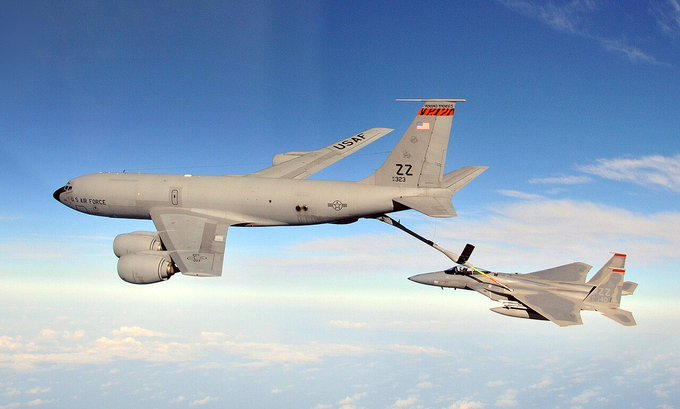
The skies over the Strait of Hormuz just got a lot busier. US Air Force KC-135 Stratotanker activity has spiked, a clear signal that American forces are prepared to maintain freedom of navigation – no matter what Iran says.
The Standoff Heats Up: Iran Says “Closed,” US Says “No”
The increased tanker activity comes as the two nations engage in a high-stakes game of “who controls the strait.” Tehran’s military command, the Khatam al-Anbiya Central Headquarters, declared the waterway closed on Saturday, citing what it called US violations of the recent ceasefire agreement tied to Israeli strikes in Lebanon .
This is a direct challenge to the fragile 14-point “Islamabad Memorandum of Understanding” signed earlier this week, which explicitly called for ending hostilities on all fronts – including Lebanon – and reopening the strait .
The US military has pushed back hard. CENTCOM spokesperson Captain Tim Hawkins firmly stated, “Iran does not control the Strait of Hormuz,” adding that traffic “continues to flow, and US forces are monitoring the situation to ensure this remains the case” . In fact, CENTCOM reported that 55 merchant ships transited the strait on Saturday alone, carrying more than 17 million barrels of oil .
With Vice President JD Vance en route to Switzerland for peace talks, the ongoing military presence—including the KC-135s—underlines Washington’s commitment to keeping the strait open, regardless of Tehran’s threats .
Why the Tankers? The Strategy Behind the Sky
The presence of KC-135 Stratotankers is a strategic necessity. These aerial refueling aircraft serve as the “gas stations in the sky” for US naval and air assets in the region.
In a hostile environment where Iran has threatened commercial shipping and declared the strait closed, the US needs to project power. The KC-135s extend the range and loiter time of fighter jets and surveillance aircraft, ensuring the US can:
- Protect Commercial Shipping: Escort tankers and cargo ships through the strategic waterway.
- Enforce Freedom of Navigation: Deter Iranian forces from attempting to interdict vessels.
- Maintain Air Superiority: Show that the US controls the skies and is ready for any scenario.
The tanker activity is a direct message: regardless of diplomatic statements, the US military capability to maintain control of the strait remains unchallenged .
The Diplomatic Chessboard: Talks in Switzerland
As the tankers fly, delegations from both nations are gathering in Switzerland for a crucial round of peace talks . The “Hormuz status” is the main topic on the table.
Iran has attempted to link the reopening of the strait to a complete cessation of Israeli operations in Lebanon, accusing Washington of failing to enforce its commitments .
President Trump has adopted a firm stance. He has stated that there will be no tolls for passage through the strait during the 60-day ceasefire window, but warned that if a final deal is not reached, the US could impose its own fees as a “guardian angel” to the region .
This is a developing story. Reflecto News will continue to provide updates on the situation in the Strait of Hormuz and the Switzerland peace talks.
Questions people ask
What is China's current share of global manufacturing?
China now accounts for twenty eight percent of global manufacturing. This industrial output exceeds the combined manufacturing production of the United States, Japan, and Germany, making China the leading global industrial power according to recent reports.
Why were Andrew Tate and Tristan Tate arrested in Miami?
Andrew Tate and his brother Tristan Tate were taken into custody in Miami by the United States Marshals Service. They face thirty eight new charges in the United Kingdom, including rape and child pornography offences, and prosecutors are seeking their extradition.
What warning did Moscow issue about oil prices?
Kirill Dmitriev, the Chief Executive of the Russian Direct Investment Fund, warned that a tsunami of skyrocketing oil prices is approaching. Moscow describes this potential energy shock as a major threat to global markets.
What political shift is projected for Benjamin Netanyahu's coalition?
Political polls project that Prime Minister Benjamin Netanyahu's coalition is on track to lose its majority in the upcoming October election. This projection indicates a potential political shift in Jerusalem.
Why did a Russian military aircraft land in Tehran?
A Russian airborne command aircraft, widely known as a doomsday plane, landed in Tehran. The arrival of the aircraft represents a high stakes show of support from Russia for Iran during a period of heightened regional tensions.
What did President Masoud Pezeshkian claim about the United States and Israel?
Iranian President Masoud Pezeshkian claimed that the United States and Israel failed in a forty eight hour plan to topple the Iranian government. He made these statements during a televised address marking two years since his inauguration.