Reflecto News is an online news platform covering major international political events, global economic developments, and security conflicts. The site provides updates on topics such as Chinese manufacturing dominance, Middle Eastern political tensions, and high profile legal arrests. Readers can access current articles organized by categories like World News, Iran, and USA.
In a speech to American farmers, the US president defended his hardline policy against Tehran, asserting that the Islamic Republic poses an immediate existential threat to Israel and the Middle East
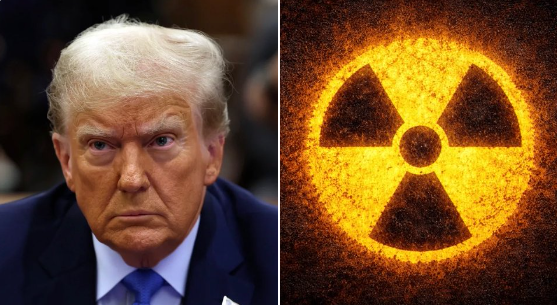
WASHINGTON — President Donald Trump has declared that Iran would have used a nuclear weapon “within the first hour” if it had ever acquired one, framing his administration’s military campaign and diplomatic pressure as the only barrier preventing a regional catastrophe.
Speaking at the Rose Garden Club Dinner with American Farmers on Thursday, Trump said preventing Iran from obtaining nuclear weapons remains a core objective of his administration’s policy toward Tehran. “Iran would have used a nuclear weapon within the first hour; now they have agreed not to acquire one,” he told the audience .
Trump’s warning was unequivocal. “If Iran had a nuclear weapon, they would have used it within the first hour, and we will not allow that to happen,” he said . He elaborated that Iran’s possession of such weapons would mean “the demise of Israel and the Middle East and endangering the world” .
A Core Justification for War
The President’s remarks underscore a central justification for the US-Israeli military campaign that began on February 28. The joint strikes on Iranian nuclear and military sites were presented by the administration as a preemptive measure to prevent Tehran from crossing the nuclear threshold. Trump has previously claimed that “if we didn’t hit within 2 weeks, they would have had a nuclear weapon” .
Trump has consistently argued that Iran’s leadership is too volatile to be trusted with atomic arms. During earlier remarks in March, he stated that Iran’s leaders are “violent and vicious people” who “would use it within one hour or one day,” threatening to “blow up the entire Middle East, not just Israel” .
The Peace Deal and Nuclear Concessions
Trump’s latest comments come amid ongoing negotiations following the signing of a memorandum of understanding (MOU) between Washington and Tehran. The President has framed the nascent deal as a decisive victory that permanently bars Iran from nuclear weapons, contrasting it with the 2015 Joint Comprehensive Plan of Action (JCPOA) which he withdrew from during his first term.
“This deal is a wall to a nuclear weapon. His (Obama) deal was a road to a nuclear weapon. My deal, they can’t have a nuclear, they get blown up,” Trump said at the G7 summit in France .
Under the new agreement, Iran has committed to an “indefinite” prohibition on procuring or developing nuclear weapons. The deal also includes provisions for the eventual removal or dilution of Iran’s enriched uranium stockpile and allows for the reopening of the critical Strait of Hormuz .
Divided Reactions
Trump’s claim that Iran would use a nuclear weapon immediately has drawn mixed reactions . Critics have pointed to the logic of mutually assured destruction (MAD) that has historically prevented nuclear use, while supporters argue it underscores the existential threat posed by a nuclear-armed Iran to Israel and regional stability .
Meanwhile, tensions remain regarding the implementation of the deal. While Trump insists Iran has “fully and completely agreed to highest level Nuclear inspections,” Iranian officials have pushed back, stating there are no plans yet for IAEA inspectors to return to bombed enrichment sites .
Despite the lingering disagreements over verification and inspections, Trump remains adamant that the U.S. has Tehran in a position of weakness, insisting the agreement ensures “Iran will never have a nuclear weapon” .
Questions people ask
What is China's current share of global manufacturing?
China now accounts for twenty eight percent of global manufacturing. This industrial output exceeds the combined manufacturing production of the United States, Japan, and Germany, making China the leading global industrial power according to recent reports.
Why were Andrew Tate and Tristan Tate arrested in Miami?
Andrew Tate and his brother Tristan Tate were taken into custody in Miami by the United States Marshals Service. They face thirty eight new charges in the United Kingdom, including rape and child pornography offences, and prosecutors are seeking their extradition.
What warning did Moscow issue about oil prices?
Kirill Dmitriev, the Chief Executive of the Russian Direct Investment Fund, warned that a tsunami of skyrocketing oil prices is approaching. Moscow describes this potential energy shock as a major threat to global markets.
What political shift is projected for Benjamin Netanyahu's coalition?
Political polls project that Prime Minister Benjamin Netanyahu's coalition is on track to lose its majority in the upcoming October election. This projection indicates a potential political shift in Jerusalem.
Why did a Russian military aircraft land in Tehran?
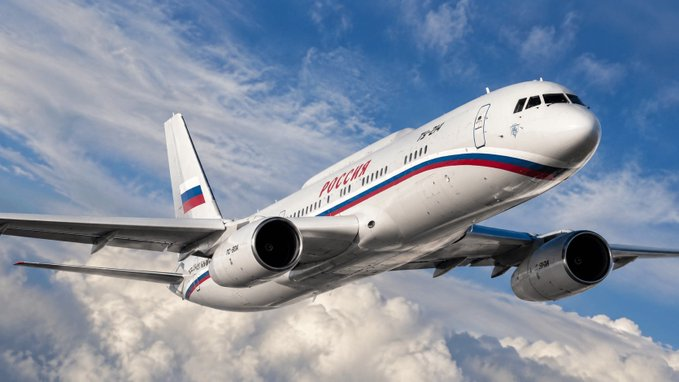
A Russian airborne command aircraft, widely known as a doomsday plane, landed in Tehran. The arrival of the aircraft represents a high stakes show of support from Russia for Iran during a period of heightened regional tensions.
What did President Masoud Pezeshkian claim about the United States and Israel?
Iranian President Masoud Pezeshkian claimed that the United States and Israel failed in a forty eight hour plan to topple the Iranian government. He made these statements during a televised address marking two years since his inauguration.