Reflecto News is an online news platform covering major international political events, global economic developments, and security conflicts. The site provides updates on topics such as Chinese manufacturing dominance, Middle Eastern political tensions, and high profile legal arrests. Readers can access current articles organized by categories like World News, Iran, and USA.
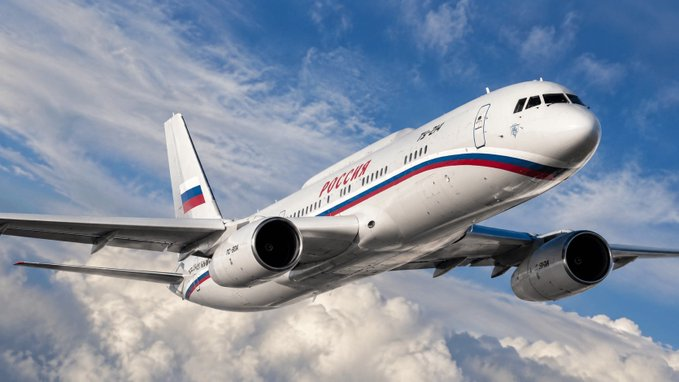
A Russian Tu-214PU airborne command aircraft, widely known as a “doomsday plane,” has landed in Tehran as the United States expands its military posture in the region and tensions over the Strait of Hormuz reach a boiling point. The arrival of the highly secretive aircraft is being interpreted as a powerful signal of deepening military coordination between Moscow and Tehran, occurring just days after Washington issued an ultimatum demanding the reopening of the strategic waterway.
‘Doomsday Plane’ Arrives at Critical Moment
Flight tracking data indicates that the Tu-214PU, operating under the call sign RSD420, departed from Moscow’s Vnukovo Airport and landed at Tehran’s Imam Khomeini International Airport. Operated by the Russian Special Flight Detachment — the unit responsible for the country’s top leadership — the aircraft is not a standard transport plane.
The Tu-214PU has been specifically modified to serve as a heavily fortified, nuclear-survivable command center. It is equipped with advanced satellite communications, anti-jamming technologies, and extensive electronic warfare capabilities, allowing senior officials to maintain command and control even in the event of a large-scale conflict or decapitation strike. This is why it is categorized by military analysts as a “doomsday plane”: its purpose is to ensure that strategic communications and command authority remain intact if ground-based headquarters are destroyed.
A Pivotal Signal of Strategic Support
The aircraft’s arrival is being interpreted as an overt strategic signal. By deploying such a sensitive asset to Tehran, Moscow is demonstrating its commitment to its strategic partnership with Iran, which was formalized in a 20-year comprehensive agreement. At a time of maximum pressure, the “doomsday plane” is a visible reminder that Iran has a powerful backer willing to engage in the highest levels of military coordination.
Military observers highlight that this is not a routine diplomatic visit. Sending a platform of this nature implies discussions at the highest state levels regarding sensitive defense coordination, joint crisis management, and the security of key leadership figures. It signals a shift from tactical cooperation toward a more institutionalized and strategic security alliance.
The deployment also creates a tangible “deterrence by entanglement” risk for the United States. The presence of a Russian aircraft carrying advanced communications equipment, potentially with Russian personnel, in Tehran raises the stakes for any potential US or Israeli strike. It threatens to introduce a direct US-Russia confrontation scenario into any military planning against Iran.
Russia’s Strategic Move
This deployment fits a broader pattern of Russian military support for Iran. Previous reports detail Russia sharing real-time satellite intelligence on US military movements in the region and supplying advanced electronic warfare systems designed to interfere with GPS and data links.
The show of support comes as the Trump administration has declared the June ceasefire “over” and given Iran a Saturday deadline to reopen the Strait of Hormuz or face “severe consequences”[citation:previous coverage]. The arrival of the Russian command aircraft in this context appears designed to complicate any US military calculus and reassure Iranian leadership that they are not alone.
Frequently Asked Questions (FAQs)
Q1: What is a “doomsday plane”?
The Tu-214PU is a specialized airborne command post, nicknamed the “doomsday plane.” Its purpose is to serve as a mobile, nuclear-survivable command center. It is equipped with highly advanced, secure communications, and anti-jamming technology, designed to maintain command and control links for political and military leaders during national emergencies, including nuclear war, by relaying strategic orders if ground-based command centers are destroyed.
Q2: Why has Russia sent this aircraft to Iran?
Russia is signaling its military and strategic commitment to Iran. Sending the Tu-214PU is a highly visible way of demonstrating support for the Iranian leadership and deterring any potential US or Israeli military action. It suggests Moscow is prepared to coordinate closely with Tehran on military and security issues, potentially offering a secure communication and command platform for Iranian leaders in the event of conflict.
Q3: What does the arrival of this plane mean for the US-Iran standoff?
This deployment significantly complicates the US-Iran standoff. It introduces a “deterrence by entanglement” factor, raising the risk of a direct US-Russia confrontation in any military strike against Iran. It also demonstrates that Russia is willing to use its assets to bolster Iran’s command and control capabilities, potentially making any conflict more costly and unpredictable for the US and its allies.
Q4: Is this Russia’s first military support for Iran during this standoff?
No. Reports indicate that Russia has been providing intelligence support, including sharing satellite data on US military positions, and has delivered advanced electronic warfare systems to Iran. The arrival of the Tu-214PU represents a further escalation of this support, moving from technical assistance to high-level strategic military coordination.
Questions people ask
What is China's current share of global manufacturing?
China now accounts for twenty eight percent of global manufacturing. This industrial output exceeds the combined manufacturing production of the United States, Japan, and Germany, making China the leading global industrial power according to recent reports.
Why were Andrew Tate and Tristan Tate arrested in Miami?
Andrew Tate and his brother Tristan Tate were taken into custody in Miami by the United States Marshals Service. They face thirty eight new charges in the United Kingdom, including rape and child pornography offences, and prosecutors are seeking their extradition.
What warning did Moscow issue about oil prices?
Kirill Dmitriev, the Chief Executive of the Russian Direct Investment Fund, warned that a tsunami of skyrocketing oil prices is approaching. Moscow describes this potential energy shock as a major threat to global markets.
What political shift is projected for Benjamin Netanyahu's coalition?
Political polls project that Prime Minister Benjamin Netanyahu's coalition is on track to lose its majority in the upcoming October election. This projection indicates a potential political shift in Jerusalem.
Why did a Russian military aircraft land in Tehran?
A Russian airborne command aircraft, widely known as a doomsday plane, landed in Tehran. The arrival of the aircraft represents a high stakes show of support from Russia for Iran during a period of heightened regional tensions.
What did President Masoud Pezeshkian claim about the United States and Israel?
Iranian President Masoud Pezeshkian claimed that the United States and Israel failed in a forty eight hour plan to topple the Iranian government. He made these statements during a televised address marking two years since his inauguration.