Reflecto News is an online news platform covering major international political events, global economic developments, and security conflicts. The site provides updates on topics such as Chinese manufacturing dominance, Middle Eastern political tensions, and high profile legal arrests. Readers can access current articles organized by categories like World News, Iran, and USA.
Reflecto News | Breaking News | Energy & Politics
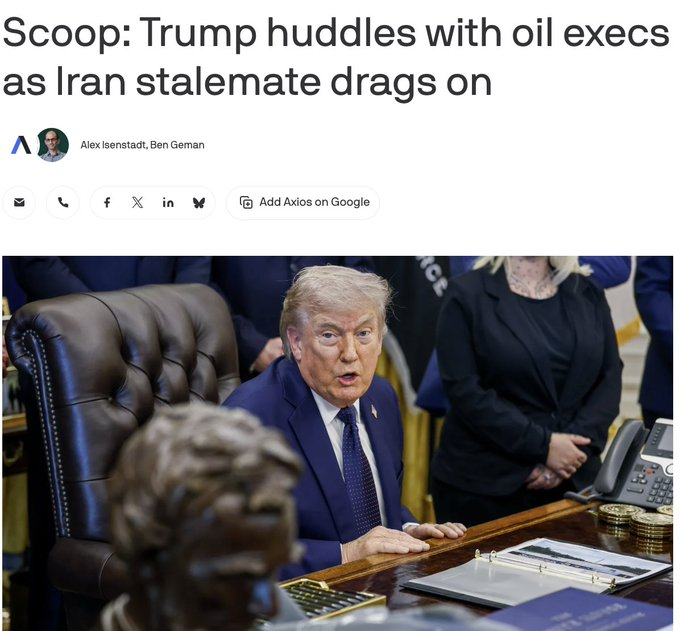
WASHINGTON — President Donald Trump convened a high-level meeting with oil and gas executives at the White House on Tuesday as the Iran war continues to disrupt global energy markets, driving U.S. gasoline prices to a four-year high of $4.18 per gallon and creating significant political pressure on the administration .
Chevron CEO Mike Wirth was among the attendees, according to a company spokesperson. White House chief of staff Susie Wiles, Treasury Secretary Scott Bessent, and envoys Steve Witkoff and Jared Kushner were also present .
“The president meets with energy executives frequently to get their feedback on domestic and international energy markets,” a White House official said .
📈 $4.18 a Gallon: The Economic Toll
The national average price for regular gasoline reached $4.18 per gallon on Tuesday, according to AAA. This marks the highest level since April 2022 — shortly after Russia’s invasion of Ukraine — and reflects a 40% surge since the U.S.-Israeli war with Iran began on February 28 .
Prices rose 1.6% on Tuesday alone, the sharpest daily increase in over a month . Diesel prices have climbed even faster, reaching $5.46 per gallon — a 45% increase since the start of the conflict .
Regional disparities remain stark:
- Texas: $3.72 per gallon
- California: $5.96 per gallon
🛑 Limited Options to Ease the Surge
Despite the urgency of rising prices, the White House faces severely constrained options to address the crisis. Experts agree that the most effective solution would be to end the conflict or secure the Strait of Hormuz, which normally handles about a quarter of the world’s seaborne oil .
Measures the administration has considered or implemented:
| Option | Status | Effectiveness |
|---|---|---|
| Jones Act waiver | Implemented | Allows more tankers between U.S. ports |
| Strategic Petroleum Reserve (SPR) release | Under consideration | Could cool markets but not offset Hormuz losses |
| Restrict U.S. oil exports | Under consideration | Short-term relief; could backfire long-term |
| Relax summer gas rules (E15 waiver) | Potentially available | Limited impact on prices |
| Gas tax holiday | Requires Congress | Unlikely given partisan divide |
“There’s not a whole lot of levers that are going to be influential at this point,” Patrick De Haan, petroleum analyst at GasBuddy, told CBS News. “The biggest thing he could do is work towards is getting and boosting confidence in the Strait of Hormuz” .
🌍 The Root Cause: A Blockaded Strait
The surge stems from the effective closure of the Strait of Hormuz, which Iran has largely sealed since the war began. Before the conflict, approximately 20% of the world’s oil supply transited the strategic waterway .
The U.S. has responded with its own naval blockade of Iranian ports, creating a dual standoff that has choked global supplies and sent crude oil prices above $100 per barrel .
What would meaningfully lower prices:
- Reopening the Strait of Hormuz to commercial shipping
- A permanent ceasefire between the U.S. and Iran
- Diplomatic resolution of the nuclear impasse
However, negotiations remain stalled. Iran has requested several days to consult Supreme Leader Ayatollah Mojtaba Khamenei before submitting a revised proposal, and President Trump has rejected Tehran’s proposed “phased” approach to ending the war.
🗳️ Political Fallout: A Midterm Headwind
The price spike creates significant political pressure for the White House and congressional Republicans ahead of the November midterm elections. Gas prices are historically a key driver of voter sentiment, and the 40% surge since the war began threatens to erode Trump’s approval ratings on economic management .
A White House official acknowledged concern over the potential political cost of higher fuel prices, though Trump has regularly met with industry leaders to “maintain a clear picture” of energy market developments .
📊 Key Takeaways
| Aspect | Summary |
|---|---|
| Current gas price | $4.18 per gallon (national average) — highest since 2022 |
| Increase since war began | ~40% |
| Meeting attendees | Chevron CEO Mike Wirth, Bessent, Wiles, Kushner, Witkoff |
| Primary cause | Effective closure of Strait of Hormuz (handles 20-25% of global oil) |
| Administration’s limited options | Jones Act waiver (done); SPR release (potential); export ban (controversial) |
| Political impact | Potential headwind for Republicans in November midterms |
| What would truly lower prices | Reopening the strait; permanent ceasefire |
Follow Reflecto News for continuous updates on the Iran war, energy markets, and all breaking news from Washington and around the world.
This article is the intellectual property of Reflecto News. Redistribution without attribution is prohibited. For syndication or media inquiries, please contact the editorial team.
Questions people ask
What is China's current share of global manufacturing?
China now accounts for twenty eight percent of global manufacturing. This industrial output exceeds the combined manufacturing production of the United States, Japan, and Germany, making China the leading global industrial power according to recent reports.
Why were Andrew Tate and Tristan Tate arrested in Miami?
Andrew Tate and his brother Tristan Tate were taken into custody in Miami by the United States Marshals Service. They face thirty eight new charges in the United Kingdom, including rape and child pornography offences, and prosecutors are seeking their extradition.
What warning did Moscow issue about oil prices?
Kirill Dmitriev, the Chief Executive of the Russian Direct Investment Fund, warned that a tsunami of skyrocketing oil prices is approaching. Moscow describes this potential energy shock as a major threat to global markets.
What political shift is projected for Benjamin Netanyahu's coalition?
Political polls project that Prime Minister Benjamin Netanyahu's coalition is on track to lose its majority in the upcoming October election. This projection indicates a potential political shift in Jerusalem.
Why did a Russian military aircraft land in Tehran?
A Russian airborne command aircraft, widely known as a doomsday plane, landed in Tehran. The arrival of the aircraft represents a high stakes show of support from Russia for Iran during a period of heightened regional tensions.
What did President Masoud Pezeshkian claim about the United States and Israel?
Iranian President Masoud Pezeshkian claimed that the United States and Israel failed in a forty eight hour plan to topple the Iranian government. He made these statements during a televised address marking two years since his inauguration.