Reflecto News is an online news platform covering major international political events, global economic developments, and security conflicts. The site provides updates on topics such as Chinese manufacturing dominance, Middle Eastern political tensions, and high profile legal arrests. Readers can access current articles organized by categories like World News, Iran, and USA.
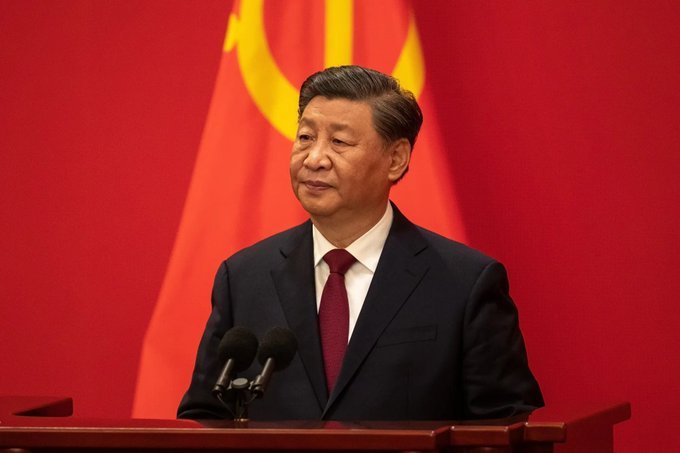
As the global technology race intensifies, newly updated educational data from Tuesday, March 31, 2026, confirms a widening disparity in the production of high-level technical talent. Recent reports from the Center for Security and Emerging Technology (CSET) and the ITIF indicate that Chinese universities are now awarding more than twice as many Science, Technology, Engineering, and Mathematics (STEM) degrees as their American counterparts.
This “talent surge” is particularly pronounced at the doctoral level, where China has successfully closed and surpassed the historical U.S. lead.
The Numbers: A Diverging Pipeline
The gap in “First University Degrees” (Bachelor’s equivalents) in Science and Engineering has reached a historic peak, driven by massive state investment in Chinese higher education.
- Undergraduate Output: China is now awarding nearly 2 million STEM bachelor’s degrees annually. In contrast, the United States awards just under 900,000, meaning China is producing roughly 2.2 graduates for every 1 American.
- The PhD Inflection Point: While the U.S. was long considered the “gold standard” for doctoral research, China surpassed the U.S. in STEM PhD production in the mid-2000s. By the 2025–2026 academic cycle, China is projected to produce approximately 77,000 STEM PhDs per year—nearly double the U.S. output of roughly 40,000.
- Growth Rates: China’s STEM PhD output has grown at an average annual rate of 9% since 2000, while U.S. growth has slowed to approximately 3%.
Quality and “Elite” Concentrations
Critics historically questioned the quality of Chinese degrees, but recent metrics suggest that the top tier of Chinese education is now globally competitive.
- Double First Class Universities: Approximately 45% of Chinese PhDs graduate from “Double First Class” (A) universities—the country’s most elite institutions.
- Research Productivity: Improvements in Chinese university rankings are being driven largely by massive increases in research productivity. In fields like Artificial Intelligence and Advanced Materials, Chinese researchers are now producing a larger share of the world’s top 1% most-cited publications.
- Government Funding: The Chinese Ministry of Education roughly doubled its spending on higher education between 2012 and 2021, focusing specifically on centrally-administered universities to ensure high standards for doctoral candidates.
The “Stay Rate” Crisis
A critical component of the U.S. talent pipeline has historically been international students—particularly from China—who stay in the U.S. after graduation. However, this safety net is fraying.
- Declining Stay Intent: Recent data suggests that the “stay rate” for Chinese doctoral students in the U.S. has declined from 90% to 76%.
- Geopolitical Push Factors: Mounting tensions, export controls, and potential legislation targeting Chinese researchers have created a “reverse brain drain,” where top-tier talent is increasingly choosing to return to China or seek opportunities in third-party hubs like Singapore or the UAE.
| Metric (2025-2026 Projections) | China | United States | Ratio |
| STEM Bachelor’s Degrees | ~2,000,000 | ~900,000 | 2.2 : 1 |
| STEM PhD Graduates | ~77,100 | ~39,900 | 1.9 : 1 |
| Avg. PhD Growth Rate (since 2000) | 9% | 3% | 3.0 : 1 |
| Elite University Share (PhDs) | 45% | ~80% (Ranked) | N/A |
Strategic Implications for 2026
With the U.S. and China locked in a “decisive phase” of military and industrial competition, the degree gap is being viewed as a national security vulnerability in Washington. Secretary of War Pete Hegseth and various think tanks have warned that an “insufficient substitute” for the Chinese student pipeline could lead to a permanent disadvantage in AI inference, quantum computing, and semiconductor design.
As the “Islamabad Track” negotiations attempt to lower the kinetic temperature of the current war, the educational “cold war” appears to be only accelerating, with Beijing betting that its sheer volume of “human capital” will eventually outweigh Western technological precision.
Questions people ask
What is China's current share of global manufacturing?
China now accounts for twenty eight percent of global manufacturing. This industrial output exceeds the combined manufacturing production of the United States, Japan, and Germany, making China the leading global industrial power according to recent reports.
Why were Andrew Tate and Tristan Tate arrested in Miami?
Andrew Tate and his brother Tristan Tate were taken into custody in Miami by the United States Marshals Service. They face thirty eight new charges in the United Kingdom, including rape and child pornography offences, and prosecutors are seeking their extradition.
What warning did Moscow issue about oil prices?
Kirill Dmitriev, the Chief Executive of the Russian Direct Investment Fund, warned that a tsunami of skyrocketing oil prices is approaching. Moscow describes this potential energy shock as a major threat to global markets.
What political shift is projected for Benjamin Netanyahu's coalition?
Political polls project that Prime Minister Benjamin Netanyahu's coalition is on track to lose its majority in the upcoming October election. This projection indicates a potential political shift in Jerusalem.
Why did a Russian military aircraft land in Tehran?
A Russian airborne command aircraft, widely known as a doomsday plane, landed in Tehran. The arrival of the aircraft represents a high stakes show of support from Russia for Iran during a period of heightened regional tensions.
What did President Masoud Pezeshkian claim about the United States and Israel?
Iranian President Masoud Pezeshkian claimed that the United States and Israel failed in a forty eight hour plan to topple the Iranian government. He made these statements during a televised address marking two years since his inauguration.