Reflecto News is an online news platform covering major international political events, global economic developments, and security conflicts. The site provides updates on topics such as Chinese manufacturing dominance, Middle Eastern political tensions, and high profile legal arrests. Readers can access current articles organized by categories like World News, Iran, and USA.
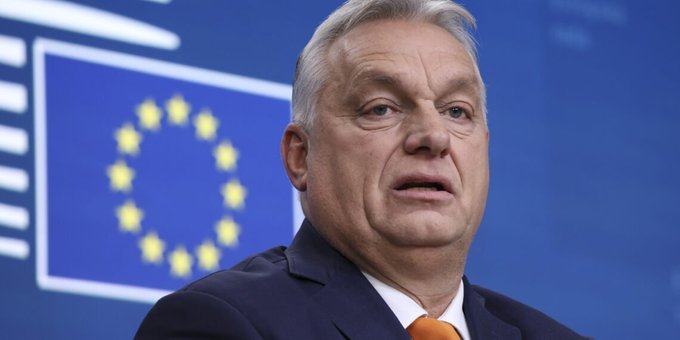
As Hungary prepares for its most consequential parliamentary election in a generation on April 12, 2026, the European Union has reportedly begun drafting contingency plans to deal with a potential fifth term for Prime Minister Viktor Orbán. According to reports from Politico and other diplomatic sources on March 30-31, 2026, the options being weighed range from procedural shifts to the “nuclear option” of suspension or expulsion.
The discussions come as recent polling shows the opposition Tisza Party, led by Péter Magyar, leading the incumbent Fidesz coalition by a narrow margin, with some surveys placing Tisza as high as 48% among decided voters.
The Five Options on the Table
EU diplomats have outlined a tiered strategy to prevent what they describe as “continued obstruction” of the bloc’s decision-making processes.
- Expanding Qualified Majority Voting (QMV): The most likely procedural shift involves extending QMV to sensitive areas like foreign policy and the long-term budget, effectively stripping individual member states (like Hungary) of their veto power.
- A “Multi-Speed” Europe: Moving toward flexible formats where “coalitions of the willing” proceed with integration or aid (such as to Ukraine) without requiring unanimous consent, leaving obstructive members on the periphery.
- Aggressive Financial Sanctions: Utilizing Article 4(3) of the EU Treaty (the principle of “sincere cooperation”) to withhold further funding. European Council President António Costa has suggested that blocking aid to Ukraine could be interpreted as a treaty violation.
- Suspension of Voting Rights: A revitalized push for Article 7 proceedings, which could strip Hungary of its vote in the European Council. However, this remains procedurally difficult as it traditionally requires unanimity from all other 27 members (with Slovakia expected to dissent).
- The “Nuclear Option” of Expulsion: For the first time, diplomats are reportedly exploring legal interpretations that could lead to a member state’s expulsion. While currently considered a “taboo” and “least realistic” scenario, its presence in high-level discussions underscores the severity of the rift.
The Election Backdrop
Prime Minister Orbán has framed the upcoming vote as a struggle for Hungarian sovereignty against “external pressure” from Brussels and Kyiv.
- The “Puppet” Narrative: In recent campaign rallies, Orbán has accused the opposition Tisza Party of being an “EU-Ukraine puppet” designed to strip Hungary of its resources and force it into the regional conflict.
- The Energy Threat: The Prime Minister has warned that an opposition victory would lead to Hungary being disconnected from affordable Russian energy, which he claims would “end the system of reduced household utility costs.”
| Election Metric | Current Status (March 31, 2026) |
| Election Date | April 12, 2026 |
| Leading Party | Tisza Party (~47-48%) |
| Incumbent | Fidesz–KDNP (~42-44%) |
| Key EU Trigger | Blocking of Ukraine aid / Rule of law violations |
| Potential EU Action | Article 7 suspension or QMV expansion |
Market and Regional Sentiment
The uncertainty surrounding Hungary’s future in the bloc has led to increased volatility in the Forint, while neighbors in the Visegrad Four (V4) remain divided. While Poland and Czechia have largely distanced themselves from Orbán’s stance on Ukraine, Slovakia under Robert Fico remains a key ally in preventing formal EU sanctions.
Questions people ask
What is China's current share of global manufacturing?
China now accounts for twenty eight percent of global manufacturing. This industrial output exceeds the combined manufacturing production of the United States, Japan, and Germany, making China the leading global industrial power according to recent reports.
Why were Andrew Tate and Tristan Tate arrested in Miami?
Andrew Tate and his brother Tristan Tate were taken into custody in Miami by the United States Marshals Service. They face thirty eight new charges in the United Kingdom, including rape and child pornography offences, and prosecutors are seeking their extradition.
What warning did Moscow issue about oil prices?
Kirill Dmitriev, the Chief Executive of the Russian Direct Investment Fund, warned that a tsunami of skyrocketing oil prices is approaching. Moscow describes this potential energy shock as a major threat to global markets.
What political shift is projected for Benjamin Netanyahu's coalition?
Political polls project that Prime Minister Benjamin Netanyahu's coalition is on track to lose its majority in the upcoming October election. This projection indicates a potential political shift in Jerusalem.
Why did a Russian military aircraft land in Tehran?
A Russian airborne command aircraft, widely known as a doomsday plane, landed in Tehran. The arrival of the aircraft represents a high stakes show of support from Russia for Iran during a period of heightened regional tensions.
What did President Masoud Pezeshkian claim about the United States and Israel?
Iranian President Masoud Pezeshkian claimed that the United States and Israel failed in a forty eight hour plan to topple the Iranian government. He made these statements during a televised address marking two years since his inauguration.