Reflecto News is an online news platform covering major international political events, global economic developments, and security conflicts. The site provides updates on topics such as Chinese manufacturing dominance, Middle Eastern political tensions, and high profile legal arrests. Readers can access current articles organized by categories like World News, Iran, and USA.
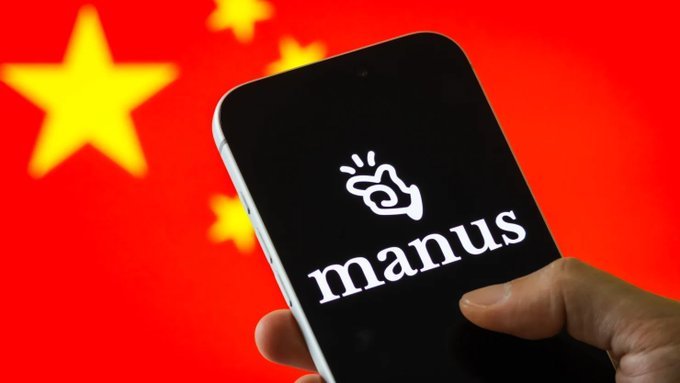
In a significant escalation of the tech war between Washington and Beijing, Chinese authorities have barred the co-founders of the AI startup Manus from leaving the country. According to reports from the Financial Times on Wednesday, March 25, 2026, the National Development and Reform Commission (NDRC) is reviewing Meta’s $2 billion acquisition of the company for potential violations of foreign investment and export control rules.
The move marks the first time Beijing has utilized exit bans on high-profile tech executives to scrutinize a multibillion-dollar acquisition by a U.S. giant.
The Exit Ban: Xiao Hong and Ji Yichao
The two executives at the center of the probe are Xiao Hong (CEO) and Ji Yichao (Chief Scientist). Both are Chinese entrepreneurs who founded Manus in China before relocating its headquarters to Singapore in 2025.
- The Summons: Earlier this month, both men were summoned to a meeting in Beijing with the NDRC to address “reporting rule breaches” related to the company’s onshore Chinese entities.
- The Restriction: Following the meeting, they were informed they are not permitted to leave China while the regulatory review is active. They remain free to travel within the country, but their return to Singapore is currently blocked.
- Legal Status: No formal charges have been filed, and no official criminal investigation has been opened. The founders are reportedly seeking international legal counsel to resolve the matter.
The “Singapore Washing” Allegation
At the heart of the dispute is a practice Chinese regulators have dubbed “Singapore washing”—where domestic startups move their legal headquarters abroad to access global capital and evade U.S. sanctions or Chinese exit restrictions.
- Technology Export Controls: China’s Ministry of Commerce is investigating whether Manus’s relocation and subsequent sale to Meta constitutes an unauthorized export of “controlled technology” (specifically autonomous AI agents).
- Strategic Value: Regulators are increasingly concerned about the trend of “selling young crops”—losing cutting-edge startups to foreign buyers before they can mature into domestic champions like DeepSeek or ByteDance.
- FDI Violations: The review is also looking into potential reporting violations after the company’s ownership structure changed following the Meta deal in December 2025.
Meta’s Strategy and Regional Fallout
Meta acquired Manus for $2 billion to bolster its newly formed Superintelligence Labs, headed by Alexandr Wang (CEO of Scale AI).
- The Team: Manus consists of a roughly 100-person team of “world-class” researchers who were meant to integrate into Meta’s expanding AI hub in Singapore.
- Official Response: A Meta spokesperson stated that the transaction “complied fully with applicable law” and that the company anticipates an “appropriate resolution.”
- “Messy” Settlement: Analysts warn that because the deal is already completed and integration has begun, a forced “unwinding” of the transaction by Chinese regulators would be extremely difficult and legally complex.
| Deal Detail | Status (March 31, 2026) |
| Acquirer | Meta Platforms Inc. |
| Target | Manus (Butterfly Effect Pte) |
| Valuation | $2 Billion |
| Primary Issue | Technology Export & FDI Reporting |
| Executive Status | Exit Ban (Xiao Hong & Ji Yichao) |
Precedent for the AI Race
The Manus case is being viewed as a landmark precedent for how Beijing will manage its domestic AI talent pool. By grounding the founders, China is signaling that even companies that relocate to “friendly” hubs like Singapore remain under the jurisdiction of Chinese security laws if their core R&D originated in the mainland.
As the “Islamabad Track” negotiations attempt to cool military tensions, the battle for “AI Sovereignty” appears to be entering a more aggressive, non-military phase where humans are as much a regulated asset as the code they write.
Questions people ask
What is China's current share of global manufacturing?
China now accounts for twenty eight percent of global manufacturing. This industrial output exceeds the combined manufacturing production of the United States, Japan, and Germany, making China the leading global industrial power according to recent reports.
Why were Andrew Tate and Tristan Tate arrested in Miami?
Andrew Tate and his brother Tristan Tate were taken into custody in Miami by the United States Marshals Service. They face thirty eight new charges in the United Kingdom, including rape and child pornography offences, and prosecutors are seeking their extradition.
What warning did Moscow issue about oil prices?
Kirill Dmitriev, the Chief Executive of the Russian Direct Investment Fund, warned that a tsunami of skyrocketing oil prices is approaching. Moscow describes this potential energy shock as a major threat to global markets.
What political shift is projected for Benjamin Netanyahu's coalition?
Political polls project that Prime Minister Benjamin Netanyahu's coalition is on track to lose its majority in the upcoming October election. This projection indicates a potential political shift in Jerusalem.
Why did a Russian military aircraft land in Tehran?
A Russian airborne command aircraft, widely known as a doomsday plane, landed in Tehran. The arrival of the aircraft represents a high stakes show of support from Russia for Iran during a period of heightened regional tensions.
What did President Masoud Pezeshkian claim about the United States and Israel?
Iranian President Masoud Pezeshkian claimed that the United States and Israel failed in a forty eight hour plan to topple the Iranian government. He made these statements during a televised address marking two years since his inauguration.