
Reflecto News is an online news platform covering major international political events, global economic developments, and security conflicts. The site provides updates on topics such as Chinese manufacturing dominance, Middle Eastern political tensions, and high profile legal arrests. Readers can access current articles organized by categories like World News, Iran, and USA.
Published on Reflecto News | World News | Diplomacy & Conflict
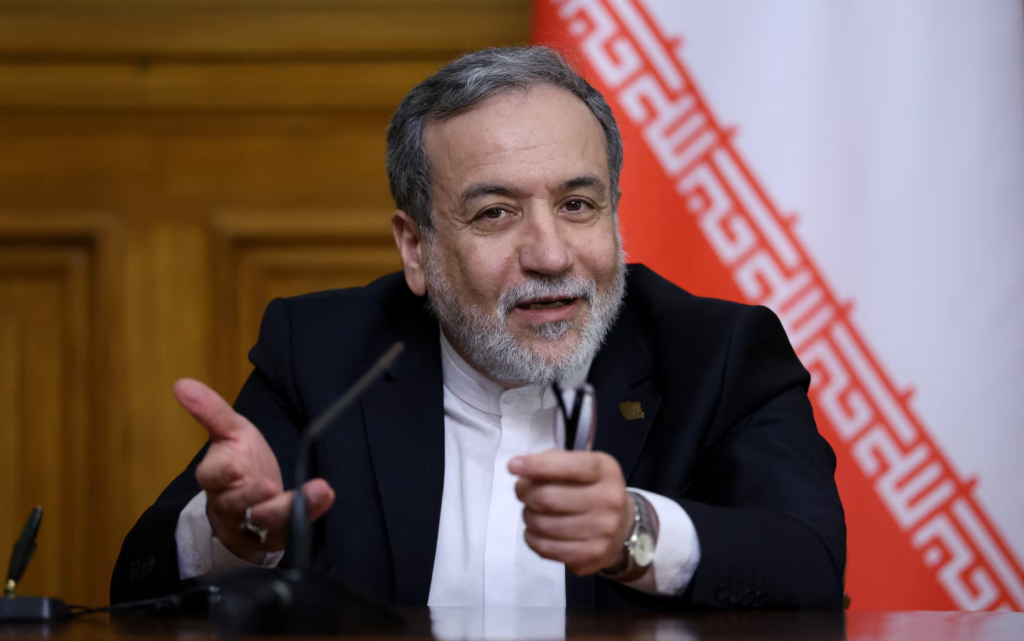
Iranian Foreign Minister Abbas Araghchi has issued an urgent appeal to the international community, calling on nations worldwide to condemn the “brutal aggression” of the United States and Israel against the Islamic Republic. The statement, delivered during a press conference in Tehran, marks Tehran’s latest diplomatic offensive as a fragile ceasefire with the US hangs in the balance .
“We call on all countries that believe in international law, justice, and peace to condemn the brutal aggression of the United States and Israel against the Iranian people. Silence is not neutrality. Silence is complicity.” — Abbas Araghchi, Iranian Foreign Minister
The Legal Framework: Citing International Law
Araghchi’s appeal rested heavily on international legal arguments, emphasizing that American and Israeli airstrikes have violated core tenets of international law even in a time of active conflict.
Key arguments raised by Araghchi:
| Violation Cited | Details |
|---|---|
| Civilian targeting | Strikes on “residential areas, hospitals, and critical infrastructure” |
| Disproportionate force | Widespread destruction of housing, energy, and water facilities |
| Economic warfare | Naval blockade of Iranian ports, seizure of commercial vessels |
| Ceasefire violation | US actions inconsistent with April 7 truce |
| UN Charter breach | “Unprovoked military aggression” under Article 2(4) |
Sources: Araghchi statement
Iran has compiled extensive documentation of what it claims are US and Israeli war crimes, including satellite imagery, witness testimony, and damage assessments, which it is presenting to UN bodies and the International Court of Justice.
The Domestic Toll: ‘At Least 1,200 Civilians Killed’
Araghchi provided updated figures on the war’s toll, emphasizing civilian casualties and infrastructure destruction .
Iran’s War Damage Claims:
| Category | Figure |
|---|---|
| Civilians killed | 1,200+ (official) |
| Homes destroyed | 101,000+ in 24 provinces |
| Total damage estimate | $270 billion (preliminary) |
| Displaced persons | Up to 3.2 million |
Sources: Iranian officials, Reuters, multiple news reports
The foreign minister particularly emphasized the impact on hospitals, water treatment plants, power grids, and fuel storage facilities across multiple provinces.
‘Silence Is Complicity’: The Appeal to the Global South
Araghchi’s statement was clearly aimed at the “Global South”—developing nations that have historically been more skeptical of US foreign policy and that have sought greater representation in international institutions .
“We are witnessing a systematic effort to cripple our nation. Those who claim to stand for the rules-based international order must prove it by their actions, not just their words.” — Abbas Araghchi
This “silence is complicity” framing is a deliberate rhetorical strategy, designed to pressure nations—particularly European countries and members of the Non-Aligned Movement—to take a public stance against the war. It also serves to isolate the United States and Israel diplomatically.
The Diplomatic Context: Ceasefire on the Brink
Araghchi’s appeal comes as the fragile two-week ceasefire brokered by Pakistan remains in effect but is increasingly fragile. President Trump recently extended the ceasefire at Pakistan’s request, but diplomatic efforts have stalled, with Iran refusing to send a delegation for a second round of talks until the US lifts its naval blockade .
Ceasefire Status:
| Element | Status |
|---|---|
| Ceasefire | Extended; no formal expiration |
| US naval blockade | Remains in place |
| Iranian delegation | Will not travel to Islamabad |
| US delegation | Vance trip suspended |
| Comprehensive talks | Frozen, awaiting Iranian proposal |
The ICJ and ICC Fronts
Iran has already initiated proceedings at the International Court of Justice (ICJ) against the United States and Israel, alleging violations of the Genocide Convention and human rights treaties . Iran has also submitted evidence to the International Criminal Court (ICC) regarding potential war crimes committed on its territory .
Araghchi’s statement noted progress on these legal fronts:
- ICJ: Preliminary hearings held; provisional measures sought
- ICC: Office of the Prosecutor reviewing submission
- UN Special Procedures: Multiple rapporteurs have issued urgent appeals
This legal strategy serves multiple purposes: it maintains international pressure on the US and Israel, provides a narrative for domestic audiences, and potentially influences the behavior of other nations.
The US Response: ‘False Narrative, Unsubstantiated Claims’
The United States has rejected Araghchi’s appeal as “propaganda” and “an attempt to divert attention from Iran’s own nuclear extortion and regional aggression” .
“The Iranian regime is the source of instability in the Middle East, not the victim. Their call for international condemnation is a cynical attempt to evade accountability for their own actions.” — State Department spokesperson
The US has also noted that Iran’s own forces have fired on commercial shipping in the Strait of Hormuz and seized foreign vessels, actions Washington says demonstrate “contempt for international law” .
What Comes Next
Araghchi’s appeal is part of a broader Iranian diplomatic and legal offensive. Key developments to watch include:
| Factor | Status | Potential Development |
|---|---|---|
| UN General Assembly | Next session | Possible resolution condemning the war |
| ICJ proceedings | Preliminary hearings | Could issue provisional measures |
| European position | Divided | Some nations may support Iran’s call |
| Non-Aligned Movement | Iran is member | Could issue statement of support |
The success of Iran’s diplomatic offensive remains unclear. While many nations have expressed concern about civilian casualties, few have explicitly condemned the United States—largely due to strategic alliances and trade relationships.
Araghchi’s appeal, however, ensures that the question of “who is the aggressor?” will remain on the international agenda for the foreseeable future.
Frequently Asked Questions (FAQs)
1. What is Iran asking other countries to do?
Iran is calling on nations to condemn what it calls the “brutal aggression” of the United States and Israel against Iran, arguing that “silence is complicity.”
2. What legal arguments is Iran making?
Iran cites violations of international law, including targeting of civilians, disproportionate force, economic warfare, and breach of the UN Charter .
3. How many civilians does Iran say have been killed?
Iran’s official figure is “at least 1,200 civilians killed” during the war, with more than 101,000 homes destroyed and up to 3.2 million people displaced .
4. Has Iran taken its case to international courts?
Yes. Iran has initiated proceedings at the International Court of Justice (ICJ) and submitted evidence to the International Criminal Court (ICC) .
5. How has the US responded to Iran’s appeal?
The US has dismissed Iran’s claims as “false narrative” and “propaganda,” calling Iran the “source of instability in the Middle East” .
6. What is the status of the ceasefire?
The ceasefire remains in effect but is fragile. Diplomatic efforts have stalled, with Iran refusing to send a delegation until the US lifts its naval blockade .
Stay informed with Reflecto News – Your trusted source for breaking diplomatic, legal, and geopolitical intelligence. Subscribe for real-time updates on the Iran war, international law, and global security developments.
Questions people ask
What is China's current share of global manufacturing?
China now accounts for twenty eight percent of global manufacturing. This industrial output exceeds the combined manufacturing production of the United States, Japan, and Germany, making China the leading global industrial power according to recent reports.
Why were Andrew Tate and Tristan Tate arrested in Miami?
Andrew Tate and his brother Tristan Tate were taken into custody in Miami by the United States Marshals Service. They face thirty eight new charges in the United Kingdom, including rape and child pornography offences, and prosecutors are seeking their extradition.
What warning did Moscow issue about oil prices?
Kirill Dmitriev, the Chief Executive of the Russian Direct Investment Fund, warned that a tsunami of skyrocketing oil prices is approaching. Moscow describes this potential energy shock as a major threat to global markets.
What political shift is projected for Benjamin Netanyahu's coalition?
Political polls project that Prime Minister Benjamin Netanyahu's coalition is on track to lose its majority in the upcoming October election. This projection indicates a potential political shift in Jerusalem.
Why did a Russian military aircraft land in Tehran?
A Russian airborne command aircraft, widely known as a doomsday plane, landed in Tehran. The arrival of the aircraft represents a high stakes show of support from Russia for Iran during a period of heightened regional tensions.
What did President Masoud Pezeshkian claim about the United States and Israel?
Iranian President Masoud Pezeshkian claimed that the United States and Israel failed in a forty eight hour plan to topple the Iranian government. He made these statements during a televised address marking two years since his inauguration.