Reflecto News is an online news platform covering major international political events, global economic developments, and security conflicts. The site provides updates on topics such as Chinese manufacturing dominance, Middle Eastern political tensions, and high profile legal arrests. Readers can access current articles organized by categories like World News, Iran, and USA.
Reflecto News | Energy Security | Sweden & Europe
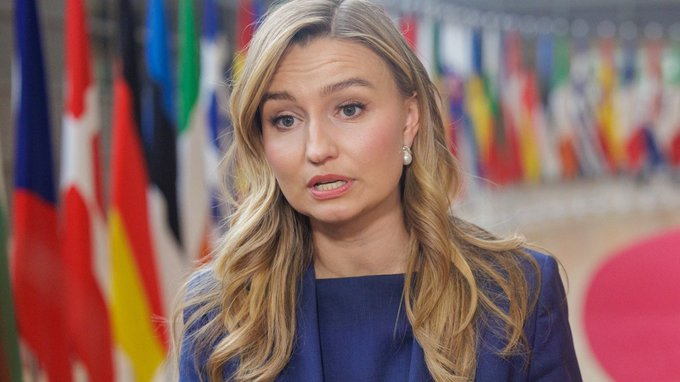
STOCKHOLM — Sweden has issued its first official “early warning” of a potential jet fuel shortage, stemming directly from the war in the Middle East and the effective closure of the strategic Strait of Hormuz, Deputy Prime Minister and Energy Minister Ebba Busch announced on Tuesday .
The warning, based on fresh assessments from the Swedish Energy Agency, signals a major escalation in the economic fallout from the conflict, which began with US-Israeli strikes on Iranian nuclear facilities on February 28, 2026.
“We are going out with an early warning for a shortage of jet fuel. This is based on the Energy Agency’s assessment.”
— Ebba Busch, Swedish Deputy Prime Minister & Energy Minister
⚠️ ‘Early Warning’ vs. ‘Rationing’
During a press conference at the government’s Rosenbad headquarters, Minister Busch was careful to urge calm while pressing the urgency of the situation.
Current stance:
- No call to avoid flying: The government is not currently advising the public to cancel summer travel plans
- No immediate rationing: Fuel rationing is considered a worst-case scenario
Preparatory Steps:
- Financial preparedness: The government advises travelers to ensure they have adequate travel insurance covering potential disruptions
- Flexible booking: Busch recommended that travelers build “a little margin” into their bookings and avoid booking trips that rely on returning at a very specific time
- Stay updated: Travelers should expect continued information campaigns as the situation evolves
“We are not calling on anyone to refrain from flying right now. But don’t book trips that require you to come home at a very specific time, if there is a short-term shortage of jet fuel and you have to come home another day.”
— Ebba Busch
⛽ Why Is This Happening? The ‘Hormuz’ Chokepoint
The root cause of this imminent threat is the near-total paralysis of the Strait of Hormuz, a narrow passage between Iran and Oman through which approximately 20% of the world’s oil and 30-40% of Europe’s jet fuel imports normally pass .
The Supply Problem:
- Europe’s Vulnerability: Before the war, Europe imported approximately 30-40% of its jet fuel, with at least half—roughly 15-20% of total supply—originating from refineries in the Middle East that ship product through the strait. The sudden cutoff has left a gap that alternative sources (US refineries, release of strategic reserves) cannot yet fully fill .
- Low Inventory: Unlike gasoline and diesel, jet fuel is often held in smaller immediate stocks, making the supply chain highly dependent on continuous deliveries that have now stopped .
- Strategic Reserves: Sweden holds a contingency stock equivalent to 90 days of net imports held by commercial operators, but industry analysts note that even these reserves are insufficient to cover a protracted summer season without deliveries. A coordinated release of strategic stocks (the “stock drawdown”) was already initiated this spring at the request of the International Energy Agency, but the situation remains critical .
The IEA Warning: The International Energy Agency (IEA) has warned that Europe has “maybe six weeks or so of jet fuel left” . Given that warning was first reported in mid-April, the timeline aligns precisely with the early summer period—coinciding with the peak of the European summer travel season .
🇪🇺 European Context: A Continent-Wide Threat
Sweden is the first country to issue a formal “early warning,” but it is far from the only nation at risk.
| Entity | Warning/Action |
|---|---|
| Sweden | First official “early warning” of potential jet fuel shortage |
| International Air Transport Association (IATA) | Warned airlines could face rationing and begin canceling flights by late May |
| EU Commission | Drafting guidelines for members to cut dependence on Middle East jet fuel and to diversify imports (e.g., increasing imports from the US). Considering a coordinated release of jet fuel stocks |
| Airports Council International (ACI) Europe | Warned fuel shortages could happen within weeks, threatening the summer tourist season |
The European summer travel season—typically spanning June through August—now faces an unprecedented threat. If the Strait of Hormuz is not fully reopened to fuel shipments, even a partial grounding of flights would cause cascading economic damage across the tourism, hospitality, and transport sectors, particularly affecting southern European economies heavily dependent on summer visitors .
🔮 What Comes Next?
Minister Busch emphasized that future developments depend entirely on how well the international market adapts to the loss of Middle Eastern supply . She did not rule out the possibility that further, more severe warnings, or even official rationing, could be issued if the war in Iran becomes more protracted or if alternative supply chains fail to materialize quickly enough .
The Swedish Energy Agency has confirmed that rationing is “a tool used as a last resort, when the assessment is that access to fuel is so limited that there is not enough for everyone” . In such a scenario, remaining supplies would be prioritized for socially critical activities—including air ambulances and essential cargo—rather than commercial passenger travel.
Sweden has only experienced fuel rationing twice in peacetime: during the Suez Crisis of 1956 and the oil crisis of 1974 .
📋 Key Takeaways
| Aspect | Summary |
|---|---|
| The Warning | Sweden issues first official “early warning” for jet fuel shortage |
| Official Source | Deputy PM & Energy Minister Ebba Busch, based on Swedish Energy Agency assessment |
| Root Cause | Closure of Strait of Hormuz due to Iran war; ~20% of global oil transits the strait |
| Potential Outcome | Worst-case: aviation fuel rationing in Sweden, likely June–August coinciding with IEA 6-week warning timeline |
| Action for Travelers | Check insurance; book flexible tickets; avoid rigid return dates; stay updated |
| Current Status | Not rationing; no call to avoid flying yet |
| European Context | IATA warns flights could face cancellations by late May; EU drafting contingency plans |
Follow Reflecto News for continuous updates on the energy crisis, the Middle East conflict, and all breaking news from around the world.
This article is the intellectual property of Reflecto News. Redistribution without attribution is prohibited. For syndication or media inquiries, please contact the editorial team.
Questions people ask
What is China's current share of global manufacturing?
China now accounts for twenty eight percent of global manufacturing. This industrial output exceeds the combined manufacturing production of the United States, Japan, and Germany, making China the leading global industrial power according to recent reports.
Why were Andrew Tate and Tristan Tate arrested in Miami?
Andrew Tate and his brother Tristan Tate were taken into custody in Miami by the United States Marshals Service. They face thirty eight new charges in the United Kingdom, including rape and child pornography offences, and prosecutors are seeking their extradition.
What warning did Moscow issue about oil prices?
Kirill Dmitriev, the Chief Executive of the Russian Direct Investment Fund, warned that a tsunami of skyrocketing oil prices is approaching. Moscow describes this potential energy shock as a major threat to global markets.
What political shift is projected for Benjamin Netanyahu's coalition?
Political polls project that Prime Minister Benjamin Netanyahu's coalition is on track to lose its majority in the upcoming October election. This projection indicates a potential political shift in Jerusalem.
Why did a Russian military aircraft land in Tehran?
A Russian airborne command aircraft, widely known as a doomsday plane, landed in Tehran. The arrival of the aircraft represents a high stakes show of support from Russia for Iran during a period of heightened regional tensions.
What did President Masoud Pezeshkian claim about the United States and Israel?
Iranian President Masoud Pezeshkian claimed that the United States and Israel failed in a forty eight hour plan to topple the Iranian government. He made these statements during a televised address marking two years since his inauguration.