Reflecto News is an online news platform covering major international political events, global economic developments, and security conflicts. The site provides updates on topics such as Chinese manufacturing dominance, Middle Eastern political tensions, and high profile legal arrests. Readers can access current articles organized by categories like World News, Iran, and USA.
Reflecto News | Breaking News | Global Energy Crisis
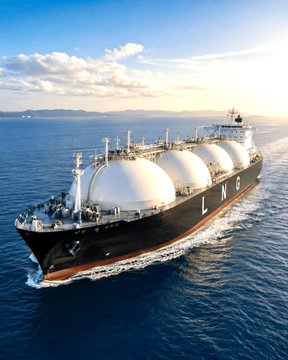
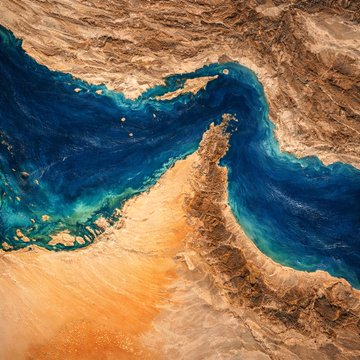
DUBAI — In the first breakthrough for global energy markets since the outbreak of the Iran war two months ago, a fully loaded liquefied natural gas (LNG) tanker has successfully transited the blockaded Strait of Hormuz and is now sailing toward China, according to ship-tracking data .
The vessel — the Mubaraz, operated by the UAE’s Abu Dhabi National Oil Company (ADNOC) — was spotted off the western coast of India on Monday, April 27, having reappeared on tracking systems after weeks of silence. Its passage marks the first confirmed movement of a loaded LNG carrier through the strategic chokepoint since the US-Israeli strikes on Iran began on February 28, 2026 .
🚢 The Crossing: A Break in the Blockade
The Mubaraz loaded its cargo of approximately 132,000–136,000 cubic meters of LNG at ADNOC’s Das Island facility in the UAE in early March. It then remained idle inside the Persian Gulf for weeks as Iran enforced a near-total shipping ban through the Strait, while the US simultaneously imposed its own naval blockade on Iranian ports .
According to vessel tracking data, the ship stopped transmitting its signal around March 31 — a common tactic to avoid detection or interception — and re-emerged on April 27 in the Indian Ocean off the west coast of India, confirming it had traversed the Hormuz passage sometime in the preceding days .
| Aspect | Details |
|---|---|
| Vessel name | Mubaraz |
| Operator | Abu Dhabi National Oil Company (ADNOC) |
| Cargo | ~132,000–136,000 cu m LNG (fully loaded) |
| Loading date/location | Early March, Das Island (UAE) |
| Signal lost | March 31 |
| Signal reappeared | April 27 |
| Current location | West of India (en route to China) |
| Estimated arrival | May 15, 2026 |
📊 Why This Matters: A Chokepoint Unblocked
The Strait of Hormuz is one of the world’s most critical energy corridors, handling roughly one-fifth of global LNG supply. Since the war began, Iran effectively closed the strait in retaliation for US-Israeli strikes, while Washington imposed its own blockade on Iranian ports. Shipping traffic through the passage fell to near zero, sending global energy prices soaring .
Before the conflict, an average of three fully loaded LNG tankers transited the strait daily. Since late February, no loaded LNG shipments had been confirmed to complete the journey — until now .
Several Qatari LNG vessels attempted the crossing in recent weeks but turned back amid escalating geopolitical tensions. Earlier in April, tracking data indicated an empty LNG tanker successfully exited the strait, but the Mubaraz is the first fully loaded cargo ship confirmed to have made the transit .
🌍 Cautious Optimism: ‘One Ship Does Not Mean a Trend’
Analysts are urging caution despite the breakthrough.
“If this tanker has indeed crossed the strait, it’s a hopeful signal for the gas market, but it’s still just an initial indication. One successful crossing doesn’t necessarily mean others will follow, as the situation remains highly volatile.”
— Alex Froley, Senior LNG Analyst, ICIS
The vessel is currently signalling a receiving terminal in China as its destination, with an estimated arrival date of May 15 .
🔗 Parallel Development: Pakistani Oil Tanker Crosses Days Earlier
The Mubaraz LNG transit follows another significant breach of the blockade. On April 17, the Pakistani-flagged oil tanker Shalamar successfully carried crude oil through the Strait of Hormuz, becoming the first oil tanker to complete the passage since the US announced its naval blockade on April 13.
The vessel, operated by Pakistan National Shipping Corporation, loaded approximately 450,000 barrels of crude oil at Das Island (UAE) and is now sailing toward Karachi .
Shipping data shows more than 20 vessels passed through the strait on April 18 — the highest recorded since the start of the war — including three LNG carriers, with cargoes heading to China and India .
🎯 Fragile Ceasefire Holds as Diplomatic Talks Stall
The successful transit comes as a fragile US-Iran ceasefire — extended indefinitely by President Trump — continues to hold on paper, even as formal peace talks remain stalled.
Iran recently submitted a written proposal to Washington via Pakistani mediators offering to reopen the Strait of Hormuz in exchange for the US lifting its naval blockade, while postponing nuclear negotiations to a later stage. President Trump has reportedly expressed dissatisfaction with the terms, insisting that Iran’s nuclear program must be addressed immediately .
A US official familiar with the negotiations told Reuters that Trump “doesn’t love the proposal,” and that a final agreement remains elusive .
🔮 What Comes Next
The Mubaraz’s successful transit offers a glimmer of hope to global energy markets, but analysts caution against reading too much into a single vessel’s passage.
- For global LNG supply: If more tankers follow, prices could stabilize; if the breakthrough is isolated, supply constraints will persist.
- For the ceasefire: The transit may indicate quiet behind-the-scenes coordination rather than a formal diplomatic breakthrough.
- For diplomacy: Iran’s closure of the strait remains its primary leverage point in negotiations with the US. Granting passage to the UAE — a US ally — could signal willingness to ease pressure.
For now, the Mubaraz continues its eastward journey toward China. Whether it will be the first of many — or an exception proving the rule — depends on the fragile state of US-Iran diplomacy in the weeks ahead.
📋 Key Takeaways
| Aspect | Summary |
|---|---|
| Vessel | Mubaraz (ADNOC-operated, UAE flag) |
| Cargo | ~132,000–136,000 cu m LNG (fully loaded) |
| Significance | First confirmed loaded LNG carrier to cross Hormuz since war began Feb 28 |
| Destination | China (est. arrival May 15) |
| Previous attempts | Several Qatari LNG vessels turned back |
| Earlier crossing | Oil tanker Shalamar (Pakistan) crossed April 17 |
| Current status | Ceasefire holds; formal talks stalled |
| Analyst caution | “One ship does not mean a trend” — ICIS analyst Alex Froley |
Follow Reflecto News for continuous updates on the Strait of Hormuz, global energy markets, and all breaking news from around the world.
This article is the intellectual property of Reflecto News. Redistribution without attribution is prohibited. For syndication or media inquiries, please contact the editorial team.
Questions people ask
What is China's current share of global manufacturing?
China now accounts for twenty eight percent of global manufacturing. This industrial output exceeds the combined manufacturing production of the United States, Japan, and Germany, making China the leading global industrial power according to recent reports.
Why were Andrew Tate and Tristan Tate arrested in Miami?
Andrew Tate and his brother Tristan Tate were taken into custody in Miami by the United States Marshals Service. They face thirty eight new charges in the United Kingdom, including rape and child pornography offences, and prosecutors are seeking their extradition.
What warning did Moscow issue about oil prices?
Kirill Dmitriev, the Chief Executive of the Russian Direct Investment Fund, warned that a tsunami of skyrocketing oil prices is approaching. Moscow describes this potential energy shock as a major threat to global markets.
What political shift is projected for Benjamin Netanyahu's coalition?
Political polls project that Prime Minister Benjamin Netanyahu's coalition is on track to lose its majority in the upcoming October election. This projection indicates a potential political shift in Jerusalem.
Why did a Russian military aircraft land in Tehran?
A Russian airborne command aircraft, widely known as a doomsday plane, landed in Tehran. The arrival of the aircraft represents a high stakes show of support from Russia for Iran during a period of heightened regional tensions.
What did President Masoud Pezeshkian claim about the United States and Israel?
Iranian President Masoud Pezeshkian claimed that the United States and Israel failed in a forty eight hour plan to topple the Iranian government. He made these statements during a televised address marking two years since his inauguration.