Reflecto News is an online news platform covering major international political events, global economic developments, and security conflicts. The site provides updates on topics such as Chinese manufacturing dominance, Middle Eastern political tensions, and high profile legal arrests. Readers can access current articles organized by categories like World News, Iran, and USA.
Reflecto News | European Security | Defense & Geopolitics
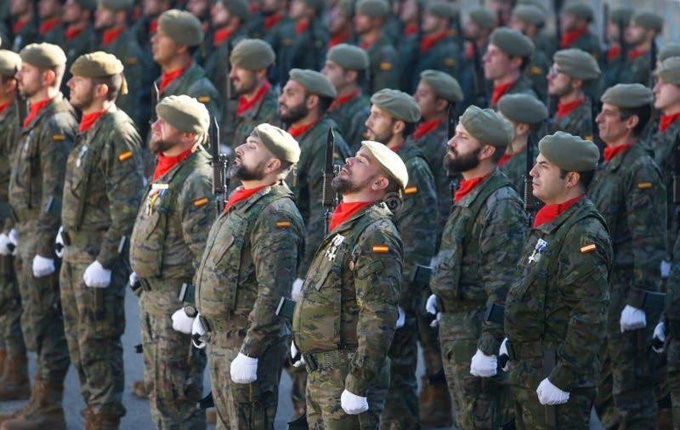
MADRID — Spain increased its military spending by 50 percent in 2025, reaching $40.2 billion (approximately €34 billion) and surpassing the NATO benchmark of 2 percent of GDP for the first time in 31 years, according to the latest report from the Stockholm International Peace Research Institute (SIPRI) .
The dramatic increase marks a historic turning point for Spanish defense policy, ending nearly three decades of military expenditure below the alliance’s target and signaling Madrid’s commitment to European security amid escalating global tensions .
📊 The Numbers: A Historic Surge
Spain’s defense investment saw its most significant single-year increase in modern history, fundamentally altering the country’s position within NATO.
| Metric | 2024 | 2025 | Change |
|---|---|---|---|
| Military spending (USD) | $26.8 billion (est.) | $40.2 billion | +50% |
| Military spending (EUR) | ~€22.7 billion | ~€34.3 billion | +51% |
| Percentage of GDP | ~1.28% | 2.1% (SIPRI) / 2.42% (Centre Delàs) | First time above 2% since 1994 |
| Global rank | Outside top 15 | 15th globally | Entered top 15 |
The SIPRI data, compiled from official budget documents and government reports, shows Spain’s expenditure reached $40.2 billion, corresponding to approximately 2.1 percent of GDP . However, the Barcelona-based Centre Delàs d’Estudis per la Pau, which includes additional military-related expenditures often distributed across other ministries, calculates the real figure at €39.5 billion (approximately $46.3 billion), equivalent to 2.42 percent of GDP .
Italian Defense Minister Guido Crosetto publicly highlighted the SIPRI findings, noting that Spain’s 50 percent increase reflects a broader European trend toward rearmament .
🎯 Key Drivers: Reaching the NATO Target
The increase fulfills a commitment Spain made to NATO following Russia’s full-scale invasion of Ukraine in 2022. NATO allies had agreed to spend at least 2 percent of GDP on defense by 2025, a target Madrid had repeatedly postponed but finally met at the end of the year .
The Industrial and Technological Plan
The primary mechanism driving the increase was the Industrial and Technological Plan for Security and Defense, a €10.5 billion investment program aimed at modernizing Spain’s military capabilities .
- 31 special modernization programs (PEMs) were fast-tracked through administrative channels
- Contracts were signed at a record pace in December 2025 to ensure funds could be disbursed and reported to NATO
- The Spanish Ministry of Defense’s extended budget reached €14.5 billion, with an additional €8.6 billion in extraordinary credits approved during the year
Concentration of Contracts
The distribution of defense funds has been heavily concentrated among three major companies, which together receive 83 percent of the total budget :
| Company | Contract Share | Key Focus Areas |
|---|---|---|
| Indra | 45% (over €13 billion through 2037) | Defense electronics, systems integration, cybersecurity |
| Airbus | Significant share | Eurofighter, A400M transport aircraft, drones |
| Navantia | Significant share | Shipbuilding (submarines, frigates, naval platforms) |
The concentration on Indra has drawn particular attention, though the Ministry of Defense now requires the company to act as a “key player in an ecosystem” that actively seeks cooperation with small and medium-sized enterprises .
🌍 The European Context: A Continent Rearming
Spain’s military surge is part of a continent-wide acceleration in defense spending driven by the ongoing war in Ukraine, the conflict with Iran, and uncertainty over long-term US security guarantees.
Selected European NATO spending increases (2025) :
| Country | Military Spending (USD) | Year-over-Year Change | Percentage of GDP |
|---|---|---|---|
| Germany | $114 billion | +24% | 3.9% |
| United Kingdom | $89 billion | -2% | Not specified |
| France | $68 billion | +1.5% | Not specified |
| Spain | $40.2 billion | +50% | 2.1% (first time since 1994) |
- Total European military spending reached $864 billion in 2025, a 14 percent increase—the largest annual rise in Central and Western Europe since the end of the Cold War
- 29 European NATO members collectively spent $559 billion, with 22 of them allocating at least 2 percent of GDP to defense
- Global military spending rose to $2.89 trillion, marking the eleventh consecutive year of growth, driven primarily by European and Asian increases
The year 2025 also saw the implementation of the NATO defense investment pledge, with member states required to submit semi-annual documents detailing their spending. NATO is expected to officially confirm Spain’s compliance in the coming weeks .
🗣️ Domestic Debate: Criticism over Social Spending
Despite the strategic rationale, the dramatic increase in defense expenditure has sparked intense domestic criticism. The Centre Delàs has warned that the budgetary reinforcement of defense comes at the direct expense of social policies .
Pere Ortega, a researcher at the Centre Delàs, stated that the Spanish government resorted to a redistribution of budgetary remainders from other departments to reinforce defense—a practice he labeled “creative accounting” .
“The increase in military spending translates into cuts in other ministries, potentially affecting social policies and public services. This will affect the well-being of all citizens.”
— Pere Ortega, Centre Delàs researcher
The organization also questioned whether the increase responds exclusively to strategic security needs, arguing that Europe is moving toward a “war economy” logic driven by geopolitical uncertainty rather than genuine defensive requirements .
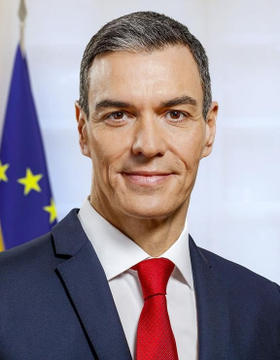
Spain’s Prime Minister Pedro Sánchez has publicly acknowledged the tension between defense spending and social welfare. In a letter to NATO Secretary-General Mark Rutte, Sánchez rejected a proposed new target of 5 percent of GDP as “unreasonable,” stating that such a commitment “would be incompatible with our welfare state and our world vision,” requiring cuts to public services and the green transition .
🔮 What Comes Next
Spain’s achievement of the 2 percent target is unlikely to be the end of the defense spending debate.
The 5 Percent Question
NATO Secretary-General Mark Rutte has proposed a new target of 5 percent of GDP, broken down as:
- 3.5 percent for core defense (tanks, warplanes, air defense, missiles, troop expansion)
- 1.5 percent for enabling infrastructure (roads, bridges, ports, airfields for rapid deployment, societal preparedness)
Poland and the Baltic states have already publicly committed to the 5 percent target, but Spain has firmly rejected the proposal. Sánchez has called for a “more flexible formula” that would either make the target optional or exempt certain countries from its application .
Long-Term Commitments
The defence ministry has approved approximately 40 military projects spanning the next 15 years, representing what the Centre Delàs describes as a “colossal” total financial commitment . The full impact of these multi-year programs on Spain’s public finances remains to be seen.
Investment Timeline
| Year | Projected Spending | Key Milestones |
|---|---|---|
| 2025 | $40.2 billion (actual) | 2% achieved; 31 modernization contracts signed |
| 2026-2027 | Under development | Multi-year program execution; NATO verification |
| 2028-2037 | €13 billion+ (Indra contracts) | Long-term industrial commitments |
For now, Spain has crossed a threshold it had avoided for three decades. Whether this represents the beginning of sustained high defense spending or a one-time surge to meet alliance requirements will depend on the evolution of the global security environment—and the political will in Madrid to sustain it .
📋 Key Takeaways
| Aspect | Summary |
|---|---|
| Spending increase | 50% ($40.2 billion) – largest single-year increase in modern history |
| GDP percentage | 2.1% (SIPRI) / 2.42% (Centre Delàs) – first time above 2% since 1994 |
| Global rank | 15th among all nations |
| Primary mechanism | €10.5 billion Industrial and Technological Plan with 31 modernization programs |
| Major beneficiaries | Indra (45%), Airbus, Navantia – together 83% of contracts |
| European context | Europe up 14% to $864 billion; 22 of 29 NATO allies reached 2% |
| Domestic criticism | Centre Delàs warns of “cuts to social welfare” and “creative accounting” |
| NATO’s new target | 5% of GDP – Spain has rejected as “unreasonable” |
Follow Reflecto News for continuous updates on European defense spending, NATO developments, and all breaking news from around the world.
This article is the intellectual property of Reflecto News. Redistribution without attribution is prohibited. For syndication or media inquiries, please contact the editorial team.
Questions people ask
What is China's current share of global manufacturing?
China now accounts for twenty eight percent of global manufacturing. This industrial output exceeds the combined manufacturing production of the United States, Japan, and Germany, making China the leading global industrial power according to recent reports.
Why were Andrew Tate and Tristan Tate arrested in Miami?
Andrew Tate and his brother Tristan Tate were taken into custody in Miami by the United States Marshals Service. They face thirty eight new charges in the United Kingdom, including rape and child pornography offences, and prosecutors are seeking their extradition.
What warning did Moscow issue about oil prices?
Kirill Dmitriev, the Chief Executive of the Russian Direct Investment Fund, warned that a tsunami of skyrocketing oil prices is approaching. Moscow describes this potential energy shock as a major threat to global markets.
What political shift is projected for Benjamin Netanyahu's coalition?
Political polls project that Prime Minister Benjamin Netanyahu's coalition is on track to lose its majority in the upcoming October election. This projection indicates a potential political shift in Jerusalem.
Why did a Russian military aircraft land in Tehran?
A Russian airborne command aircraft, widely known as a doomsday plane, landed in Tehran. The arrival of the aircraft represents a high stakes show of support from Russia for Iran during a period of heightened regional tensions.
What did President Masoud Pezeshkian claim about the United States and Israel?
Iranian President Masoud Pezeshkian claimed that the United States and Israel failed in a forty eight hour plan to topple the Iranian government. He made these statements during a televised address marking two years since his inauguration.