Reflecto News is an online news platform covering major international political events, global economic developments, and security conflicts. The site provides updates on topics such as Chinese manufacturing dominance, Middle Eastern political tensions, and high profile legal arrests. Readers can access current articles organized by categories like World News, Iran, and USA.
Published on Reflecto News | World News | Energy & Geopolitics
In a significant development amid the ongoing regional crisis, a Russian-flagged supertanker has successfully transited the Strait of Hormuz, navigating through the war-hit waterway that remains largely closed to vessels from nations Iran considers “hostile.” The passage marks a rare transit for Russian ships under the current selective access regime imposed by Tehran .
The very large crude carrier (VLCC) Arhimeda sailed westward through the strait late Thursday, ship-tracking data shows. The vessel was traveling empty, with its destination initially listed as Iran’s Kharg Island—the Islamic Republic’s primary crude export hub—before switching to “for orders,” a designation typically indicating the vessel has not received clear instructions for its next port of call .
A Russian ‘Friend’ in a Divided Waterway
The successful transit of the Arhimeda is a direct result of Tehran’s selective enforcement policy at the strait. Since late February, when the US-Israeli military campaign against Iran began, Tehran has effectively closed the waterway to nations it deems “enemies”—primarily the United States, Israel, and their allies—while allowing passage to “friendly countries” .
Iran’s Foreign Minister Abbas Araghchi confirmed in late March that the strait is “not completely closed,” but rather “only closed to enemies.” The list of nations granted passage includes Russia, China, India, Iraq, and Pakistan—countries that have maintained diplomatic or economic ties with Tehran during the conflict .
A Kremlin foreign policy adviser, Yury Ushakov, confirmed this arrangement last week, stating simply: “For us, Hormuz is open” . An Iranian diplomatic source told Izvestia that Tehran considers Russia a “friendly country” and that Russian vessels would be granted unhindered passage .
The Arhimeda: A Ship With a Sanctions History
The vessel at the center of this transit carries its own controversial history. The Arhimeda switched to the Russian flag in January, making it one of only four VLCCs sailing under Russian colors, according to the International Maritime Organization database .
Prior to reflagging, the ship was sanctioned by the US Treasury Department in July under its former name, Vizuri, for alleged links to the Iranian oil trade. Its last known cargo was a shipment of Merey crude from Venezuela last August—a few months before the US captured former President Nicolás Maduro and asserted control over the South American nation’s energy flows .
The vessel’s owner is listed as Egir Shipping Ltd., with a Seychelles address that has been linked to other US-sanctioned entities. Its technical manager is Pro Ocean Management LLC in Azerbaijan .
Global Implications: A Two-Tier Waterway
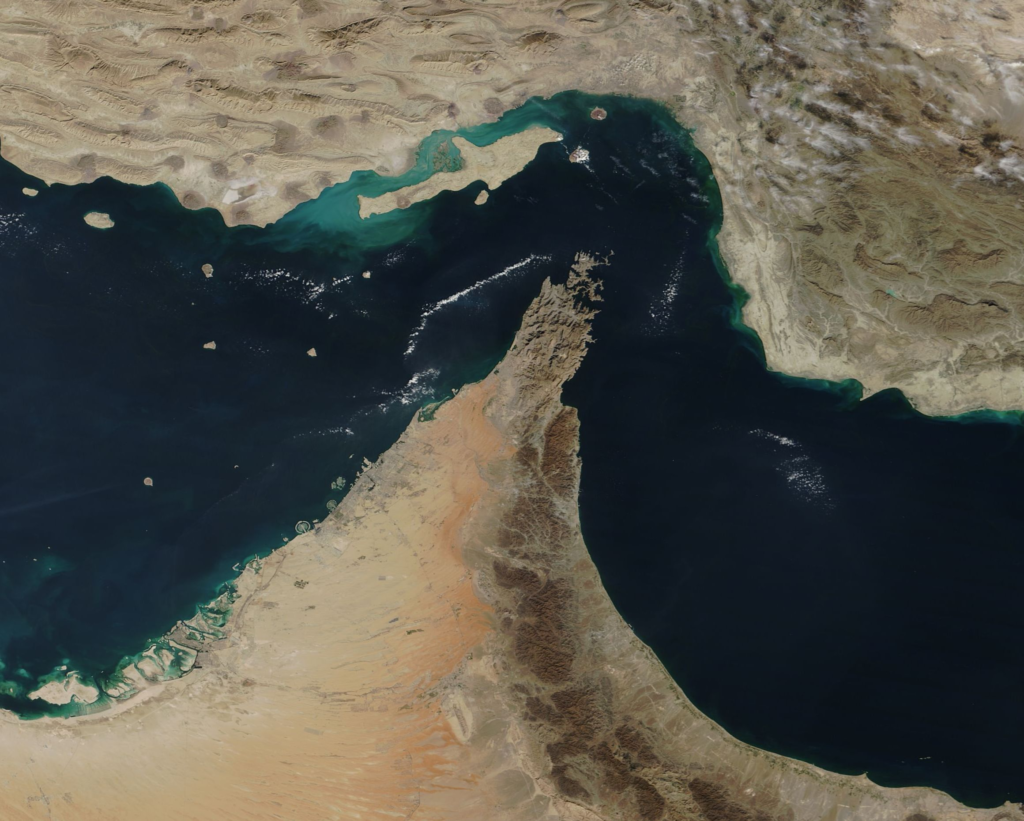
The Arhimeda’s transit underscores the emergence of a two-tier system at the Strait of Hormuz, through which approximately 20% of the world’s oil normally passes. While Russian, Chinese, and other “friendly” vessels can navigate the waterway, tankers from the US, Europe, and allied nations remain effectively blocked .
This selective access regime has sent shockwaves through global energy markets. Brent crude prices surged toward $104 per barrel in late March, with analysts warning that the disruption is “squeezing global energy supplies” . The International Energy Agency has described the situation as the most significant threat to global oil security since the 1970s.
The timing of the Arhimeda’s transit is notable, occurring just days before high-stakes US-Iran peace talks scheduled for this weekend in Islamabad, Pakistan . The talks, which will bring together US and Iranian delegations, are seen as a critical opportunity to transform the fragile two-week ceasefire into a more durable arrangement.
Iran’s Regulatory Framework: A ‘New Phase’ of Control
The Arhimeda’s transit occurred under a new regulatory framework Iran is developing for the strait. Iranian officials have confirmed they are preparing legislation that would formalize rules for passage, including a list of countries permitted to use the waterway and potentially the imposition of transit fees .
Deputy Foreign Minister Kazem Gharib-Abadi stated that the new access regime will include rules for both military and commercial vessels, with Iran and Oman assuming responsibility for ensuring safe passage. He added that it is “too early to talk about duties,” but acknowledged that the document being developed will address the responsibilities of coastal states .
The Islamic Revolutionary Guard Corps (IRGC) has been authorized to enforce the new regime, with Iranian officials warning that “aggressor countries” will be prohibited from passing through the strait .
Market Impact: Traders Watching Every Transit
The Arhimeda’s passage has drawn intense scrutiny from global energy traders, who are monitoring every transit through the strait for signals about Iran’s intentions and the durability of the ceasefire .
While most Hormuz transits have halted since the war began, Iranian crude cargoes have continued to move as usual. Kharg Island, Iran’s main export terminal, has been hit by at least two US strikes, but these reportedly targeted military facilities rather than oil infrastructure .
The selective reopening of the strait to friendly nations has created a fragmented energy market, with Russian and Chinese vessels able to access Gulf oil while Western nations scramble for alternative supplies. This dynamic has strengthened the economic and political ties between Tehran, Moscow, and Beijing—a development with long-term implications for global energy security .
Looking Ahead: Ceasefire Talks and the Strait’s Future
The Arhimeda’s successful transit comes as diplomatic efforts to end the broader conflict intensify. US and Iranian delegations are scheduled to meet in Islamabad this weekend for direct peace talks, the first such engagement since the ceasefire was announced .
However, the selective access regime at the strait remains a major point of contention. The United States has demanded the “complete, immediate, and safe opening” of the waterway to all nations, while Iran has insisted that it will maintain control and continue to distinguish between “friends” and “enemies” .
ADNOC CEO Sultan Al Jaber has condemned Iran’s approach as “economic terrorism,” warning that “when Iran holds the Strait of Hormuz hostage, every country in the world is forced to pay a ransom—a cost that will show up in everyone’s gas station bills, supermarket prices, and even medicine costs” .
As the Islamabad talks approach, the Arhimeda’s transit serves as a reminder of the new realities at the world’s most critical energy chokepoint. For Russia, the strait remains open. For much of the rest of the world, it remains a dangerous and uncertain passage—a division that may outlast any ceasefire agreement.
Frequently Asked Questions (FAQs)
1. Which Russian tanker crossed the Strait of Hormuz?
The Arhimeda, a very large crude carrier (VLCC) that switched to the Russian flag in January, successfully transited the strait westward on Thursday evening .
2. Was the tanker carrying oil?
No. The Arhimeda was traveling empty (in ballast). Its destination was initially listed as Iran’s Kharg Island before switching to “for orders” .
3. Why was the Russian tanker allowed to pass when the strait is “closed”?
Iran has implemented a selective access regime, allowing passage only to “friendly countries” including Russia, China, India, Iraq, and Pakistan. Vessels from nations Iran considers “enemies”—primarily the US and its allies—remain blocked .
4. Does this mean the Strait of Hormuz is open again?
No. The strait remains effectively closed to US, Israeli, and allied vessels. Iran has established a two-tier system: open for “friends,” closed for “enemies” .
5. Has the Arhimeda been sanctioned before?
Yes. The vessel was sanctioned by the US Treasury Department in July under its former name, Vizuri, for alleged links to the Iranian oil trade .
6. What is Iran’s official policy on Hormuz access?
Iran’s Foreign Minister Abbas Araghchi stated that the strait is “not completely closed” but “only closed to enemies.” Iran is also developing formal legislation to govern passage, potentially including transit fees .
7. When are the US-Iran peace talks scheduled?
US and Iranian delegations are scheduled to meet this weekend in Islamabad, Pakistan, for high-stakes peace talks aimed at solidifying the fragile ceasefire .
Stay informed with Reflecto News – Your trusted source for breaking energy and geopolitical intelligence. Subscribe for real-time updates on the Strait of Hormuz crisis and the Islamabad peace talks.
Questions people ask
What is China's current share of global manufacturing?
China now accounts for twenty eight percent of global manufacturing. This industrial output exceeds the combined manufacturing production of the United States, Japan, and Germany, making China the leading global industrial power according to recent reports.
Why were Andrew Tate and Tristan Tate arrested in Miami?
Andrew Tate and his brother Tristan Tate were taken into custody in Miami by the United States Marshals Service. They face thirty eight new charges in the United Kingdom, including rape and child pornography offences, and prosecutors are seeking their extradition.
What warning did Moscow issue about oil prices?
Kirill Dmitriev, the Chief Executive of the Russian Direct Investment Fund, warned that a tsunami of skyrocketing oil prices is approaching. Moscow describes this potential energy shock as a major threat to global markets.
What political shift is projected for Benjamin Netanyahu's coalition?
Political polls project that Prime Minister Benjamin Netanyahu's coalition is on track to lose its majority in the upcoming October election. This projection indicates a potential political shift in Jerusalem.
Why did a Russian military aircraft land in Tehran?
A Russian airborne command aircraft, widely known as a doomsday plane, landed in Tehran. The arrival of the aircraft represents a high stakes show of support from Russia for Iran during a period of heightened regional tensions.
What did President Masoud Pezeshkian claim about the United States and Israel?
Iranian President Masoud Pezeshkian claimed that the United States and Israel failed in a forty eight hour plan to topple the Iranian government. He made these statements during a televised address marking two years since his inauguration.