Reflecto News is an online news platform covering major international political events, global economic developments, and security conflicts. The site provides updates on topics such as Chinese manufacturing dominance, Middle Eastern political tensions, and high profile legal arrests. Readers can access current articles organized by categories like World News, Iran, and USA.
Reflecto News | Americas | Geopolitics & Trade
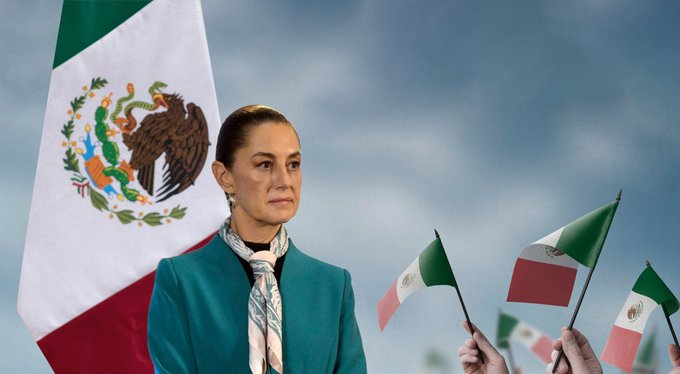
MEXICO CITY — Mexican President Claudia Sheinbaum finds herself in an increasingly precarious position: stuck between the aggressive demands of the Trump administration and a political base at home that is growing wary of her concessions to Washington.
Two months into the new U.S. administration, Sheinbaum has made significant moves to cooperate with the United States on border security, trade, and cartel crackdowns in an effort to avoid conflict and protect Mexico’s fragile economy. Yet Trump keeps demanding more—including the possibility of unilateral U.S. military action against cartels on Mexican soil. Her strategy is now under strain from all sides .
The Concessions: Extraditions and Crackdowns
Over the past year, Sheinbaum has delivered tangible results that the Trump administration has welcomed.
- Record Extraditions: In a notable shift, Mexico has transferred dozens of high-level cartel operatives to the United States. As recently as January, Mexico sent 37 alleged members of the Jalisco New Generation Cartel and Sinaloa Cartel to the U.S. at the request of the Justice Department . In total, Mexico has sent 92 individuals, including cartel leaders, over the past year.
- Targeting ‘El Mencho’: Under U.S. pressure, the Mexican military launched an offensive against Nemesio “El Mencho” Oseguera Cervantes, the leader of the Jalisco cartel, who died in a shootout with Mexican security forces. The operation was aided by U.S. intelligence .
Despite these efforts, Trump continues to criticize Mexico’s efforts, recently posting that “Mexico must step up their effort on Cartels and Drugs!”
The Flashpoint: The Chihuahua Incident
The delicate balance nearly broke in late April following the deaths of two U.S. personnel—identified by media reports as CIA agents—in a car accident in Chihuahua state.
The agents were killed while returning from an operation to dismantle clandestine drug labs. The incident has sparked a diplomatic crisis because the Mexican federal government claims it did not authorize the agents’ presence on Mexican soil for operational activities .
- Mexico’s Claims: The agents entered Mexico as “visitors, without permission to carry out paid activities.” They were reportedly collaborating with local police in Chihuahua, which is governed by the conservative opposition PAN party, bypassing federal authority .
- U.S. Backlash: The White House demanded “some sympathy from Claudia Sheinbaum” for the fallen Americans, criticizing her response as lacking empathy .
Sheinbaum attempted to de-escalate, stating publicly that she wants to “avoid conflict with the United States.” However, she is still demanding answers and clarification on whether foreign agents are operating outside of legal frameworks .
Trump’s Position: The administration has long pushed for drone strikes and the use of U.S. ground troops to attack drug cartels in Mexico. Sheinbaum remains adamantly opposed to this, insisting that security cooperation must be based on a “framework of respect” for Mexican laws and sovereignty .
The Economic “Sword of Damocles”
The major factor keeping Sheinbaum at the negotiating table is economics. Mexico sends roughly 80% of its exports to the United States.
Trump has repeatedly threatened to tear up the USMCA trade agreement and impose crippling tariffs, actions that would devastate the Mexican economy. Additionally, the threat of unilateral action in Mexico’s energy sector, following the U.S. military operation in Venezuela, looms large over Latin America .
Political Fallout at Home
Sheinbaum’s strategy of “appeasement” is creating friction with her left-leaning Morena party base, which prides itself on standing up to foreign interference.
- Criticism of Sovereignty: Opponents and even some allies argue that the extradition of cartel members—while made at the U.S.’s request—undermines national sovereignty, even if her administration declares it a “sovereign decision” .
- Internal Instability: The El Mencho operation led to violent cartel backlash, leaving American tourists stranded in hotspots like Puerto Vallarta. While Trump hailed the operation as a victory, images of burning buses and chaos hurt Sheinbaum’s image of security control .
- The Venezuela Factor: The U.S. military operation to capture Venezuela’s Nicolas Maduro sent shockwaves through the region. It served as a stark warning to Latin American leaders of what could happen if they defy Washington, forcing Sheinbaum to walk a tightrope between rhetorical defiance and practical submission .
What Comes Next
The dynamic between the two leaders remains unpredictable. Trump is reportedly considering new demands, including:
- Harsher Trade Terms: Renegotiating the USMCA to favor U.S. workers significantly more.
- Unilateral Operations: Demanding “consequences” or direct strikes against cartels if Mexico’s military does not achieve rapid results.
For Sheinbaum, the path forward is narrow. She must demonstrate to Trump that she can control the cartels to forestall U.S. intervention, while also proving to Mexicans that she is not simply a puppet of Washington.
Key Takeaways for Reflecto News Readers
| Aspect | Summary |
|---|---|
| The Strategy | Sheinbaum cooperates with U.S. demands on cartels (extraditions, raids) to avoid trade wars and military intervention . |
| The Flashpoint | Death of 2 suspected CIA agents in Mexico caused rift: U.S. demands empathy; Mexico demands respect for sovereignty . |
| Trump’s Stance | Demands Mexico “step up” efforts and keeps open option of deploying U.S. military forces against cartels . |
| Domestic Pressure | Political base upset over concessions; critics say sovereignty is being weakened to please Trump . |
| The Economic Threat | Trump’s tariffs and trade renegotiations pose an existential risk to Mexico’s economy . |
Follow Reflecto News for continuous updates on U.S.-Mexico relations, cartel diplomacy, and global security.
This article is the intellectual property of Reflecto News. Redistribution without attribution is prohibited. For syndication or media inquiries, please contact the editorial team.
Questions people ask
What is China's current share of global manufacturing?
China now accounts for twenty eight percent of global manufacturing. This industrial output exceeds the combined manufacturing production of the United States, Japan, and Germany, making China the leading global industrial power according to recent reports.
Why were Andrew Tate and Tristan Tate arrested in Miami?
Andrew Tate and his brother Tristan Tate were taken into custody in Miami by the United States Marshals Service. They face thirty eight new charges in the United Kingdom, including rape and child pornography offences, and prosecutors are seeking their extradition.
What warning did Moscow issue about oil prices?
Kirill Dmitriev, the Chief Executive of the Russian Direct Investment Fund, warned that a tsunami of skyrocketing oil prices is approaching. Moscow describes this potential energy shock as a major threat to global markets.
What political shift is projected for Benjamin Netanyahu's coalition?
Political polls project that Prime Minister Benjamin Netanyahu's coalition is on track to lose its majority in the upcoming October election. This projection indicates a potential political shift in Jerusalem.
Why did a Russian military aircraft land in Tehran?
A Russian airborne command aircraft, widely known as a doomsday plane, landed in Tehran. The arrival of the aircraft represents a high stakes show of support from Russia for Iran during a period of heightened regional tensions.
What did President Masoud Pezeshkian claim about the United States and Israel?
Iranian President Masoud Pezeshkian claimed that the United States and Israel failed in a forty eight hour plan to topple the Iranian government. He made these statements during a televised address marking two years since his inauguration.