Reflecto News is an online news platform covering major international political events, global economic developments, and security conflicts. The site provides updates on topics such as Chinese manufacturing dominance, Middle Eastern political tensions, and high profile legal arrests. Readers can access current articles organized by categories like World News, Iran, and USA.
Reflecto News | Breaking News | US-Iran War
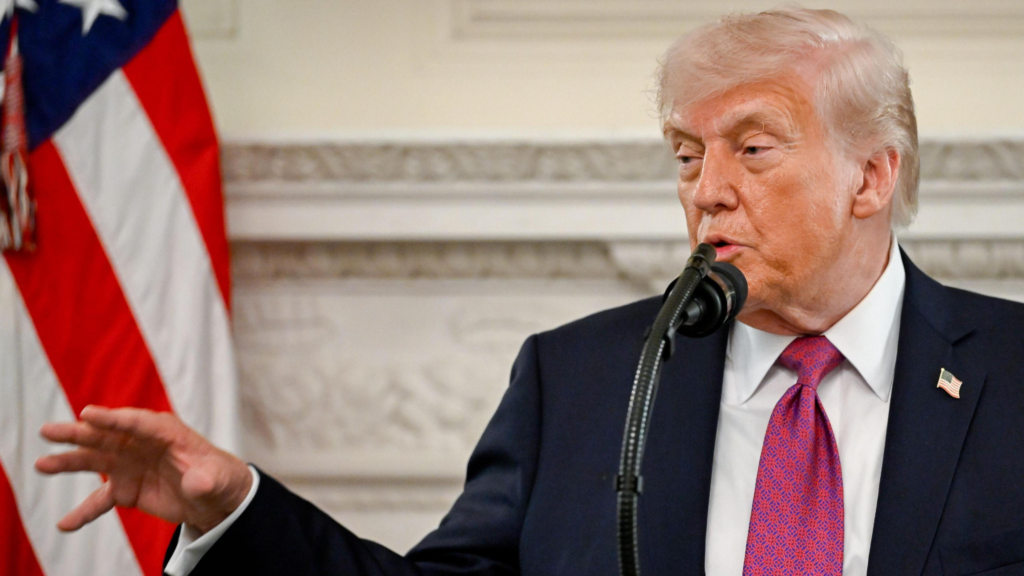
WASHINGTON — President Donald Trump is dissatisfied with Iran’s latest proposal to end the two-month war because it delays negotiations over Tehran’s nuclear programme, leaving both sides far apart despite a fragile ceasefire and intensifying diplomatic efforts.
Tehran is pushing for a phased approach: first, a ceasefire and the lifting of the U.S. naval blockade; then, talks on the nuclear issue at a later stage. Washington, by contrast, insists that nuclear negotiations begin immediately, arguing that Iran’s advancing enrichment programme is the central security threat.
🔁 Iran’s Proposal: ‘Ceasefire Now, Nuclear Later’
The proposal, delivered via Pakistani mediators last Saturday after Trump abruptly cancelled a planned US envoy trip to Islamabad, represents Tehran’s attempt to sever the immediate crisis over the Strait of Hormuz from the long-running nuclear dispute.
Key elements of the Iranian proposal, according to sources familiar with the discussions:
- Reopen the Strait of Hormuz – Allowing oil and gas traffic to resume, easing global energy prices.
- Agree to a permanent ceasefire – Ending the two-month war triggered by US-Israeli strikes on Iranian nuclear facilities on February 28.
- Lift the US naval blockade – Removing economic pressure on Iranian ports.
- Defer nuclear negotiations – Addressing the enrichment programme only in a later, separate round of talks.
The phased approach reflects Tehran’s assessment that it can negotiate from a position of greater strength once the strait is reopened and the blockade is lifted. Iran has reportedly told mediators that “a permanent agreement is possible with the presence and guarantee of influential countries”, but that the nuclear issue is not currently on the table because it sees its enrichment programme as its sovereign right.
🃏 Trump’s Position: ‘Too Early’ for Blockade Relief
The White House has made clear that the nuclear issue is a precondition for any deal.
Trump has emphasised that a nuclear agreement must be reached before the U.S. even considers lifting the blockade. “Our primary concern is Iran’s nuclear programme. They must suspend enrichment and remove their stockpiles. That has to be the first step,” a senior administration official told Reuters.
A White House spokesperson said: “We have reviewed the proposal and continue to evaluate it. The President has been clear: any agreement must permanently prevent Iran from obtaining a nuclear weapon. There is no other way.”
The administration’s war objectives remain unchanged: convincing Iran to suspend uranium enrichment for at least a decade and to remove its existing stockpile of enriched uranium from the country.
📍The ‘Plausible Deniability’ Gap
Beyond the nuclear issue, distrust runs deep. A U.S. official cited by Reuters expressed scepticism that Iran would halt enrichment even if the blockade were lifted.
Moreover, Washington insists on “stringent, verifiable guarantees” – a level of international oversight that Tehran has historically resisted.
Iran, for its part, has consistently argued that its nuclear programme is peaceful and that the enrichment issue is a matter for the International Atomic Energy Agency (IAEA), not bilateral bargaining under the threat of a blockade. Foreign Minister Abbas Araghchi has said that the nuclear file is “not on the table at this stage” because Iran considers it a “red line”.
🗓️ Ceasefire Ceiling: The War Powers Deadline
The diplomatic impasse comes as the 60‑day deadline under the War Powers Resolution approaches on April 29 – a date that will force the Trump administration to seek congressional authorisation if it wishes to continue hostilities beyond that window.
A senior Iranian official told Reuters that if the U.S. rejects the phased approach, “the responsibility for the continuation of the war and its consequences will be on Washington”.
🔮 What Comes Next
- Situation Room meeting – Trump will convene his national security team on Monday to review the Iranian proposal and discuss next steps.
- Iran’s military posture – Tehran has warned that if the U.S. rejects the proposal, it may order the Islamic Revolutionary Guard Corps (IRGC) to “fully close the strait” to all traffic, including U.N. and humanitarian shipments.
- Congressional dynamics – As the 60‑day window expires, hawkish senators are pushing for a formal authorisation of force, while the administration is exploring whether it can argue that the ceasefire constitutes a pause in hostilities, resetting the clock.
For now, the Strait of Hormuz remains closed, oil prices hover around $108 a barrel, and both sides wait to see who will blink first.
Key Takeaways for Reflecto News Readers
| Aspect | Summary |
|---|---|
| Iran’s proposal | Reopen strait, end war, lift blockade → nuclear talks later |
| US position | Nuclear issues must be addressed first, immediately |
| Iran’s justification | Enrichment is a sovereign right, not a negotiating chip |
| US war objective | Suspend enrichment for 10+ years and remove stockpiles |
| Blockade status | In effect since April 13; Iran’s ports effectively sealed |
| Strait of Hormuz | Effectively closed since war began |
| Ceasefire | Extended indefinitely but fragile |
| Next step | Trump Situation Room meeting (Monday) |
| War Powers deadline | April 29 – 60 days since conflict began |
Follow Reflecto News for continuous updates on US-Iran negotiations, the Strait of Hormuz blockade, and all breaking news from around the world.
This article is the intellectual property of Reflecto News. Redistribution without attribution is prohibited. For syndication or media inquiries, please contact the editorial team.
Questions people ask
What is China's current share of global manufacturing?
China now accounts for twenty eight percent of global manufacturing. This industrial output exceeds the combined manufacturing production of the United States, Japan, and Germany, making China the leading global industrial power according to recent reports.
Why were Andrew Tate and Tristan Tate arrested in Miami?
Andrew Tate and his brother Tristan Tate were taken into custody in Miami by the United States Marshals Service. They face thirty eight new charges in the United Kingdom, including rape and child pornography offences, and prosecutors are seeking their extradition.
What warning did Moscow issue about oil prices?
Kirill Dmitriev, the Chief Executive of the Russian Direct Investment Fund, warned that a tsunami of skyrocketing oil prices is approaching. Moscow describes this potential energy shock as a major threat to global markets.
What political shift is projected for Benjamin Netanyahu's coalition?
Political polls project that Prime Minister Benjamin Netanyahu's coalition is on track to lose its majority in the upcoming October election. This projection indicates a potential political shift in Jerusalem.
Why did a Russian military aircraft land in Tehran?
A Russian airborne command aircraft, widely known as a doomsday plane, landed in Tehran. The arrival of the aircraft represents a high stakes show of support from Russia for Iran during a period of heightened regional tensions.
What did President Masoud Pezeshkian claim about the United States and Israel?
Iranian President Masoud Pezeshkian claimed that the United States and Israel failed in a forty eight hour plan to topple the Iranian government. He made these statements during a televised address marking two years since his inauguration.