Reflecto News is an online news platform covering major international political events, global economic developments, and security conflicts. The site provides updates on topics such as Chinese manufacturing dominance, Middle Eastern political tensions, and high profile legal arrests. Readers can access current articles organized by categories like World News, Iran, and USA.
Exclusive CNN investigation shows reconstruction work at Parchin and other strategic sites during the period when the US-Iran memorandum of understanding was in effect, raising serious compliance questions.
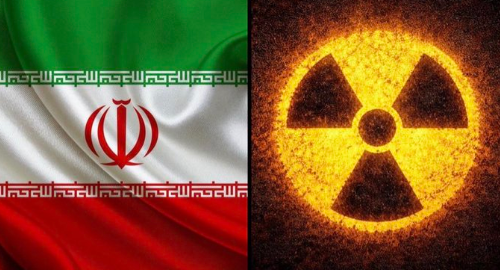
WASHINGTON / TEHRAN — New satellite imagery obtained by CNN has revealed that Iran may be attempting to rebuild nuclear and missile facilities damaged during the US-Israeli military campaign, according to a visual investigation published Friday .
The findings come at a time of heightened tension between Washington and Tehran, with President Donald Trump declaring the June ceasefire “over” just days ago while continuing indirect talks with Iranian officials .
What the Satellite Images Show
The CNN investigation, conducted in partnership with the Institute for Science and International Security (ISIS), analyzed commercial satellite imagery from Vantor that captured construction activity across multiple strategic Iranian sites between late June and early July .
Parchin Military Complex
Significant activity was observed at the Taleghan 2 facility within the Parchin military complex southeast of Tehran. Experts believe this site is used for research and testing related to nuclear weapons development, specifically housing explosive materials .
Images taken on June 22 and July 7 showed:
- Multiple impact craters from US and Israeli strikes being repaired
- Temporary coverings placed over damaged areas, later replaced with mesh coverings
- Concrete mixing trucks at the site, suggesting preparations to seal impact holes
“Experts believe Iran has been excavating around the three bomb craters on the building’s roof, adding layers of reinforced concrete and installing rebar in preparation for pouring a new layer of solid concrete,” the investigation reported .
Pickaxe Mountain Underground Facility
Satellite imagery from June 21—while the US-Iran memorandum of understanding (MoU) was still formally in effect—showed numerous vehicles entering and exiting the tunnel system at Pickaxe Mountain, an underground facility near Natanz suspected of housing sensitive nuclear infrastructure .
The activity was notable because the MoU, signed on June 17, required Iran to maintain the status quo at all nuclear sites and suspend activities related to its nuclear program . At least 50 of 69 tunnel access points examined had already been reopened, potentially restoring Iranian access to missiles trapped underground after strikes .
Missile and Airbase Repairs
The investigation also documented repair efforts at Iranian missile bases and the Tabriz airbase, where runway craters appeared to be filled with concrete .
A Violation of the Memorandum?
The timing of the reconstruction work has raised serious questions about Iran’s compliance with the June 17 MoU .
The agreement, negotiated to reduce hostilities and stabilize the Strait of Hormuz, included explicit commitments by Iran to freeze its nuclear activities . CNN noted that the reconstruction work observed during the agreement’s implementation period “could raise fresh questions about Tehran’s compliance” .
According to the Jerusalem Post, analysis of the imagery indicated that the observed activity “may amount to a violation of the recently signed US-Iran Memorandum of Understanding” .
Iran has not publicly commented on CNN’s findings or addressed the satellite imagery cited in the investigation .
Satellite Imagery Restrictions
The investigation was made possible by a brief window when restrictions on satellite imagery of the region were loosened .
According to CNN, regional satellite imagery had been temporarily withheld by the US government for several weeks at Washington’s request. CNN was able to conduct its analysis during a brief relaxation of those restrictions, which were subsequently reimposed as US military operations resumed .
A Pentagon official told CNN that the military would not discuss battlefield conditions or intelligence matters due to operational security considerations .
IAEA Loses Oversight
The satellite imagery revelations come as the International Atomic Energy Agency (IAEA) has confirmed it has “lost continuity of knowledge” across all of Iran’s declared nuclear facilities .
UN Undersecretary-General Rosemary DiCarlo told the Security Council that the IAEA has not conducted “any in-field verification activities under the Nuclear Non-Proliferation Treaty Safeguards Agreement” in the most recent reporting period . The agency has been unable to gain access to damaged facilities at Fordow, Natanz, and Isfahan since the US-Israeli strikes in June 2025 .
The IAEA’s June report warned that the year-long loss of continuity of knowledge over declared nuclear material is “a matter of proliferation concern” requiring urgent action .
Frequently Asked Questions (FAQs)
Q1: What new satellite imagery has been revealed about Iran’s nuclear facilities?
A: CNN obtained exclusive satellite imagery showing reconstruction work at several Iranian nuclear and missile sites, including the Taleghan 2 facility at the Parchin military complex and the underground Pickaxe Mountain facility near Natanz. The imagery captured activity between late June and early July .
Q2: When was the reconstruction activity observed?
A: Satellite images from June 22 and July 7 showed repair work at the Parchin complex, while images from June 21 showed activity at Pickaxe Mountain—periods when the US-Iran memorandum of understanding was still formally in effect .
Q3: Does this mean Iran violated the US-Iran memorandum?
A: The MoU required Iran to maintain the status quo at nuclear sites and suspend nuclear activities . CNN noted the reconstruction work “could raise fresh questions about Tehran’s compliance” . The Jerusalem Post reported that the activity “may amount to a violation” of the agreement .
Q4: What is the significance of the Parchin facility?
A: The Taleghan 2 facility at Parchin is believed to be used for research and testing related to nuclear weapons development, specifically housing explosive materials .
Q5: What is the status of IAEA oversight of Iran’s nuclear program?
A: The IAEA has confirmed it has “lost continuity of knowledge” across all of Iran’s declared nuclear facilities . Inspectors have been unable to access damaged facilities at Fordow, Natanz, and Isfahan since the June 2025 strikes .
Q6: Why were satellite images of the region initially restricted?
A: Satellite imagery of the region was temporarily withheld by the US government for several weeks at Washington’s request. CNN was able to conduct its analysis during a brief relaxation of those restrictions, which were subsequently reimposed as US military operations resumed .
This is a developing story. Reflecto News will continue to provide updates on Iran’s nuclear activities, the IAEA’s ability to verify compliance, and the status of US-Iran diplomatic engagement.
Questions people ask
What is China's current share of global manufacturing?
China now accounts for twenty eight percent of global manufacturing. This industrial output exceeds the combined manufacturing production of the United States, Japan, and Germany, making China the leading global industrial power according to recent reports.
Why were Andrew Tate and Tristan Tate arrested in Miami?
Andrew Tate and his brother Tristan Tate were taken into custody in Miami by the United States Marshals Service. They face thirty eight new charges in the United Kingdom, including rape and child pornography offences, and prosecutors are seeking their extradition.
What warning did Moscow issue about oil prices?
Kirill Dmitriev, the Chief Executive of the Russian Direct Investment Fund, warned that a tsunami of skyrocketing oil prices is approaching. Moscow describes this potential energy shock as a major threat to global markets.
What political shift is projected for Benjamin Netanyahu's coalition?
Political polls project that Prime Minister Benjamin Netanyahu's coalition is on track to lose its majority in the upcoming October election. This projection indicates a potential political shift in Jerusalem.
Why did a Russian military aircraft land in Tehran?
A Russian airborne command aircraft, widely known as a doomsday plane, landed in Tehran. The arrival of the aircraft represents a high stakes show of support from Russia for Iran during a period of heightened regional tensions.
What did President Masoud Pezeshkian claim about the United States and Israel?
Iranian President Masoud Pezeshkian claimed that the United States and Israel failed in a forty eight hour plan to topple the Iranian government. He made these statements during a televised address marking two years since his inauguration.