Reflecto News is an online news platform covering major international political events, global economic developments, and security conflicts. The site provides updates on topics such as Chinese manufacturing dominance, Middle Eastern political tensions, and high profile legal arrests. Readers can access current articles organized by categories like World News, Iran, and USA.
Wheat-Carrying Vessel Goes Down; At Least 3 Dead Including Chief Mate, Surviving Crew Rescued by Lifeboat
By Reflecto News Staff
April 6, 2026
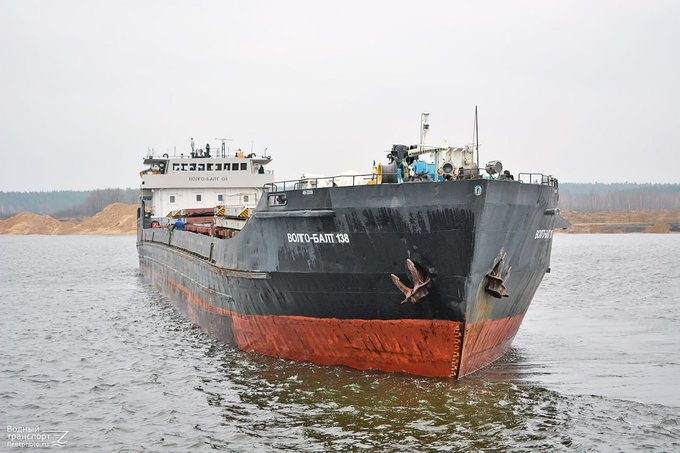
A Russian-flagged general cargo ship, the Volgo-Balt-138, has sunk in the Sea of Azov following a suspected Ukrainian drone strike, according to Russian and Ukrainian reports.
The vessel was carrying a cargo of wheat when it was attacked. Russian occupation authorities in the Kherson region confirmed the sinking, reporting that the ship went down after being hit by a Ukrainian UAV.
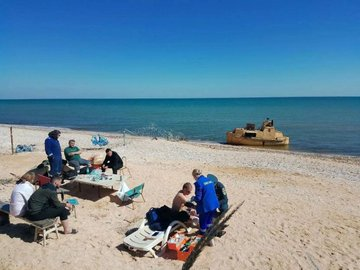
Casualties include at least three dead, among them the chief mate (born in 1991). The remaining crew members escaped in a lifeboat and were rescued, with some receiving medical and psychological assistance upon reaching shore near the village of Shchaslyvtseve in the Kherson region.
Details of the Incident
The attack reportedly occurred on or around April 3–5, 2026, in the Sea of Azov, off the coast of the Kherson region (near areas under Russian control). Russian sources described it as a “terrorist attack by the Kyiv regime,” while Ukrainian reports align with the timeline of increased drone activity targeting Russian maritime assets.
The Volgo-Balt-138 is a Soviet-era general cargo vessel (IMO 8862791), built in 1971, with a length of approximately 114 meters. It was en route in the region, consistent with grain transport routes from Russian-controlled ports.
This incident adds to a pattern of Ukrainian drone strikes on Russian shipping and infrastructure in the Black Sea and Azov Sea theaters, part of Kyiv’s strategy to disrupt Russian logistics and exports, including agricultural goods.
Broader Context in the Russia-Ukraine War
The sinking highlights the ongoing maritime dimension of the conflict, where both sides target vessels, ports, and energy infrastructure. Ukraine has conducted multiple successful drone operations against Russian oil tankers, ports, and cargo ships in recent months, while Russia continues strikes on Ukrainian grain and energy facilities.
The Sea of Azov, largely controlled by Russia since the early phases of the full-scale invasion, has seen heightened tensions, with grain exports remaining a sensitive economic and strategic issue.
No independent verification of the exact cause (direct drone hit versus debris from intercepted drones) has been confirmed by all parties, but Russian officials have attributed the sinking directly to Ukrainian action.
Implications
- Human Cost: Confirmed fatalities underscore the risks to civilian seafarers in the conflict zone.
- Economic Impact: Loss of a wheat-carrying vessel contributes to disruptions in Russian grain exports, already affected by sanctions and wartime logistics challenges.
- Escalation Risks: Such attacks on commercial shipping could prompt stronger Russian retaliation in the maritime domain.
International maritime organizations have repeatedly called for de-escalation and protection of civilian vessels in the Black Sea region.
Reflecto News will continue monitoring developments, including any official statements from Russia or Ukraine, updates on the investigation, and potential effects on regional shipping routes.
This story is developing.
Sources include reports from Russian occupation authorities (Kherson region governor Vladimir Saldo), TASS, Ukrainian media, and open-source maritime tracking data.
Questions people ask
What is China's current share of global manufacturing?
China now accounts for twenty eight percent of global manufacturing. This industrial output exceeds the combined manufacturing production of the United States, Japan, and Germany, making China the leading global industrial power according to recent reports.
Why were Andrew Tate and Tristan Tate arrested in Miami?
Andrew Tate and his brother Tristan Tate were taken into custody in Miami by the United States Marshals Service. They face thirty eight new charges in the United Kingdom, including rape and child pornography offences, and prosecutors are seeking their extradition.
What warning did Moscow issue about oil prices?
Kirill Dmitriev, the Chief Executive of the Russian Direct Investment Fund, warned that a tsunami of skyrocketing oil prices is approaching. Moscow describes this potential energy shock as a major threat to global markets.
What political shift is projected for Benjamin Netanyahu's coalition?
Political polls project that Prime Minister Benjamin Netanyahu's coalition is on track to lose its majority in the upcoming October election. This projection indicates a potential political shift in Jerusalem.
Why did a Russian military aircraft land in Tehran?
A Russian airborne command aircraft, widely known as a doomsday plane, landed in Tehran. The arrival of the aircraft represents a high stakes show of support from Russia for Iran during a period of heightened regional tensions.
What did President Masoud Pezeshkian claim about the United States and Israel?
Iranian President Masoud Pezeshkian claimed that the United States and Israel failed in a forty eight hour plan to topple the Iranian government. He made these statements during a televised address marking two years since his inauguration.