Reflecto News is an online news platform covering major international political events, global economic developments, and security conflicts. The site provides updates on topics such as Chinese manufacturing dominance, Middle Eastern political tensions, and high profile legal arrests. Readers can access current articles organized by categories like World News, Iran, and USA.
JUST IN: Senior Russian Official Predicts Severe Economic Strain as EU Pushes Ahead with Full Phase-Out Amid Global Energy Turmoil
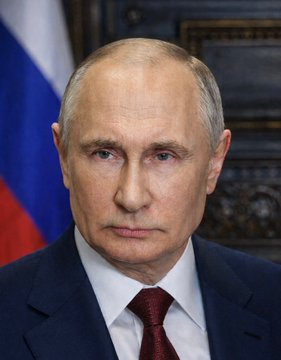
Reflecto News – In a sharp rebuke of European energy policy, Kirill Dmitriev, Russia’s Special Presidential Envoy for Investment and Economic Cooperation and CEO of the Russian Direct Investment Fund (RDIF), has warned that the European Union’s decision to abandon Russian energy supplies will lead to “extremely tough times” for the continent. Dmitriev described the move, along with what he called “other stupid ideological decisions,” as foreshadowing serious economic hardship.
The statement, made via a post on X (formerly Twitter) and reported by Russian state media, comes as Europe grapples with ongoing energy market volatility exacerbated by recent conflicts in the Middle East, including disruptions around the Strait of Hormuz.
Who Made the Statement?
Kirill Dmitriev, a prominent Russian official with deep ties to international investment circles, issued the warning on April 6. As head of the RDIF, he plays a key role in promoting Russian economic interests abroad. His comments reflect Moscow’s long-standing narrative that Europe’s sanctions and diversification efforts are self-defeating.
Background: Europe’s Shift Away from Russian Energy
Prior to Russia’s full-scale invasion of Ukraine in 2022, the EU relied heavily on Russian natural gas, which accounted for around 40% of its imports in some years. Pipeline supplies via routes like Nord Stream, Yamal, and TurkStream formed the backbone of this dependence.
In response to the invasion, the EU launched REPowerEU, a comprehensive plan to rapidly reduce reliance on Russian fossil fuels. Measures included:
- Diversifying suppliers through increased LNG imports from the United States, Qatar, Norway, and others.
- Accelerating renewable energy deployment and energy efficiency improvements.
- Filling gas storage facilities to record levels in subsequent winters.
- Imposing sanctions and price caps on Russian oil and gas.
By 2026, Russian pipeline gas to the EU has dropped dramatically, though some LNG imports and limited pipeline flows (notably to landlocked countries like Hungary and Slovakia) continue. The EU has set targets to phase out remaining Russian gas imports, with bans on new short-term LNG contracts planned for late April 2026 and broader restrictions by 2027.
Russia’s Perspective and Recent Warnings
Russian officials, including President Vladimir Putin, have repeatedly argued that Europe’s decoupling is driven by ideology rather than pragmatism. In March 2026, amid rising global energy prices linked to Middle East tensions, Putin suggested Russia might preemptively halt remaining gas supplies to Europe and redirect volumes to faster-growing Asian markets.
Dmitriev’s latest comments echo this view, claiming that Europe’s “decoupling” combined with other policy choices will result in higher costs, supply vulnerabilities, and broader economic pain. Russian sources have pointed to declining European gas storage levels, potential “energy lockdowns,” and the higher prices of alternative supplies (particularly US LNG) as evidence that the strategy is backfiring.
Current Energy Situation in Europe
Europe has made significant progress in diversification:
- LNG terminals have expanded capacity, with major imports arriving via sea from the Atlantic and beyond.
- Norway has become a leading pipeline supplier.
- Renewables and nuclear output help offset some demand.
However, challenges persist. Global events, including the Iran-related disruptions, have pushed energy prices higher. European industries face elevated costs compared to pre-2022 levels, and some member states express private concerns about long-term competitiveness. Winter demand, storage replenishment, and the transition to greener energy add layers of complexity.
Economic and Geopolitical Implications
For Europe, the shift has meant:
- Higher Energy Costs: Alternatives like US LNG often come with a premium, contributing to inflation and reduced industrial competitiveness in energy-intensive sectors such as chemicals, steel, and manufacturing.
- Supply Security Risks: Greater dependence on global LNG markets exposes Europe to price volatility from distant suppliers and shipping disruptions.
- Internal Divisions: Countries with stronger historical ties to Russian energy (e.g., parts of Central and Eastern Europe) sometimes voice differing priorities, while others push harder for rapid green transition.
From Russia’s viewpoint, the warnings serve both economic and political purposes: highlighting perceived European missteps while positioning Moscow as a reliable (if sanctioned) energy partner for willing buyers in Asia and elsewhere.
Analysts note that while Europe has built resilience, a combination of harsh winters, delayed renewable rollout, or further global shocks could test that resilience severely. Conversely, successful diversification could accelerate the EU’s energy independence and green goals.
What Lies Ahead?
As the EU moves toward its 2027 phase-out targets, the coming months will be critical. Key factors to watch include:
- Gas storage levels heading into the next winter.
- Progress on LNG infrastructure and renewable capacity.
- Global energy market responses to ongoing geopolitical tensions.
- Potential further statements or actions from Moscow regarding remaining supplies.
Dmitriev’s stark prediction underscores the high stakes in Europe’s energy transition. Whether it proves prophetic or overstated will depend on how effectively the EU manages its diversification while balancing economic security, affordability, and climate ambitions.
Reflecto News will continue monitoring developments in European energy policy and Russia-EU relations. The continent’s ability to weather these “tough times” may define its economic trajectory for years to come.
Questions people ask
What is China's current share of global manufacturing?
China now accounts for twenty eight percent of global manufacturing. This industrial output exceeds the combined manufacturing production of the United States, Japan, and Germany, making China the leading global industrial power according to recent reports.
Why were Andrew Tate and Tristan Tate arrested in Miami?
Andrew Tate and his brother Tristan Tate were taken into custody in Miami by the United States Marshals Service. They face thirty eight new charges in the United Kingdom, including rape and child pornography offences, and prosecutors are seeking their extradition.
What warning did Moscow issue about oil prices?
Kirill Dmitriev, the Chief Executive of the Russian Direct Investment Fund, warned that a tsunami of skyrocketing oil prices is approaching. Moscow describes this potential energy shock as a major threat to global markets.
What political shift is projected for Benjamin Netanyahu's coalition?
Political polls project that Prime Minister Benjamin Netanyahu's coalition is on track to lose its majority in the upcoming October election. This projection indicates a potential political shift in Jerusalem.
Why did a Russian military aircraft land in Tehran?
A Russian airborne command aircraft, widely known as a doomsday plane, landed in Tehran. The arrival of the aircraft represents a high stakes show of support from Russia for Iran during a period of heightened regional tensions.
What did President Masoud Pezeshkian claim about the United States and Israel?
Iranian President Masoud Pezeshkian claimed that the United States and Israel failed in a forty eight hour plan to topple the Iranian government. He made these statements during a televised address marking two years since his inauguration.