Reflecto News is an online news platform covering major international political events, global economic developments, and security conflicts. The site provides updates on topics such as Chinese manufacturing dominance, Middle Eastern political tensions, and high profile legal arrests. Readers can access current articles organized by categories like World News, Iran, and USA.
JUST IN: Gulf Nation Pushes for International Action as Iran’s Blockade Triggers Global Energy Crisis
Reflecto News – In a bold diplomatic move, Bahrain has formally called on the United Nations Security Council to adopt a resolution that would authorize member states to use force to reopen the Strait of Hormuz, the world’s most critical oil chokepoint. The proposal comes amid Iran’s effective closure of the waterway, which has disrupted global shipping and sent energy prices soaring to record levels.
Bahrain, which currently holds the rotating presidency of the UN Security Council, has led the effort with strong backing from other Gulf Cooperation Council (GCC) states and the United States. The resolution aims to restore freedom of navigation in the Strait of Hormuz, the Gulf, and the Gulf of Oman, where Iran has blocked commercial traffic in what many describe as an unlawful attempt to control international waters.
What Is the Strait of Hormuz and Why Does It Matter?
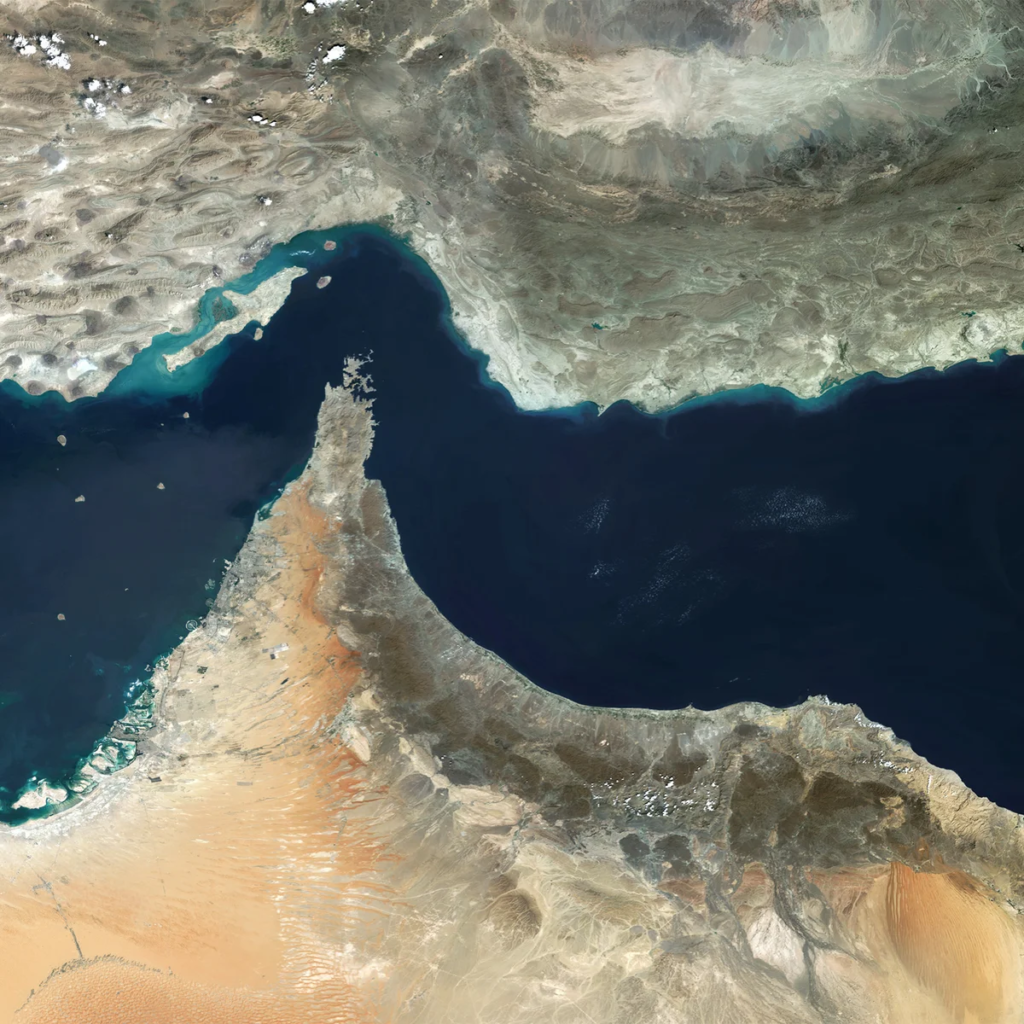
The Strait of Hormuz is a narrow passage connecting the Persian Gulf to the Gulf of Oman and the Arabian Sea. At its narrowest point, it is just 21 miles (33 kilometers) wide, with shipping lanes only two miles wide in each direction. Despite its small size, it is one of the most strategically vital waterways on the planet.
Approximately 20-30% of the world’s seaborne oil and a significant portion of liquefied natural gas pass through the strait daily—equivalent to about 21 million barrels of oil per day under normal conditions. Major exporters including Saudi Arabia, Iraq, the UAE, Kuwait, and Qatar rely on it for their energy exports to Asia, Europe, and beyond. Any disruption here ripples instantly through global markets, affecting everything from gasoline prices to manufacturing costs worldwide.
Background: Iran’s Closure and the Escalating Regional Conflict
The current crisis stems from heightened tensions in the Middle East. Following military strikes by the United States and Israel against Iran in late February 2026, Tehran responded by imposing a blockade on the Strait of Hormuz. Iranian forces have halted commercial shipping, citing security concerns and retaliation, effectively turning the waterway into a flashpoint that threatens global economic stability.
This is not the first time the strait has been threatened—historical incidents include the 1980s Tanker War during the Iran-Iraq conflict and multiple Iranian threats in recent decades. However, the scale of the current shutdown has triggered the worst energy supply disruption in modern history, with fuel prices skyrocketing and supply chains for oil-dependent economies under severe strain.
Details of Bahrain’s UN Resolution Proposal
Bahrain initially circulated a strong draft resolution invoking Chapter VII of the UN Charter—the section that allows the Security Council to authorize sanctions or military action in response to threats to international peace and security. The original text called for member states, acting individually or through multinational coalitions, to use “all necessary means” to secure passage, deter interference, and ensure safe navigation—even within or near territorial waters.
Key elements of the proposal include:
- Affirmation that the Strait of Hormuz must remain open for international transit passage, with no single state having the right to close or control it.
- Authorization for “defensive measures” (in the revised version) to protect commercial shipping.
- Establishment of a monitoring mechanism and legal framework under international and humanitarian law.
- Potential for targeted sanctions against those obstructing navigation.
- Initial duration of at least six months, subject to Council review.
Due to intense negotiations and opposition, Bahrain has significantly watered down the language. The latest draft shifts from explicit “all necessary means” (which could imply offensive military action) to “all defensive means necessary and commensurate with the circumstances.” France has been advising Bahrain on the text to improve chances of adoption.
A vote, originally expected in early April, has been postponed amid ongoing wrangling, with diplomats indicating it could slip to next week.
International Reactions: Support, Opposition, and Divisions
The proposal enjoys solid support from Gulf Arab states (including the UAE, Saudi Arabia, and others) and Jordan, as well as Washington. Bahrain’s Foreign Minister has warned that Iran’s actions pose a direct threat to global economic stability.
However, major hurdles remain. Veto-wielding permanent members China and Russia have voiced strong opposition, arguing that authorizing any use of force risks further escalation in an already volatile region. China has explicitly rejected language that could lead to military action. France has also raised concerns during negotiations.
Iran has condemned the move as provocative, while diplomats from multiple nations stress the need for a unified Council position to avoid deadlock.
Economic and Geopolitical Implications
The blockade has already caused fuel prices to surge globally, threatening inflation, supply shortages, and humanitarian impacts in energy-importing nations. Reopening the strait could stabilize markets, but failure—or a forced military response—risks broader conflict involving naval powers.
Geopolitically, the resolution tests the UN Security Council’s ability to address maritime security threats. Success could set a precedent for international coalitions protecting vital sea lanes; failure might encourage unilateral actions outside the UN framework.
Experts note that even a passed resolution would require broad international cooperation for implementation, potentially involving naval patrols from multiple countries.
What Happens Next?
As Bahrain continues to seek consensus among all 15 Security Council members, the coming days will be critical. A revised vote is anticipated soon, but the outcome remains uncertain given the deep divisions between Western and Gulf allies on one side and Russia-China on the other.
Reflecto News will continue to monitor developments at the United Nations and in the Gulf. The world watches closely: the resolution on the Strait of Hormuz is not just about one waterway—it is about the stability of global energy security in an era of heightened geopolitical risk.
Questions people ask
What is China's current share of global manufacturing?
China now accounts for twenty eight percent of global manufacturing. This industrial output exceeds the combined manufacturing production of the United States, Japan, and Germany, making China the leading global industrial power according to recent reports.
Why were Andrew Tate and Tristan Tate arrested in Miami?
Andrew Tate and his brother Tristan Tate were taken into custody in Miami by the United States Marshals Service. They face thirty eight new charges in the United Kingdom, including rape and child pornography offences, and prosecutors are seeking their extradition.
What warning did Moscow issue about oil prices?
Kirill Dmitriev, the Chief Executive of the Russian Direct Investment Fund, warned that a tsunami of skyrocketing oil prices is approaching. Moscow describes this potential energy shock as a major threat to global markets.
What political shift is projected for Benjamin Netanyahu's coalition?
Political polls project that Prime Minister Benjamin Netanyahu's coalition is on track to lose its majority in the upcoming October election. This projection indicates a potential political shift in Jerusalem.
Why did a Russian military aircraft land in Tehran?
A Russian airborne command aircraft, widely known as a doomsday plane, landed in Tehran. The arrival of the aircraft represents a high stakes show of support from Russia for Iran during a period of heightened regional tensions.
What did President Masoud Pezeshkian claim about the United States and Israel?
Iranian President Masoud Pezeshkian claimed that the United States and Israel failed in a forty eight hour plan to topple the Iranian government. He made these statements during a televised address marking two years since his inauguration.