Reflecto News is an online news platform covering major international political events, global economic developments, and security conflicts. The site provides updates on topics such as Chinese manufacturing dominance, Middle Eastern political tensions, and high profile legal arrests. Readers can access current articles organized by categories like World News, Iran, and USA.
Reflecto News | Breaking News | Russia-Ukraine War
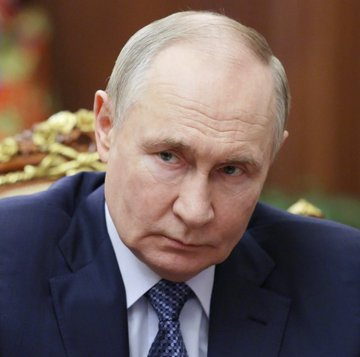
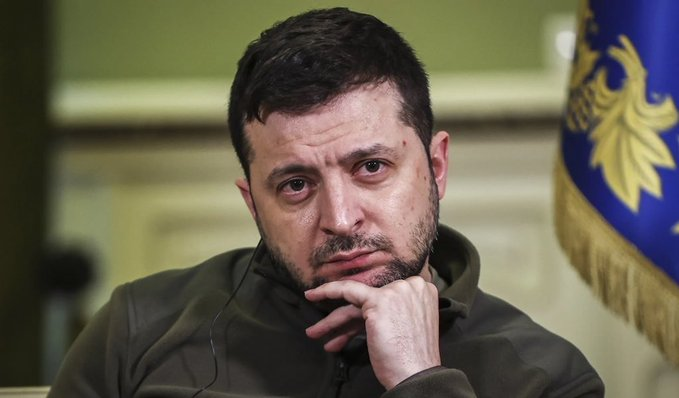
MOSCOW — Russian President Vladimir Putin has announced that he is willing to meet Ukrainian President Volodymyr Zelensky for the first time outside Russian territory — but only after a comprehensive, long‑term peace agreement has been reached, and only to sign that deal, not to negotiate it.
Speaking to reporters after the Victory Day parade in Moscow on Saturday, Putin stressed that preliminary work on a peace deal must be handled by specialists, and that a face‑to‑face meeting would serve merely as a formal signing ceremony. He also repeated his long‑standing invitation for Zelensky to visit Moscow.
“We can meet in a third country as well, but only after there is an ultimate agreement regarding a peace deal that must be a long‑term deal. Then we can meet to sign something, but this should be the final thing to do, not the place for negotiations.”
— President Vladimir Putin, Russia
The remarks represent the first time Putin has publicly suggested a meeting outside Russia with Zelensky, signaling a potential pathway toward a formal peace settlement amid the fifth year of the full‑scale war.
📜 Not a Negotiation, a Ceremony
Putin was careful to frame any potential summit as the end point of a process, not the starting line. He pointed to the failure of the Minsk accords – the 2014‑2015 agreements that were supposed to resolve the conflict in Ukraine’s Donbas region – as a lesson that drawn‑out negotiations without pre‑agreed terms are counterproductive.
At the same time, Putin reiterated that he has never refused to meet Zelensky. He said that if the Ukrainian side is ready for talks, “those who want to meet can travel to Moscow”. The offer to meet in a third country is an addition to, not a replacement for, his long‑standing invitation for Zelensky to come to the Russian capital.
🕊️ A Fragile Ceasefire and ‘End of the War’ Comments
Putin’s comments follow a three‑day ceasefire brokered by US President Donald Trump, which took effect on May 9 and is set to run through May 11. The truce includes a suspension of all “kinetic activity” and a prisoner exchange of 1,000 individuals from each side.
Hours before his remarks on a potential meeting, Putin also told reporters inside the Kremlin that “the matter is coming to an end”. Those words – suggesting the war is winding down – came after Moscow staged its most scaled‑back Victory Day parade in years, with no heavy military equipment on display for the first time in nearly two decades.
🤝 What Would a Zelensky-Putin Meeting Look Like?
If a meeting were to take place, it would likely mirror other high‑stakes superpower summits: a highly scripted, one‑day event in a neutral venue (such as Geneva, Istanbul, or Ankara) where both leaders sign a document already hammered out by their negotiators.
However, there are substantial hurdles:
- Ukraine’s position: Zelensky has consistently insisted that any peace deal must include security guarantees and the restoration of Ukraine’s territorial integrity. He has also stressed the need for a “common European voice” at the negotiating table.
- Russia’s demands: The Kremlin continues to insist that Ukraine cede territory it does not control, particularly the remainder of unoccupied Donetsk region, as a precondition for a ceasefire. The Institute for the Study of War (ISW) has described this as an attempt to extract political concessions that Russia has been unable to achieve on the battlefield.
- Stalled talks: A new round of trilateral negotiations (US-Ukraine-Russia) was supposed to take place in early March, but it was postponed because of the US‑Israeli war against Iran. Kremlin spokesperson Dmitry Peskov has warned that reaching a peace agreement “will take a long time”.
Putin’s own aides have sent mixed signals. Yuri Ushakov, an aide to the Russian president, said on May 7 that another round of trilateral negotiations currently makes “no sense” unless Ukraine withdraws from unoccupied Donetsk region – a demand that Ukraine and its Western allies have rejected.
🇺🇸 Trump’s Role: Pushing for a Deal
The backdrop to Putin’s announcement is intense diplomatic activity by the Trump administration. Trump has stated that he would “love” to make ending the Russia-Ukraine war the 10th conflict he has helped settle. He announced the three‑day ceasefire on May 8, describing it as a potential “beginning of the end” of the war.
Speaking to reporters, Trump said he would send his teams to Moscow to negotiate a permanent ceasefire if he thought it would help. According to a Ukrainian media report, representatives of President Trump are expected to visit Kyiv in late spring or early summer.
📊 Battlefield Reality vs. Diplomatic Moves
While diplomatic signals are becoming more visible, the battlefield remains active. Ukraine has significantly intensified its mid‑range strike campaign against Russian logistics, military equipment, and manpower in early 2026, degrading Russia’s ability to conduct offensive operations.
The Institute for the Study of War reports that Russian advances across the theater stalled to an average of just 2.9 square kilometers per day in the first four months of 2026, with Russian forces suffering a net loss of territory in April 2026. Russia is also struggling with an increasing casualty rate that has recently exceeded its recruitment rate.
At the same time, Ukraine has faced intense Russian drone and missile strikes. Russia has sent more than 800 drones against Ukraine’s port infrastructure in the first four months of 2026, a sharp rise from 75 in the same period last year.
🔮 What Comes Next
Putin’s openness to a meeting outside Russia is a shift in tone, but not yet a breakthrough. The key obstacle remains the same as it has been for years: both sides have fundamentally incompatible visions of what a peace deal should look like.
The Trump-brokered three‑day ceasefire is set to expire on May 11. Whether it will be extended, or whether the fighting will resume at full force, will be the first test of whether recent diplomatic moves have any substance behind them.
For now, Putin has placed the ball in Ukraine’s court – but with conditions that Kyiv has repeatedly rejected. A summit in a third country remains a distant possibility, dependent on an agreement that, by all accounts, does not yet exist.
📋 Key Takeaways for Reflecto News Readers
| Aspect | Summary |
|---|---|
| Putin’s Offer | Willing to meet Zelensky outside Russia for the first time – but only to sign a final, long‑term peace deal. |
| Meeting Purpose | Ceremony, not negotiations. Preliminary talks must be handled by specialists. |
| Putin’s Pre‑Conditions | Final agreements must be reached beforehand; third‑country meeting only after that. |
| Ceasefire Context | Trump‑brokered three‑day truce (May 9‑11) in effect; includes a 1,000‑for‑1,000 prisoner swap. |
| Putin on War’s End | Told reporters “the matter is coming to an end” – his most optimistic public assessment in months. |
| Ukraine’s Position | Demands security guarantees and territorial integrity; insists on a “common European voice” at the table. |
| Russia’s Demands | Continues to demand Ukraine cede unoccupied Donetsk region as a precondition for a ceasefire. |
| Trump’s Role | Claims to have settled nine conflicts and wants to make Ukraine the 10th; expects his representatives to visit Moscow and Kyiv soon. |
| Battlefield Reality | Ukraine’s strikes have degraded Russia’s offensive capability; Russian advances stalled to 2.9 sq km/day in early 2026. |
Follow Reflecto News for continuous updates on the Russia‑Ukraine war, ceasefire developments, and all breaking news from around the world.
This article is the intellectual property of Reflecto News. Redistribution without attribution is prohibited. For syndication or media inquiries, please contact the editorial team.
Questions people ask
What is China's current share of global manufacturing?
China now accounts for twenty eight percent of global manufacturing. This industrial output exceeds the combined manufacturing production of the United States, Japan, and Germany, making China the leading global industrial power according to recent reports.
Why were Andrew Tate and Tristan Tate arrested in Miami?
Andrew Tate and his brother Tristan Tate were taken into custody in Miami by the United States Marshals Service. They face thirty eight new charges in the United Kingdom, including rape and child pornography offences, and prosecutors are seeking their extradition.
What warning did Moscow issue about oil prices?
Kirill Dmitriev, the Chief Executive of the Russian Direct Investment Fund, warned that a tsunami of skyrocketing oil prices is approaching. Moscow describes this potential energy shock as a major threat to global markets.
What political shift is projected for Benjamin Netanyahu's coalition?
Political polls project that Prime Minister Benjamin Netanyahu's coalition is on track to lose its majority in the upcoming October election. This projection indicates a potential political shift in Jerusalem.
Why did a Russian military aircraft land in Tehran?
A Russian airborne command aircraft, widely known as a doomsday plane, landed in Tehran. The arrival of the aircraft represents a high stakes show of support from Russia for Iran during a period of heightened regional tensions.
What did President Masoud Pezeshkian claim about the United States and Israel?
Iranian President Masoud Pezeshkian claimed that the United States and Israel failed in a forty eight hour plan to topple the Iranian government. He made these statements during a televised address marking two years since his inauguration.