Reflecto News is an online news platform covering major international political events, global economic developments, and security conflicts. The site provides updates on topics such as Chinese manufacturing dominance, Middle Eastern political tensions, and high profile legal arrests. Readers can access current articles organized by categories like World News, Iran, and USA.
Reflecto News | Breaking News | Middle East
PARIS — France is moving its nuclear-powered aircraft carrier, the Charles de Gaulle, and its strike group toward the Strait of Hormuz, preparing for a potential defensive mission to restore maritime security as Europe seeks to carve out a distinct role from the United States in the escalating Iran crisis.
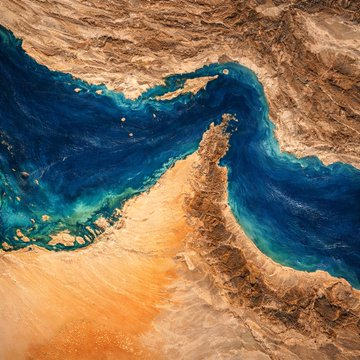
The French Ministry of Defense announced that the carrier group crossed the Suez Canal on Wednesday and is heading to the southern Red Sea, positioning Europe’s most powerful warship closer to the strategic waterway whose closure has paralyzed global oil markets.
🚢 A Distinctly European Mission
President Emmanuel Macron confirmed that the deployment is in preparation for a potential French-British mission in the Strait of Hormuz, which would involve more than 40 countries. The move is intended to send a clear signal, a French top official said: “We want to send the message that not only are we ready to secure the Strait of Hormuz, but that we are also capable of doing so”.
The French Defense Ministry stressed that the deployment “is distinct from ongoing military operations in the region” and is designed to complement existing security arrangements. Unlike the United States’ “Project Freedom” — which President Donald Trump paused on Tuesday — the European-led mission would be purely defensive and would not begin operating until the threat to shipping subsides and maritime industry confidence is restored.
🇫🇷🇬🇧 The ‘Hormuz Coalition’
France and Britain are spearheading a multi-national initiative to secure the Strait of Hormuz. Military planners from more than 30 nations have already finalized operational details.
However, the coalition will not launch until two thresholds are cleared, according to Col. Guillaume Vernet, spokesperson for the French armed forces chief of staff:
- The threat to shipping must come down
- The maritime industry must be reassured enough to use the strait
Even then, any operation would require the agreement of neighboring countries — including Iran, which borders the strait and effectively closed it after the war began on February 28.
🌍 Macron’s Diplomatic Push
The military move is accompanied by a parallel diplomatic effort. Macron spoke with Iranian President Masoud Pezeshkian on Wednesday, conveying “deep concern” over the escalation and urging Tehran to “seize the opportunity window” for a breakthrough.
“A return to calm in the Strait will help advance negotiations on nuclear issues, ballistic matters, and the regional situation,” Macron wrote on X. “Europeans… will play their part”.
France has proposed a deal to Washington and Tehran:
- Iran would allow passage for its own ships in exchange for a commitment to negotiate with the United States on nuclear, missile, and regional issues
- The U.S. would lift its blockade of the strait in exchange for Iran’s negotiation pledge
If those conditions are met, the European coalition could deploy assets to protect ships moving through the strait, “help restore the confidence needed to calm the markets”.
🛡️ Why France Is Acting Now
The closure of the Strait of Hormuz, which normally carries about 20% of the world’s crude oil, has inflicted severe damage on the global economy. War-risk insurance premiums for transits have risen four to five times above pre-conflict levels, making it nearly impossible for commercial shipping to operate.
“The blockade of the Strait of Hormuz continues, the damage to the global economy is becoming increasingly severe, and the risk of prolonged hostilities is too serious for us to accept,” a Macron aide told reporters.
Moreover, the French container shipping company CMA CGM reported that one of its vessels was shot at in the strait on Tuesday, wounding several crew members — a “grave event” that Macron’s office said underscored the urgent need for a multinational protection force.
⏳ What Comes Next
The Charles de Gaulle — which carries around 20 Rafale fighter jets, two E-2C Hawkeye airborne early warning aircraft, and three helicopters — will remain in the region to “assess the regional operational environment in advance” and be ready to act once conditions permit.
Germany has deployed the minehunter Fulda toward the Mediterranean in support of the effort. More than 40 countries have pledged support for the broader initiative.
However, the prospect of a European-led mission hinges on whether Paris and London can secure a lasting ceasefire. Until then, the Charles de Gaulle will remain poised — Europe’s most powerful warship waiting for the green light to move.
📋 Key Takeaways
| Aspect | Summary |
|---|---|
| Deployment | Charles de Gaulle carrier group moving to southern Red Sea/Gulf of Aden |
| Purpose | Prepare for potential French-British defensive mission in Strait of Hormuz |
| Status | Distinct from U.S. “Project Freedom” — not yet active |
| Threshold | Mission will not launch until threat to shipping subsides |
| Coalition | 40+ countries involved in planning |
| French Assets | 20 Rafale fighters, 2 E-2C Hawkeye, 3 helicopters, escorts |
| German Support | Minehunter Fulda deployed toward Mediterranean |
| Macron’s Call | Urged Iran’s president to “seize opportunity” for deal |
| French Proposal | “Strait issue separate from war” — mutual de-escalation |
| Timeline | Carrier in position; activation date uncertain |
Follow Reflecto News for continuous updates on the European-led Hormuz initiative, Iran negotiations, and all breaking news from the Middle East. This article is the intellectual property of Reflecto News. Redistribution without attribution is prohibited.
Questions people ask
What is China's current share of global manufacturing?
China now accounts for twenty eight percent of global manufacturing. This industrial output exceeds the combined manufacturing production of the United States, Japan, and Germany, making China the leading global industrial power according to recent reports.
Why were Andrew Tate and Tristan Tate arrested in Miami?
Andrew Tate and his brother Tristan Tate were taken into custody in Miami by the United States Marshals Service. They face thirty eight new charges in the United Kingdom, including rape and child pornography offences, and prosecutors are seeking their extradition.
What warning did Moscow issue about oil prices?
Kirill Dmitriev, the Chief Executive of the Russian Direct Investment Fund, warned that a tsunami of skyrocketing oil prices is approaching. Moscow describes this potential energy shock as a major threat to global markets.
What political shift is projected for Benjamin Netanyahu's coalition?
Political polls project that Prime Minister Benjamin Netanyahu's coalition is on track to lose its majority in the upcoming October election. This projection indicates a potential political shift in Jerusalem.
Why did a Russian military aircraft land in Tehran?
A Russian airborne command aircraft, widely known as a doomsday plane, landed in Tehran. The arrival of the aircraft represents a high stakes show of support from Russia for Iran during a period of heightened regional tensions.
What did President Masoud Pezeshkian claim about the United States and Israel?
Iranian President Masoud Pezeshkian claimed that the United States and Israel failed in a forty eight hour plan to topple the Iranian government. He made these statements during a televised address marking two years since his inauguration.