Reflecto News is an online news platform covering major international political events, global economic developments, and security conflicts. The site provides updates on topics such as Chinese manufacturing dominance, Middle Eastern political tensions, and high profile legal arrests. Readers can access current articles organized by categories like World News, Iran, and USA.
Reflecto News | Technology & Security | Geopolitics
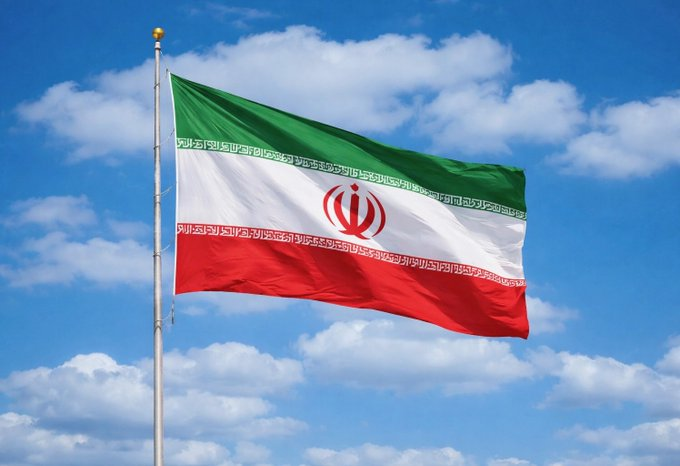
TEHRAN — Iran has announced plans to take full control of the seven undersea internet cables passing through the strategic Strait of Hormuz, demanding that foreign operators obtain permits, pay tolls, and operate under Iranian law . The proposal would also grant Iranian companies exclusive control over the maintenance and repair of the cables, transforming the waterway into what Tehran calls one of its “digital power levers” .
The move dramatically expands Iran’s asserted authority over the strait, which it already claims to control for oil tankers and commercial shipping. The new “governance model” for submarine cables, announced by Iranian media outlets affiliated with the Islamic Revolutionary Guard Corps (IRGC), comes as the two-month war with the United States and Israel enters a fragile but increasingly tense ceasefire period .
🌐 A Digital Chokepoint: The ‘Hidden Highways’ of the Global Internet
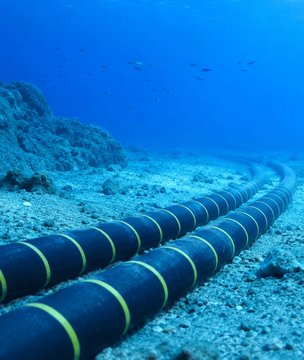
The Strait of Hormuz is not only a critical artery for global oil supplies—carrying approximately 20 percent of the world’s petroleum—but it is also an equally vital, and largely invisible, passageway for the digital world . Several fiber-optic cables snake across the seabed of the narrow waterway, connecting Asia and Africa to Europe via the Gulf states and Egypt .
Key Undersea Cables Passing Through the Strait of Hormuz
| Cable system | Route |
|---|---|
| Asia-Africa-Europe 1 (AAE-1) | Southeast Asia to Europe via Egypt (landing points include UAE, Oman, Qatar, Saudi Arabia) |
| FALCON | India and Sri Lanka to Gulf countries, Sudan, and Egypt |
| Gulf Bridge International (GBI) | Links all Gulf countries, including Iran |
| TGN-Gulf | Regional system serving Gulf states |
| SEA-ME-WE | Southeast Asia-Middle East-Western Europe (extensive network) |
These fiber-optic cables carry an estimated 97–99 percent of the world’s internet traffic, including approximately $10 trillion in daily financial transactions .
📜 Iran’s Proposed ‘Three Practical Steps’
Iranian media outlets, including the IRGC-linked Tasnim and Fars news agencies, have laid out a three-part plan to bring the undersea cables under Tehran’s control .
1. Permits, Licensing, and Tolls
Under the proposed governance model, the passage of submarine cables would “be conducted with a permit and payment of tolls, and foreign companies must also operate under Iranian laws” . This would include initial licensing fees and annual renewal charges for foreign operators .
2. Exclusive Control for Iranian Companies
Iran wants all management, repair, and maintenance of the cables to be “exclusively entrusted to Iranian companies, so that the Strait of Hormuz becomes one of Iran’s digital power levers” .
3. Legal Subordination to Iranian Authority
Foreign technology giants, such as Google, Amazon, and Microsoft, which own or lease capacity on these cables, would be required to operate under Iranian jurisdiction and legal frameworks . Iran argues that the right of “transit passage” under international law does not remove its sovereign authority to regulate the cables, claiming they lie legally within an area where it can exercise such control .
⚔️ The IRGC’s ‘Veiled Threat’ and Pattern of Escalation
The announcement is not occurring in a vacuum. Throughout April 2026, Tasnim published detailed maps of the undersea cables and regional data hubs, explicitly noting that “simultaneous damage to several major cables—whether through accidents or deliberate action—could trigger severe outages across the Persian Gulf” .
The report was published with a graphic showing a detailed cable map, a tactic analysts have noted mirrors the Houthi playbook that preceded attacks on cables in the Red Sea in 2024 . In those incidents, Houthi-aligned forces publicly signaled their intent, then severed four cables connecting Saudi Arabia and Djibouti less than three weeks later . This has led to widespread concern that Tehran is using state-linked media to “signal” a capability and intent to carry out sabotage if its demands are not met .
The IRGC has a massive fleet of fast-attack boats that are ideal for deploying divers or dragging anchors across the seabed in a way that offers Tehran “plausible deniability” . “By the time those questions are answered… the damage is already done, and entire regions can remain offline for weeks or months,” Asia Times reports .
⚡ Global Implications: A ‘Digital War of Attrition’
If implemented, Iran’s control over the undersea cables would have catastrophic consequences for the digital economy . This is not merely about internet speeds; it undermines the very backbone of global finance, cloud computing, and AI infrastructure upon which the modern world relies .
- Financial Impact: Disruption for even a few days could cause “tens to hundreds of millions of dollars in damage to the regional and global economy,” according to Iranian media .
- Data Sovereignty: Foreign companies would be forced to surrender operational control and submit to Iranian surveillance and legal oversight, a non-starter for most Western firms .
- Repair Logjam: Cable repair ships require permits to enter territorial waters—a process that could be weaponized by Tehran to indefinitely delay repairs in a hostile environment .
Iran is currently in a “no deal, no war” stalemate with the US. By threatening to sever the digital arteries of the Gulf states and the world, Tehran is dramatically raising the stakes as Western powers debate whether to re-engage in nuclear diplomacy or escalate military force in the Strait .
Key Takeaways
| Aspect | Summary |
|---|---|
| The Demand | Iran demands permits, tolls, and legal jurisdiction over 7 undersea internet cables in the Strait of Hormuz . |
| The Mechanism | IRGC-linked media is signaling readiness to cut or disrupt the cables (through “accidents” or proxy action) if demands are ignored . |
| The Stakes | These cables carry 99% of internet traffic and $10 trillion in daily financial transactions, making this a potential digital economic weapon . |
| The Precedent | Iran-aligned forces followed a similar “signal-and-strike” pattern with undersea cables in the Red Sea in 2024 . |
| The Response | Gulf states have discussed land-based alternatives, but experts say there is no immediate replacement for subsea cable capacity . |
This article is the intellectual property of Reflecto News. Redistribution without attribution is prohibited.
Questions people ask
What is China's current share of global manufacturing?
China now accounts for twenty eight percent of global manufacturing. This industrial output exceeds the combined manufacturing production of the United States, Japan, and Germany, making China the leading global industrial power according to recent reports.
Why were Andrew Tate and Tristan Tate arrested in Miami?
Andrew Tate and his brother Tristan Tate were taken into custody in Miami by the United States Marshals Service. They face thirty eight new charges in the United Kingdom, including rape and child pornography offences, and prosecutors are seeking their extradition.
What warning did Moscow issue about oil prices?
Kirill Dmitriev, the Chief Executive of the Russian Direct Investment Fund, warned that a tsunami of skyrocketing oil prices is approaching. Moscow describes this potential energy shock as a major threat to global markets.
What political shift is projected for Benjamin Netanyahu's coalition?
Political polls project that Prime Minister Benjamin Netanyahu's coalition is on track to lose its majority in the upcoming October election. This projection indicates a potential political shift in Jerusalem.
Why did a Russian military aircraft land in Tehran?
A Russian airborne command aircraft, widely known as a doomsday plane, landed in Tehran. The arrival of the aircraft represents a high stakes show of support from Russia for Iran during a period of heightened regional tensions.
What did President Masoud Pezeshkian claim about the United States and Israel?
Iranian President Masoud Pezeshkian claimed that the United States and Israel failed in a forty eight hour plan to topple the Iranian government. He made these statements during a televised address marking two years since his inauguration.