Reflecto News is an online news platform covering major international political events, global economic developments, and security conflicts. The site provides updates on topics such as Chinese manufacturing dominance, Middle Eastern political tensions, and high profile legal arrests. Readers can access current articles organized by categories like World News, Iran, and USA.
Published on Reflecto News | World News | Diplomacy & Geopolitics
The United States says talks with Iran are “progressing.” Iran says there are no direct talks at all. Both are technically right — and that is precisely the problem. After weeks of careful diplomatic signaling, high-level visits, and conflicting public statements, the US and Iran remain stuck in a theater of diplomacy where neither side is yet willing to sit at the same table.
The current state of play is less a negotiation than a carefully choreographed dance. Iranian Foreign Minister Abbas Araghchi is touring Pakistan, Oman, and Russia to sound out US positions through intermediaries. US envoys Steve Witkoff and Jared Kushner are flying to Islamabad at the same time. The White House is calling it momentum. Tehran is calling it proximity diplomacy at best.
And the fundamental obstacle remains unchanged: Iran refuses to sit across from the United States while a US naval blockade of Iranian ports is still in place.
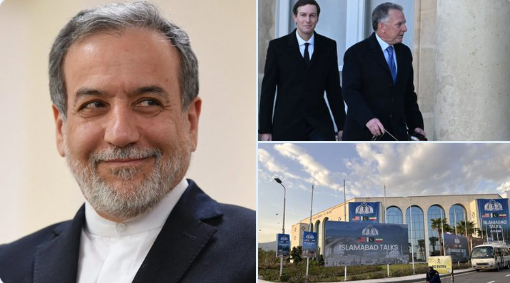
The Mechanics of ‘Proximity Diplomacy’
The diplomatic architecture now taking shape in Islamabad is a classic example of “proximity talks” — negotiations conducted through intermediaries, with the two sides occupying different rooms, or perhaps not even the same building, while mediators shuttle between them.
| Activity | US Interpretation | Iranian Interpretation |
|---|---|---|
| Araghchi’s regional tour | Diplomatic groundwork for direct engagement | Consultations with partners, not negotiations |
| Witkoff/Kushner travel | Momentum toward a deal | Unilateral US movement, not reciprocated |
| Pakistani mediation | Facilitating direct talks | Shuttling messages, not hosting negotiations |
| Ceasefire extensions | Progress toward an agreement | A pause, not a peace process |
The White House can truthfully claim that talks are “progressing” because its envoys are traveling and its allies are mediating. Iran can truthfully claim that there are no direct talks because no Iranian official has sat across from a US official since the first round in Islamabad ended without agreement two weeks ago.
The Audience Problem
Both sides are performing diplomacy for different audiences — and neither audience is the other side.
| Audience | US Message | Iranian Message |
|---|---|---|
| Domestic | Talks are progressing; pressure is working | No surrender; regime is not desperate |
| Allies | Washington is serious about a deal | Tehran is not isolated; has partners |
| Adversaries | US will maintain maximum pressure | Iran will not negotiate under threat |
| Mediators | Flexibility on process | Red lines on substance |
The US is speaking to domestic voters who want to see progress, to allies who need reassurance, and to Tehran itself — signaling that the window for a deal is open but not infinite.
Iran is speaking to hardliners who oppose any negotiation with the “Great Satan,” to regional partners who might finance reconstruction, and to Washington — signaling that the naval blockade is an unacceptable precondition for direct talks.
What ‘Progress’ Looks Like on Paper
Araghchi’s tour will take him to Muscat, where Oman has historically served as a discreet backchannel for US-Iran communications, and to Moscow, where Russia has offered to serve as a custodian for Iran’s enriched uranium . Witkoff and Kushner will huddle with Pakistani officials, who have invested heavily in brokering a ceasefire.
But there is no shared definition of what a deal even looks like.
| Issue | US Position | Iranian Position |
|---|---|---|
| Strait of Hormuz | Full reopening; naval blockade remains until a deal is reached | Blockade must be lifted before talks begin |
| Nuclear program | End enrichment; surrender stockpile | Right to enrich for civilian purposes |
| Sanctions relief | Phased relief tied to compliance | Complete lifting of all sanctions |
| Regional proxies | End support for Hamas, Hezbollah, Houthis | Non‑negotiable |
The gap between these positions has not narrowed in two weeks.
The Only Real Progress: The Ceasefire Has Held
The ceasefire, extended indefinitely at Pakistan’s request, has held. There have been no new US airstrikes on Iranian territory, and no new Iranian missile or drone barrages on US assets.
But that is not “progress” toward a deal. It is merely the absence of active hostilities.
The coming days will test whether proximity diplomacy can be converted into direct engagement — or whether the two sides will continue to talk past each other, performing negotiations for separate audiences, with no shared definition of success.
Frequently Asked Questions (FAQs)
1. Are the US and Iran actually negotiating?
Yes and no. The US is engaging with intermediaries and has envoys in the region. Iran is consulting with partners. Neither side has sat down for direct talks since the first round in Islamabad collapsed two weeks ago.
2. Why won’t Iran meet directly with the US?
Tehran insists that the US naval blockade of Iranian ports must be lifted before direct negotiations can begin. Washington refuses to lift the blockade until a deal is reached.
3. What is “proximity diplomacy”?
Proximity talks are negotiations conducted through intermediaries, with the two sides in different locations and mediators shuttling messages between them. It is a step short of direct engagement.
4. Is the ceasefire still in effect?
Yes. President Trump extended the ceasefire at Pakistan’s request. It has no fixed expiration date, but remains fragile.
5. Who is Araghchi meeting?
Iranian Foreign Minister Abbas Araghchi is visiting Pakistan, Oman, and Russia for consultations with regional partners. He will not meet directly with US officials.
Stay informed with Reflecto News – Your trusted source for breaking diplomatic and geopolitical intelligence. Subscribe for real-time updates on the US-Iran peace process and developments in the Middle East.
Questions people ask
What is China's current share of global manufacturing?
China now accounts for twenty eight percent of global manufacturing. This industrial output exceeds the combined manufacturing production of the United States, Japan, and Germany, making China the leading global industrial power according to recent reports.
Why were Andrew Tate and Tristan Tate arrested in Miami?
Andrew Tate and his brother Tristan Tate were taken into custody in Miami by the United States Marshals Service. They face thirty eight new charges in the United Kingdom, including rape and child pornography offences, and prosecutors are seeking their extradition.
What warning did Moscow issue about oil prices?
Kirill Dmitriev, the Chief Executive of the Russian Direct Investment Fund, warned that a tsunami of skyrocketing oil prices is approaching. Moscow describes this potential energy shock as a major threat to global markets.
What political shift is projected for Benjamin Netanyahu's coalition?
Political polls project that Prime Minister Benjamin Netanyahu's coalition is on track to lose its majority in the upcoming October election. This projection indicates a potential political shift in Jerusalem.
Why did a Russian military aircraft land in Tehran?
A Russian airborne command aircraft, widely known as a doomsday plane, landed in Tehran. The arrival of the aircraft represents a high stakes show of support from Russia for Iran during a period of heightened regional tensions.
What did President Masoud Pezeshkian claim about the United States and Israel?
Iranian President Masoud Pezeshkian claimed that the United States and Israel failed in a forty eight hour plan to topple the Iranian government. He made these statements during a televised address marking two years since his inauguration.