Reflecto News is an online news platform covering major international political events, global economic developments, and security conflicts. The site provides updates on topics such as Chinese manufacturing dominance, Middle Eastern political tensions, and high profile legal arrests. Readers can access current articles organized by categories like World News, Iran, and USA.
Published on Reflecto News | World News | Diplomacy & Geopolitics
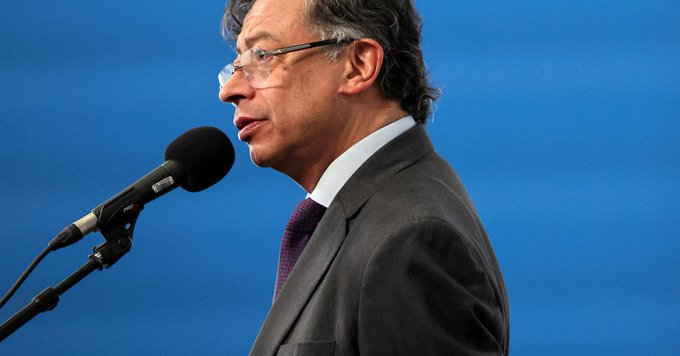
Colombian President Gustavo Petro arrived in Caracas on Friday, April 24, 2026, for the first official visit of a foreign head of state to Venezuela since the dramatic capture of Nicolás Maduro by U.S. forces on January 3, 2026. The high-stakes meeting with interim Venezuelan President Delcy Rodríguez centers on the escalating security crisis along their 2,200-kilometer (1,367-mile) shared border .
The summit, formally titled the III Reunión de la Comisión de Vecindad e Integración Colombia-Venezuela, marks a pivotal moment for bilateral relations in the post-Maduro era. It follows a failed attempt to meet in March 2026 in the Colombian border city of Cúcuta, which was canceled by Caracas due to security concerns .
Petro, who arrived with a predominantly military and police delegation, sought to advance a joint security plan focused on intelligence sharing to combat illegal armed groups operating on both sides of the porous border .
🛡️ Security in the Catatumbo: A Shared Battlefield
The primary driver of the diplomatic urgency is the deteriorating situation in the Catatumbo region, a jungle area in northeastern Colombia bordering Venezuela’s Táchira state. This region is a strategic corridor for drug trafficking, illegal mining, and contraband, controlled by a web of armed actors .
Petro has identified the Catatumbo as the top priority for the talks, warning that without close bilateral intelligence coordination, military operations could end up killing civilians .
The main security threats on the agenda:
| Armed Group | Description |
|---|---|
| National Liberation Army (ELN) | A guerrilla group present on both sides of the border, heavily involved in drug trafficking and extortion. |
| FARC-EP Dissidents (Frente 33 & 33) | Former FARC members who rejected the 2016 peace deal, now controlling significant cocaine production zones. |
| Tren de Aragua | A transnational criminal organization originating in Venezuela, involved in human smuggling, extortion, and illegal mining. |
Petro explicitly linked the Catatumbo crisis to the need for renewed cooperation, stating that “if we go to Caracas, the Catatumbo issue will be discussed with President Delcy” . He emphasized that his delegation includes the Minister of Defense and police commanders to “organize a joint plan” and enhance intelligence sharing .
⚡ Energy and Economic Integration
Beyond security, the summit was expected to lay the groundwork for reactivating stalled energy integration projects, which have gained new momentum following the partial easing of U.S. sanctions on Caracas .
The economic agenda includes:
- Natural Gas Exports: Colombia, facing a domestic gas deficit, seeks to import Venezuelan gas. The talks included reopening the Antonio Ricaurte gas pipeline, which has been inactive for years .
- Electric Interconnection: The revival of a binational electricity grid is being discussed, which could help stabilize power supply in border regions .
- Commercial Flow: The gradual normalization of trade relations, which were severed under Maduro, and the management of consular affairs for the millions of citizens living on both sides of the border.
Colombia has been lobbying the Trump administration for an exemption to U.S. sanctions to allow investment in Venezuelan energy infrastructure .
During a White House meeting in February 2026, Petro and President Donald Trump discussed revitalizing the Venezuelan economy with Colombia’s assistance, a key shift from the open hostility between the two leaders in early January. The U.S. is keen on stabilizing Venezuela to curb mass migration and regain access to its vast oil reserves .
🌎 Petro’s Role in the Post-Maduro Transition
The meeting takes place as Rodríguez consolidates power following Maduro’s ouster. Since assuming the interim presidency on January 3, Rodríguez has purged 17 ministers, arrested key chavista businessmen, and restructured the military under the watchful eye of Washington .
Petro has emerged as a pivotal diplomatic bridge. Initially a vocal critic of Maduro’s “kidnapping,” Petro moderated his stance after his February summit with Trump .
While Petro has proposed a long-term “co-governance” solution between the chavista establishment and the opposition to pave the way for free elections, the proposal has been rejected by hardline opposition figures like María Corina Machado .
🔮 What Comes Next
The meeting in Caracas is expected to produce a concrete joint border security plan, a roadmap for the resumption of natural gas exports, and a framework for future diplomatic relations.
The U.S. is closely monitoring the consolidation of Delcy Rodríguez’s interim government, while neighboring countries watch to see how Bogotá navigates its relationship with the new Caracas administration. With Petro’s term ending in August 2026, the continuity of these agreements will depend on the outcome of Colombia’s upcoming presidential election .
The summit demonstrated that despite the ideological evolution of the Venezuelan government, shared security threats compel cross-border cooperation—and that energy-hungry Colombia is willing to lead the effort.
Questions people ask
What is China's current share of global manufacturing?
China now accounts for twenty eight percent of global manufacturing. This industrial output exceeds the combined manufacturing production of the United States, Japan, and Germany, making China the leading global industrial power according to recent reports.
Why were Andrew Tate and Tristan Tate arrested in Miami?
Andrew Tate and his brother Tristan Tate were taken into custody in Miami by the United States Marshals Service. They face thirty eight new charges in the United Kingdom, including rape and child pornography offences, and prosecutors are seeking their extradition.
What warning did Moscow issue about oil prices?
Kirill Dmitriev, the Chief Executive of the Russian Direct Investment Fund, warned that a tsunami of skyrocketing oil prices is approaching. Moscow describes this potential energy shock as a major threat to global markets.
What political shift is projected for Benjamin Netanyahu's coalition?
Political polls project that Prime Minister Benjamin Netanyahu's coalition is on track to lose its majority in the upcoming October election. This projection indicates a potential political shift in Jerusalem.
Why did a Russian military aircraft land in Tehran?
A Russian airborne command aircraft, widely known as a doomsday plane, landed in Tehran. The arrival of the aircraft represents a high stakes show of support from Russia for Iran during a period of heightened regional tensions.
What did President Masoud Pezeshkian claim about the United States and Israel?
Iranian President Masoud Pezeshkian claimed that the United States and Israel failed in a forty eight hour plan to topple the Iranian government. He made these statements during a televised address marking two years since his inauguration.