Reflecto News is an online news platform covering major international political events, global economic developments, and security conflicts. The site provides updates on topics such as Chinese manufacturing dominance, Middle Eastern political tensions, and high profile legal arrests. Readers can access current articles organized by categories like World News, Iran, and USA.
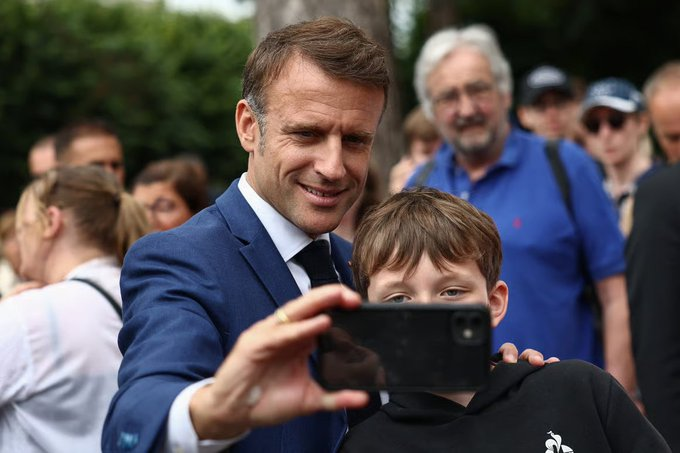
PARIS — In a move that sets a new global precedent for digital sovereignty, the French Senate has voted overwhelmingly to implement a “social media blacklist” for children under the age of 15. The legislation, which received vocal backing from President Emmanuel Macron, aims to shield minors from platforms deemed “addictive” or “dangerous” to psychological development.
The vote, held on Tuesday, March 31, 2026, marks the culmination of a two-year legislative push to regulate the “digital attention economy” in France.
The “Blacklist” Mechanism
Unlike previous attempts at age verification, which often relied on easily bypassed self-declaration, the new French law introduces a dual-layered enforcement strategy:
- Platform Classification: The Arcom (France’s Regulatory Authority for Audiovisual and Digital Communication) will now maintain a “Blacklist” of platforms that utilize infinite scrolls, algorithmic “rabbit holes,” or aggressive push notifications.
- Mandatory Digital Guardrails: Social media companies on this list must verify the age of French users using “certified third-party solutions” (such as banking ID or digital identity apps).
- Parental Consent: For children between the ages of 13 and 15, access can only be granted with explicit, verified parental authorization. Access for those under 13 is strictly prohibited on blacklisted sites.
Macron’s “Cognitive Sovereignty” Doctrine
President Macron has framed the law not as censorship, but as a matter of public health and national “cognitive sovereignty.”
“We are seeing a generation struggling with unprecedented levels of anxiety and sleep deprivation. Our children’s brains are not for sale to the highest-bidding algorithm.”
— President Emmanuel Macron, addressing the Senate following the vote.
The President’s stance reflects a growing consensus in Paris that the “wild west” of the 2010s internet is no longer compatible with European values of child protection. This follows his 2025 initiative to ban smartphones in all French primary and middle schools—a policy that the government claims has already improved student focus by 18%.
The “Big Tech” Pushback
The legislation has met with immediate resistance from Silicon Valley, particularly as many platforms are already grappling with the U.S.-Iran conflict’s impact on advertising revenue.
- Compliance Costs: Industry groups argue that the “certified” age verification requirements are technically burdensome and create new privacy risks for adult users.
- The “Blacklist” Stigma: Platforms like TikTok and Instagram have reportedly lobbied heavily against being included on the initial Arcom list, fearing that the “dangerous” label will permanently damage their brand in the European market.
- Financial Penalties: Companies that fail to enforce the blacklist face fines of up to 1% of their global turnover—a massive deterrent for even the largest tech giants.
The 2026 Digital Landscape
| Feature | Pre-2026 Status | New French Law (April 2026) |
| Age Verification | Self-declaration / “Soft” checks | Certified 3rd-Party Verification |
| Target Age | Varies (often 13+) | Strictly 15+ (w/o parental consent) |
| Enforcement | Occasional moderation | Automated Blacklist Blocking |
| Maximum Fine | Administrative penalties | 1% of Global Turnover |
Analysis: A New “French Model”?
France’s move is being closely watched by the European Commission and the United Kingdom, the latter of which is currently debating similar “online safety” expansions under PM Keir Starmer. By moving away from “recommendations” toward a “blacklist,” France is betting that the state must play an active role in the “digital upbringing” of its citizens.
As the law moves toward implementation in late 2026, it remains to be seen if French teenagers will find workarounds—such as VPNs, which have seen a 40% spike in downloads in France this week—or if this marks the beginning of a truly “walled garden” for the world’s youth.
Questions people ask
What is China's current share of global manufacturing?
China now accounts for twenty eight percent of global manufacturing. This industrial output exceeds the combined manufacturing production of the United States, Japan, and Germany, making China the leading global industrial power according to recent reports.
Why were Andrew Tate and Tristan Tate arrested in Miami?
Andrew Tate and his brother Tristan Tate were taken into custody in Miami by the United States Marshals Service. They face thirty eight new charges in the United Kingdom, including rape and child pornography offences, and prosecutors are seeking their extradition.
What warning did Moscow issue about oil prices?
Kirill Dmitriev, the Chief Executive of the Russian Direct Investment Fund, warned that a tsunami of skyrocketing oil prices is approaching. Moscow describes this potential energy shock as a major threat to global markets.
What political shift is projected for Benjamin Netanyahu's coalition?
Political polls project that Prime Minister Benjamin Netanyahu's coalition is on track to lose its majority in the upcoming October election. This projection indicates a potential political shift in Jerusalem.
Why did a Russian military aircraft land in Tehran?
A Russian airborne command aircraft, widely known as a doomsday plane, landed in Tehran. The arrival of the aircraft represents a high stakes show of support from Russia for Iran during a period of heightened regional tensions.
What did President Masoud Pezeshkian claim about the United States and Israel?
Iranian President Masoud Pezeshkian claimed that the United States and Israel failed in a forty eight hour plan to topple the Iranian government. He made these statements during a televised address marking two years since his inauguration.