Reflecto News is an online news platform covering major international political events, global economic developments, and security conflicts. The site provides updates on topics such as Chinese manufacturing dominance, Middle Eastern political tensions, and high profile legal arrests. Readers can access current articles organized by categories like World News, Iran, and USA.
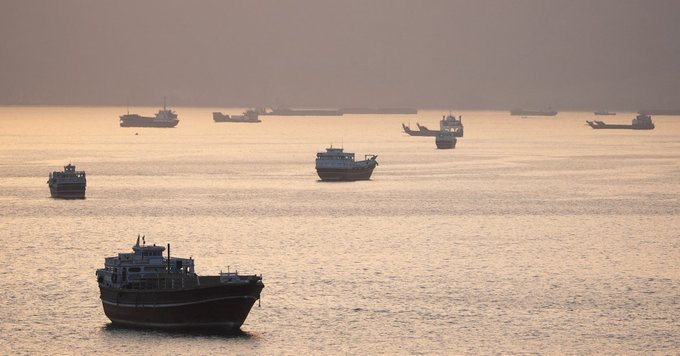
OPEC+ has agreed to a symbolic increase in oil production targets for June, marking the third consecutive monthly hike since the outbreak of the war with Iran and the effective closure of the critical Strait of Hormuz. However, the increase remains largely on paper and will have little immediate impact on global supplies as long as the shipping lane remains blocked.
The decision was reached during an online meeting on Sunday, May 3, 2026, after the announcement that the United Arab Emirates was leaving the group effective May 1 .
📊 The Decision: A Modest, Symbolic Increase
Seven OPEC+ countries have agreed to raise their collective oil output targets by 188,000 barrels per day (bpd) for June . This increase is essentially a continuation of the previous month’s hike of 206,000 bpd, adjusted to exclude the United Arab Emirates’ share following its departure .
The seven members that met and agreed to the hike are: Saudi Arabia, Russia, Iraq, Kuwait, Algeria, Kazakhstan, and Oman . The meeting was the first for the group since the UAE’s exit.
| Aspect | Details |
|---|---|
| Agreed Increase | 188,000 barrels per day (bpd) for June |
| Previous Hike (May) | 206,000 bpd (included UAE’s share) |
| Meeting Participants | Saudi Arabia, Russia, Iraq, Kuwait, Algeria, Kazakhstan, Oman |
| Primary Motive | Show readiness for post-war supply & signal ongoing market control |
📉 Why the Hike is “Largely Symbolic”
Despite the headline increase, the actual physical impact on the market is expected to be near zero as long as the Strait of Hormuz remains blockaded.
The Iran war, which began on February 28, and the resulting closure of the strait have throttled exports from key OPEC+ members, including Saudi Arabia, Iraq, and Kuwait, which were the only countries in the group with the capacity to increase production before the conflict .
Because of this, most of the new quota is a paper increase. The quota can be raised, but the oil cannot physically leave the Gulf region. For example, Saudi Arabia’s quota will rise to 10.291 million bpd in June, but its actual production in March was just 7.76 million bpd .
“While output is increasing on paper, the real impact on physical supply remains very limited given the Strait of Hormuz constraints. This is less about adding barrels and more about signaling that OPEC+ still calls the shots.”
— Jorge Leon, an analyst at Rystad and former OPEC official
🎯 The Real Message: Continuity and Control
The decision is widely viewed as a two-pronged strategy to reassure the market .
First, it signals continuity by showing that OPEC+ is pressing on with its regular operational adjustments despite the departure of a core member like the UAE . This is designed to show the world that the group is ready to raise supplies once the war stops .
Second, it sends a message of control. Even though it cannot add physical barrels now, the move reminds the market that OPEC+ still intends to be the ultimate arbiter of oil supply once the crisis ends. It is laying the groundwork for a post-war reality where it can manage the influx of supply from Gulf nations.
📈 Market Context: Prices and Production
The symbolic hike comes as actual crude oil output from all OPEC+ members has collapsed due to the war. In March, total production averaged 35.06 million bpd, a staggering drop of 7.70 million bpd from February, with Iraq and Saudi Arabia making the biggest cuts .
This supply disruption has propelled oil prices to a four-year high above $125 per barrel, sparking fears of widespread jet fuel shortages and a spike in global inflation .
The seven OPEC+ members are scheduled to meet again on June 7 to review its production strategy .
Follow Reflecto News for continuous updates on OPEC+ decisions, the Iran war, and all breaking news from global energy markets.
This article is the intellectual property of Reflecto News. Redistribution without attribution is prohibited.
Questions people ask
What is China's current share of global manufacturing?
China now accounts for twenty eight percent of global manufacturing. This industrial output exceeds the combined manufacturing production of the United States, Japan, and Germany, making China the leading global industrial power according to recent reports.
Why were Andrew Tate and Tristan Tate arrested in Miami?
Andrew Tate and his brother Tristan Tate were taken into custody in Miami by the United States Marshals Service. They face thirty eight new charges in the United Kingdom, including rape and child pornography offences, and prosecutors are seeking their extradition.
What warning did Moscow issue about oil prices?
Kirill Dmitriev, the Chief Executive of the Russian Direct Investment Fund, warned that a tsunami of skyrocketing oil prices is approaching. Moscow describes this potential energy shock as a major threat to global markets.
What political shift is projected for Benjamin Netanyahu's coalition?
Political polls project that Prime Minister Benjamin Netanyahu's coalition is on track to lose its majority in the upcoming October election. This projection indicates a potential political shift in Jerusalem.
Why did a Russian military aircraft land in Tehran?
A Russian airborne command aircraft, widely known as a doomsday plane, landed in Tehran. The arrival of the aircraft represents a high stakes show of support from Russia for Iran during a period of heightened regional tensions.
What did President Masoud Pezeshkian claim about the United States and Israel?
Iranian President Masoud Pezeshkian claimed that the United States and Israel failed in a forty eight hour plan to topple the Iranian government. He made these statements during a televised address marking two years since his inauguration.