Reflecto News is an online news platform covering major international political events, global economic developments, and security conflicts. The site provides updates on topics such as Chinese manufacturing dominance, Middle Eastern political tensions, and high profile legal arrests. Readers can access current articles organized by categories like World News, Iran, and USA.
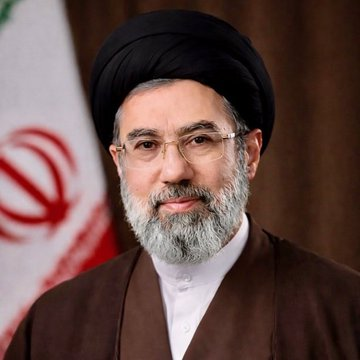
Reflecto News – Iran has signaled it will maintain its practice of charging tolls on commercial ships transiting the Strait of Hormuz, even under the terms of the fragile two-week U.S.-Iran ceasefire. Seyyed Mahmoud Nabavian, a hardline Iranian Member of Parliament and part of Tehran’s delegation to the upcoming talks in Islamabad, stated that “some commercial ships will be allowed to pass through the Strait of Hormuz upon payment of tolls.”
The announcement underscores Iran’s insistence on exercising what it calls sovereign control over the vital waterway, which carries roughly 20% of global oil trade, and adds another layer of tension to the already complicated ceasefire framework.
Nabavian’s Statement and Iran’s Position
Nabavian, a vocal conservative figure known for his staunch opposition to Western concessions, made the remarks while emphasizing Iran’s authority over the strait. He framed the toll system as a legitimate exercise of sovereignty and a means to regulate passage during the ceasefire period.
Iranian officials have previously described the tolls as fees for “navigation services, environmental protection, and security oversight,” while critics, including the United States, view them as an illegal restriction on freedom of navigation under international maritime law. The U.S. has explicitly demanded a full reopening of the strait “without limitation, including tolls.”
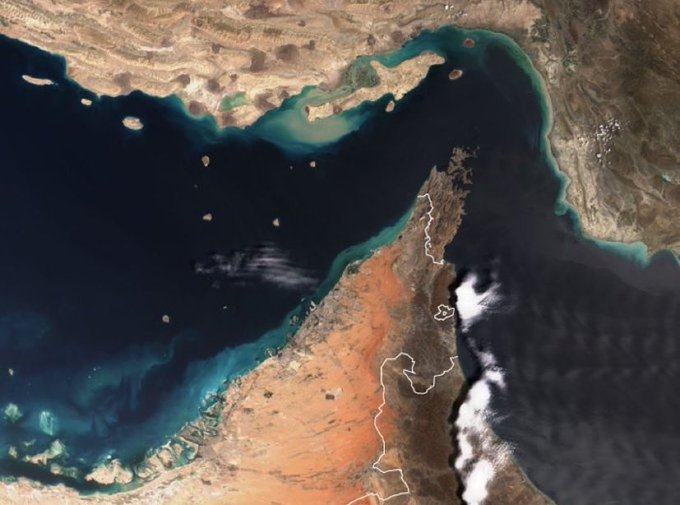
Map of the Strait of Hormuz, the strategic chokepoint where Iran asserts control and plans to impose tolls on select commercial vessels.
Context Within the Two-Week Ceasefire
The temporary truce, announced on April 7, 2026, was conditioned on Iran ensuring the “complete, immediate, and safe” reopening of the Strait of Hormuz to international shipping. While Iran has allowed limited traffic to resume, it has maintained the right to screen vessels and impose tolls on “non-hostile” commercial ships.
This approach has already drawn sharp criticism:
- The White House has called any tolls “completely unacceptable.”
- The International Maritime Organization and several Western governments argue that charging fees for transit through an international strait violates the UN Convention on the Law of the Sea (UNCLOS) principles of transit passage.
- Shipping companies and insurers have received advisories urging caution and, in some cases, recommending against payment of such fees.
The toll issue is expected to feature prominently in high-level U.S.-Iran talks scheduled for Friday, April 10, 2026, in Islamabad, Pakistan, where broader discussions on sanctions relief, nuclear assurances, and regional security will also take place.
Strategic and Economic Implications
Charging tolls gives Iran a tool to generate revenue and exert leverage, but it risks slowing the normalization of oil flows and provoking further U.S. or allied responses, including potential naval interdiction of vessels that pay the fees. Global energy markets remain sensitive to any disruption in the strait, with analysts warning that uncertainty could keep oil prices elevated.
Iran’s hardline delegation members, including Nabavian, appear intent on preserving maximum leverage ahead of negotiations, signaling that Tehran views the ceasefire as a tactical pause rather than a full concession.
Reflecto News will continue monitoring developments from the Persian Gulf, reactions from Washington and shipping industry stakeholders, and any updates from the Islamabad talks.
Frequently Asked Questions (FAQs)
Q1: What did Seyyed Mahmoud Nabavian say about the Strait of Hormuz?
He stated that some commercial ships will be allowed to pass upon payment of tolls, asserting Iran’s continued control over the waterway.
Q2: Does the U.S.-Iran ceasefire prohibit tolls?
The ceasefire requires safe reopening of the strait, but the U.S. has explicitly demanded passage “without limitation, including tolls.” Iran interprets the terms differently and intends to maintain a toll system for certain vessels.
Q3: Why is Iran charging tolls?
Iran describes the fees as compensation for navigation assistance, security, and environmental services, while framing them as an exercise of sovereignty over its territorial waters and the strait.
Q4: Is charging tolls legal under international law?
Many legal experts and the International Maritime Organization argue that imposing transit fees on ships exercising the right of transit passage through an international strait violates UNCLOS. Iran maintains it has the right to regulate passage.
Q5: How does this affect global shipping?
Tolls and associated uncertainty could increase costs, delay traffic, raise insurance premiums, and contribute to volatility in oil and gas prices. Some shipping firms are being advised to avoid paying such fees.
Q6: Will this issue be discussed in Islamabad?
Yes. The toll policy, along with broader terms for safe navigation, sanctions, and nuclear matters, is expected to be a key point of contention in the high-level talks on Friday.
Q7: What is the current status of shipping through the strait?
Limited commercial traffic has resumed under Iranian oversight, but full normalization remains stalled amid disputes over tolls and security guarantees.
For continuous updates on the U.S.-Iran ceasefire, Strait of Hormuz developments, and the Islamabad talks, follow Reflecto News — your source for accurate, timely, and professional coverage.
Questions people ask
What is China's current share of global manufacturing?
China now accounts for twenty eight percent of global manufacturing. This industrial output exceeds the combined manufacturing production of the United States, Japan, and Germany, making China the leading global industrial power according to recent reports.
Why were Andrew Tate and Tristan Tate arrested in Miami?
Andrew Tate and his brother Tristan Tate were taken into custody in Miami by the United States Marshals Service. They face thirty eight new charges in the United Kingdom, including rape and child pornography offences, and prosecutors are seeking their extradition.
What warning did Moscow issue about oil prices?
Kirill Dmitriev, the Chief Executive of the Russian Direct Investment Fund, warned that a tsunami of skyrocketing oil prices is approaching. Moscow describes this potential energy shock as a major threat to global markets.
What political shift is projected for Benjamin Netanyahu's coalition?
Political polls project that Prime Minister Benjamin Netanyahu's coalition is on track to lose its majority in the upcoming October election. This projection indicates a potential political shift in Jerusalem.
Why did a Russian military aircraft land in Tehran?
A Russian airborne command aircraft, widely known as a doomsday plane, landed in Tehran. The arrival of the aircraft represents a high stakes show of support from Russia for Iran during a period of heightened regional tensions.
What did President Masoud Pezeshkian claim about the United States and Israel?
Iranian President Masoud Pezeshkian claimed that the United States and Israel failed in a forty eight hour plan to topple the Iranian government. He made these statements during a televised address marking two years since his inauguration.