Reflecto News is an online news platform covering major international political events, global economic developments, and security conflicts. The site provides updates on topics such as Chinese manufacturing dominance, Middle Eastern political tensions, and high profile legal arrests. Readers can access current articles organized by categories like World News, Iran, and USA.
Reflecto News | Middle East | Lebanon-Israel Conflict
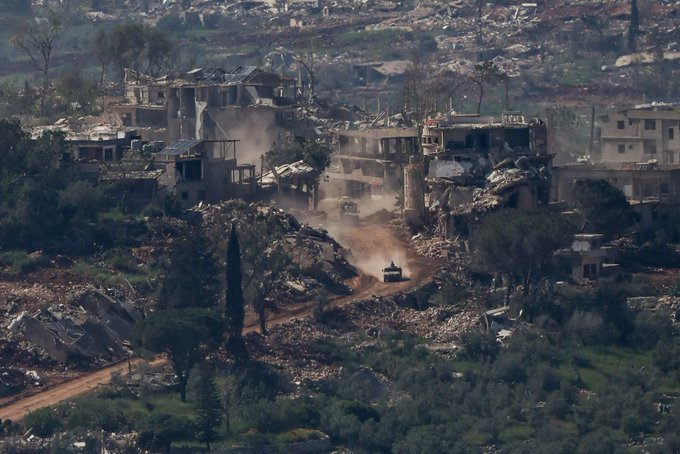
BEIRUT — Israel has carried out widespread destruction in southern Lebanon, flattening dozens of villages and towns near the border, according to a New York Times analysis of satellite imagery and battlefield footage, as fighting with Hezbollah has escalated into the most destructive phase of the conflict since 2006 .
The destruction has been so extensive that entire population centers — including Bint Jbeil, once a bustling market town of 30,000 — have been reduced to rubble. Satellite imagery confirms that more than 35 villages and border towns have been partially or totally destroyed since the resumption of fighting in March .
The systematic demolition of civilian infrastructure has raised alarms among international aid organizations, which warn that the pace and scale of the destruction are “deliberate and unprecedented.”
📊 The Toll: By the Numbers
| Statistic | Figure |
|---|---|
| Total killed in Lebanon | Over 2,600 |
| Displaced | More than 1 million (over 20% of Lebanon’s population) |
| Municipalities destroyed or damaged | 35+ villages and towns (NYT analysis) |
| Civilian infrastructure damaged/destroyed | Homes, schools, hospitals, municipal buildings, utilities |
| Economic damage (Lebanon) | Estimated at billions of dollars; World Bank calls it “a humanitarian catastrophe” |
| Current status of border area | Largely depopulated; civilians warned not to return |
The humanitarian toll has been staggering. The UN Office for the Coordination of Humanitarian Affairs (OCHA) reports that over one million Lebanese have been displaced from the southern border region, representing over 20 percent of the country’s population. This is the worst displacement crisis in Lebanon since the 2006 war .
🏚️ ‘A Bantustan of Rubble’: Bint Jbeil Is Erased
The city of Bint Jbeil, located just 4 kilometers from the Israeli border, is one of the most heavily damaged population centers. Known historically as a Hezbollah stronghold, the city of 30,000 has been almost entirely leveled.
Satellite imagery reviewed by The New York Times shows entire city blocks of Bint Jbeil reduced to rubble, with thousands of residential buildings collapsed. “When the IDF crossed the border and entered southern Lebanon, they destroyed whole villages,” a Lebanese official told the newspaper. “There will be no one to return there for years.”
Israeli officials say the destruction is necessary to create a “buffer zone” to prevent Hezbollah from staging cross-border attacks modeled on the October 7, 2023, Hamas invasion. However, critics argue the demolition of entire towns far exceeds what is required to establish a security area and amounts to collective punishment of the civilian population .
🕊️ ‘We Will Be Living in Those Graves’
For displaced residents, the destruction of their towns has been psychologically devastating. Many have lost not only their homes, but their livelihoods, community ties, and any prospect of a quick return.
Ghaith El-Masri, 45, who fled his home in the border town of Aita al-Shaab, told The Times of London: “They are destroying our homes from the inside with bulldozers. They are removing our presence from the map. We will be living in those graves.”
Israeli officials defend the destruction as legally justified under international humanitarian law, which permits the destruction of property when required by “imperative military necessity.” The IDF has accused Hezbollah of embedding military infrastructure within civilian neighborhoods, making them legitimate military targets.
“The IDF does not target civilians,” a military spokesperson said. “Hezbollah embeds its command centers, weapons depots, and rocket launchers in the heart of residential areas, turning the civilian population into human shields. The destruction we have carried out is limited to infrastructure used by Hezbollah for military purposes.”
However, the UN and human rights groups have rejected this defense, arguing that the scale of destruction suggests a policy of “systematic demolition” rather than proportionate targeting. The UN Human Rights Office has warned that the destruction may constitute a war crime, as it appears aimed at permanently depopulating the border area rather than responding to specific military threats .
📜 The ‘Buffer Zone’ Doctrine
Israel has established a temporary military occupation of a strip of southern Lebanon, described as a “security zone” intended to push Hezbollah north of the Litani River — approximately 30 kilometers from the border.
Under this doctrine, Israeli forces are systematically demolishing homes, farms, and public buildings within the zone. Residents have been warned not to return, and the area has been declared a closed military zone by the Israeli army .
The buffer zone doctrine has been widely criticized by the international community. France has called the destruction “unacceptable” and urged both sides to return to the ceasefire agreement brokered by the U.S. in April . The European Union’s foreign policy chief, Kaja Kallas, warned that the destruction of entire towns “makes a mockery of international law.”
🔮 The Future of Southern Lebanon
What happens next depends on the outcome of ongoing negotiations between Israel and Lebanon. The U.S. has proposed a three-stage plan that would see:
- Israeli forces withdraw from southern Lebanon
- Hezbollah pull back its military infrastructure north of the Litani River
- The Lebanese Armed Forces deploy 15,000 troops to the border region
- International oversight to verify compliance
However, Hezbollah has rejected any framework that does not include a permanent ceasefire and a complete Israeli withdrawal from Lebanese territory. The group continues to maintain military positions in areas not yet occupied by the IDF and has fired rockets and drones into northern Israel daily .
For the one million displaced Lebanese, the destruction of their towns means that even if a ceasefire is reached, they will not be able to return home for years — if ever. The rebuilding of southern Lebanon will require billions of dollars in international aid and permission from Israel to access the border zone.
For now, the people of Bint Jbeil, Aita al-Shaab, and dozens of other destroyed villages are refugees in their own country — living in overcrowded schools, abandoned warehouses, and tent cities, waiting for a war that has already destroyed their past to decide their future .
📋 Key Takeaways for Reflecto News Readers
| Aspect | Summary |
|---|---|
| Scale of Destruction | Over 35 villages and towns partially or totally destroyed |
| Bint Jbeil | Once a city of 30,000, now largely leveled |
| Civilian Casualties | Over 2,600 killed; more than 1 million displaced |
| Damage to Infrastructure | Homes, schools, hospitals, municipal buildings destroyed |
| Israeli Justification | “Imperative military necessity” to create buffer zone |
| Hezbollah’s Position | Embedded military assets within civilian areas, per Israeli claims |
| International Criticism | UN warns destruction may constitute a war crime |
| Outlook | Rebuilding will take years; displaced may never return |
Follow Reflecto News for continuous updates on this developing story and all breaking news from the Middle East.
Questions people ask
What is China's current share of global manufacturing?
China now accounts for twenty eight percent of global manufacturing. This industrial output exceeds the combined manufacturing production of the United States, Japan, and Germany, making China the leading global industrial power according to recent reports.
Why were Andrew Tate and Tristan Tate arrested in Miami?
Andrew Tate and his brother Tristan Tate were taken into custody in Miami by the United States Marshals Service. They face thirty eight new charges in the United Kingdom, including rape and child pornography offences, and prosecutors are seeking their extradition.
What warning did Moscow issue about oil prices?
Kirill Dmitriev, the Chief Executive of the Russian Direct Investment Fund, warned that a tsunami of skyrocketing oil prices is approaching. Moscow describes this potential energy shock as a major threat to global markets.
What political shift is projected for Benjamin Netanyahu's coalition?
Political polls project that Prime Minister Benjamin Netanyahu's coalition is on track to lose its majority in the upcoming October election. This projection indicates a potential political shift in Jerusalem.
Why did a Russian military aircraft land in Tehran?
A Russian airborne command aircraft, widely known as a doomsday plane, landed in Tehran. The arrival of the aircraft represents a high stakes show of support from Russia for Iran during a period of heightened regional tensions.
What did President Masoud Pezeshkian claim about the United States and Israel?
Iranian President Masoud Pezeshkian claimed that the United States and Israel failed in a forty eight hour plan to topple the Iranian government. He made these statements during a televised address marking two years since his inauguration.