Published on Reflecto News | World News | Defense & Geopolitics
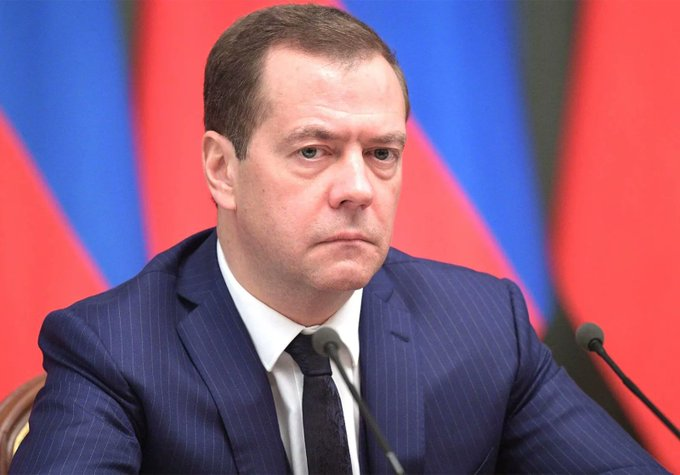
Former Russian President and current Deputy Chairman of the Security Council Dmitry Medvedev has issued a stark warning to European nations, asserting that they should not expect active military intervention from the United States in a hypothetical conflict with Russia. The statement, published on his official Telegram channel, is the latest in a series of aggressive rhetorical salvos from Moscow aimed at testing NATO’s unity and resolve .
“Europeans should not expect active intervention from the United States in a hypothetical conflict between certain EU countries and Russia. Washington has its own interests, and they do not include dying for Riga, Warsaw, or Helsinki.” — Dmitry Medvedev, Deputy Chairman of the Russian Security Council
Medvedev’s comments come as tensions between Russia and NATO have escalated dramatically over the past two years. Finland and Sweden formally joined the alliance in 2024 and 2025 respectively, doubling the length of Russia’s border with NATO and prompting Moscow to announce the creation of two new military districts and to threaten the deployment of nuclear weapons near the Baltic states and Finland .
The ‘Nuclear Umbrella’ Under Scrutiny
Medvedev’s warning directly targets the credibility of the US security guarantee, which has been the cornerstone of European defense since the founding of NATO in 1949. The former Russian president suggested that the United States would prioritize its own strategic interests over the defense of its European allies.
“The American nuclear umbrella has cracked. It will not save Europe from the consequences of its own short-sighted policies. You are on your own.” — Dmitry Medvedev
These claims align with statements made by former US President Donald Trump, who as the Republican frontrunner for the 2026 presidential election told European allies they would have to “pay their bills” and suggested that, under his leadership, the US would not defend NATO members that fail to meet their defense spending obligations .
European intelligence agencies have reportedly assessed that a second Trump presidency could lead to a partial US withdrawal from NATO, potentially limiting the alliance’s Article 5 collective defense commitment to a “core group” of members . This perception has driven EU efforts to enhance “strategic autonomy” in defense .
A Pattern of Escalation
Medvedev’s latest threat fits a well-established pattern of Russian escalation. In recent months, Moscow has:
- Announced the deployment of tactical nuclear weapons to Belarus
- Conducted nuclear drills near NATO’s borders
- Withdrawn from the Comprehensive Nuclear-Test-Ban Treaty (CTBT)
- Threatened strikes on “enemy” satellites
- Declared that conflict with NATO is a “possibility”
The rhetoric has intensified as Ukraine’s military position has deteriorated, with Russian forces making incremental advances in the Donbas region and Ukrainian troops facing critical shortages of artillery shells and air defense interceptors .
European Reactions
The Kremlin’s psychological warfare has elicited a mixed response from European leaders. French President Emmanuel Macron has urged Europe to become a “complete power” capable of defending itself, while German Chancellor Olaf Scholz has emphasized NATO’s collective defense commitment .
“NATO’s Article 5 is ironclad. An attack on one ally is an attack on all. This is not up for negotiation.” — German Chancellor Olaf Scholz
However, behind the scenes, European defense officials are actively planning for a scenario where US support is limited. The EU has accelerated efforts to boost weapons production, and discussions about a “European nuclear deterrent” have resurfaced, though France remains the only EU member with nuclear weapons .
The Nordic-Baltic Front
Medvedev’s specific mention of Riga (Latvia), Warsaw (Poland), and Helsinki (Finland) is telling. Finland’s accession to NATO in 2025 added 1,300 kilometers to the alliance’s border with Russia, placing the strategic Kola Peninsula — home to Russia’s Northern Fleet — within easy reach of NATO forces .
Russia has responded by reinforcing its western military districts and threatening to station nuclear-capable Iskander missiles in Kaliningrad, the Russian exclave sandwiched between Poland and Lithuania .
The US Election Factor
Medvedev’s warning is timed to exploit political uncertainty in the United States ahead of the November 2026 presidential election. The outcome could dramatically reshape transatlantic security .
| Candidate | Likely NATO Policy |
|---|---|
| Donald Trump (R) | Skeptical of NATO; has threatened to withdraw; demands European “burden-sharing” |
| Democratic Candidate (TBD) | Likely to reaffirm NATO commitments; support for Ukraine continues |
Russian officials have closely monitored the US campaign, and Medvedev’s statement can be seen as an attempt to influence European perceptions of US reliability, regardless of the election outcome .
What Comes Next
As the US presidential election approaches and the war in Ukraine enters its fifth year, European leaders face a daunting challenge: how to maintain a united front against Russian aggression while preparing for a future where the US security guarantee may no longer be absolute.
| Scenario | Likelihood | European Response |
|---|---|---|
| Full US withdrawal from NATO | Low (requires congressional approval) | EU strategic autonomy accelerated |
| Partial US withdrawal (reduced troop presence) | Elevated | Increased European defense spending |
| US remains committed | Moderate | Status quo; continued US-European integration |
Medvedev’s warning is not new — Russian officials have long sought to drive a wedge between the US and Europe. But as the US election approaches and European defense capabilities remain limited, his words carry more weight than in previous years.
Frequently Asked Questions (FAQs)
1. What did Medvedev say about US intervention in a European conflict?
Medvedev warned that Europeans should not expect active military intervention from the United States in a hypothetical conflict with Russia, claiming that Washington’s interests “do not include dying for Riga, Warsaw, or Helsinki” .
2. Is Medvedev’s threat credible?
While the US has maintained its NATO commitments for decades, political uncertainty in Washington and statements by former President Trump have raised questions about future US reliability. However, a full US withdrawal would require congressional approval, which is unlikely .
3. How have European leaders responded?
European leaders have publicly reaffirmed NATO’s collective defense commitment, but behind the scenes, the EU is accelerating efforts to boost weapons production and enhance “strategic autonomy” in defense .
4. Why did Medvedev specifically mention Riga, Warsaw, and Helsinki?
These cities represent the Baltic states, Poland, and Finland — NATO’s frontline members most exposed to Russian aggression. Finland’s recent accession to NATO added 1,300 kilometers to the alliance’s border with Russia .
5. What is the status of the US presidential election?
The US presidential election is scheduled for November 2026. Republican frontrunner Donald Trump has threatened to withdraw from NATO and demanded European allies “pay their bills” .
6. Is Russia preparing for a conflict with NATO?
Russian officials have escalated rhetoric and conducted military exercises near NATO’s borders, but direct conflict remains unlikely. Moscow’s primary objective is to deter NATO intervention in Ukraine and exploit divisions within the alliance .
Stay informed with Reflecto News – Your trusted source for breaking defense, geopolitical, and strategic intelligence. Subscribe for real-time updates on NATO-Russia relations, European security, and global power shifts.