Reflecto News is an online news platform covering major international political events, global economic developments, and security conflicts. The site provides updates on topics such as Chinese manufacturing dominance, Middle Eastern political tensions, and high profile legal arrests. Readers can access current articles organized by categories like World News, Iran, and USA.
By Reflecto News Staff Published: May 18, 2026
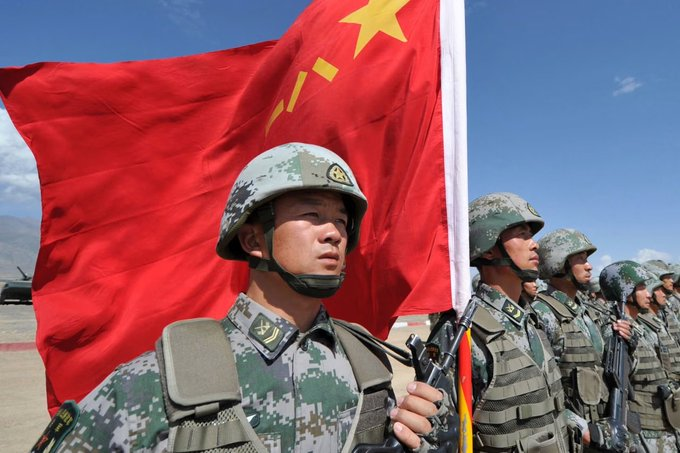
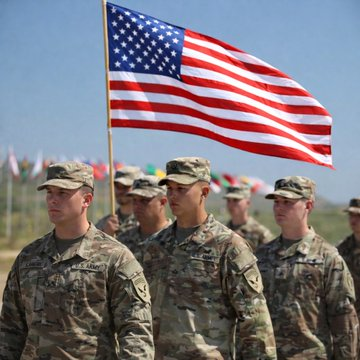
BEIJING / WASHINGTON D.C. — Following a historic and highly strategic bilateral summit between the world’s two largest superpowers, China’s Ministry of National Defense announced Monday that its military is actively working to build trust, reduce strategic friction, and stabilize lines of communication with the United States military.
Senior Defense Ministry Spokesperson Jiang Bin delivered the remarks during a packed press briefing in Beijing. The declaration follows last week’s high-stakes state visit by U.S. President Donald Trump, who met with Chinese President Xi Jinping at the Great Hall of the People to hammer out a framework for “constructive strategic stability.”
Fulfilling the “Beijing Protocol” Consensus
The sudden uptick in military-to-military (mil-to-mil) optimism is being framed as a direct action item stemming from the Trump-Xi summit held on May 14–15. Military analysts note that while geopolitical competition between the People’s Liberation Army (PLA) and the Pentagon remains deeply rooted, both nations have recognized the immediate need for a military “safety valve” to avoid accidental escalation.
Spokesperson Jiang Bin underscored that a predictable, positive defense relationship serves the shared interests of both global powers:
“The Chinese military is willing to work with the U.S. side to deliver on the important consensus reached by the two heads of state,” Jiang stated. “We must respect each other’s core interests and major concerns, strengthen communication and dialogue, manage differences, enhance trust, and dispel misgivings.”
According to senior defense sources, the immediate priorities for this renewed military dialogue include:
- The De-Confliction Hotline: Re-establishing and testing direct communications between U.S. Indo-Pacific Command (INDOPACOM) in Hawaii and the PLA Eastern and Southern Theater Commands.
- Maritime Safety Consultations: Reviving the Military Maritime Consultative Agreement (MMCA) to govern high-seas encounters between warships and aircraft in the South China Sea and Taiwan Strait.
- Nuclear Risk Reduction: Establishing working groups to share non-sensitive data and avoid miscalculations regarding strategic nuclear modernization, a key goal outlined by U.S. officials prior to the Beijing trip.
The Strategic Backdrop: Trade Wins and Regional Anxieties
The military charm offensive follows several major breakthroughs in non-defense sectors during the summit. Over the last 48 hours, China has committed to an unprecedented $17 billion annual purchase of American agricultural products through 2028 and signed an agreement to acquire 200 Boeing commercial jets.
However, defense experts caution that “building trust” does not equal a resolution of core structural rivalries.
- The Middle East Lens: The U.S. military is currently managing a massive naval blockade in the Persian Gulf and a volatile conflict with Iran. President Trump confirmed that President Xi agreed not to provide “material support” to Tehran and expressed interest in a G7-led effort to safely reopen the Strait of Hormuz, aligning Beijing’s economic reliance on energy transit with Washington’s maritime security goals.
- The Taiwan Factor: Despite the positive rhetoric, the PLA’s statements coincided with a stern warning from Beijing that the U.S. must handle the Taiwan question with “extra caution.” This remains a primary flashpoint as Taiwan’s Legislative Yuan just finalized an expanded domestic defense budget to deploy mobile artillery systems to its outlying islands.
Frequently Asked Questions (FAQs)
Q: Does this mean the U.S. and China are becoming military allies?
A: Absolutely not. The two nations are locked in a deep, long-term peer rivalry. This initiative is about “crisis management”—preventing an accidental collision between a U.S. destroyer and a PLA jet from spiraling into an unintended international war.
Q: Did the leaders talk about AI and autonomous weapons?
A: Yes. U.S. and Chinese tech delegations—including top American AI leaders—accompanied the state visit. The two militaries are trying to establish an initial, basic communication channel specifically regarding artificial intelligence guardrails in command systems.
Q: How does this impact the situation in the Persian Gulf?
A: It stabilizes it. Because China is reassuring the U.S. military of its peaceful intentions, Washington can confidently maintain its naval deployments near Iran and coordinate the proposed multi-national de-mining mission for the Strait of Hormuz without fearing a sudden, opportunistic flare-up in the South China Sea.
Q: Is the U.S. lifting export controls on military-grade chips?
A: No. U.S. Trade Representative Jamieson Greer clarified that export controls on advanced semiconductors, such as cutting-edge AI processors, were completely left off the negotiation table to protect the U.S. qualitative military edge.
U.S.-China Strategic Milestones: May 2026
| Date | Segment | Agreement / Outcome | Status |
| May 14, 2026 | Diplomatic | Trump & Xi unveil “Constructive Strategic Stability” | Signed |
| May 15, 2026 | Commercial | Boeing Deal & $17B Annual Ag Procurement | Finalized |
| May 18, 2026 | Military | PLA commits to active trust-building dialogues | Initiated |
| Ongoing | Geopolitical | Mutual cooperation on opening the Strait of Hormuz | Under Review |
Reflecto News will continue to follow the resumption of joint maritime safety meetings as Pentagon and PLA commanders schedule their first direct virtual hookup later this month.
Tags: US-China Relations, PLA, Pentagon, Jiang Bin, Donald Trump, Xi Jinping, Military News, Reflecto News, Strategic Stability, Indo-Pacific
Questions people ask
What is China's current share of global manufacturing?
China now accounts for twenty eight percent of global manufacturing. This industrial output exceeds the combined manufacturing production of the United States, Japan, and Germany, making China the leading global industrial power according to recent reports.
Why were Andrew Tate and Tristan Tate arrested in Miami?
Andrew Tate and his brother Tristan Tate were taken into custody in Miami by the United States Marshals Service. They face thirty eight new charges in the United Kingdom, including rape and child pornography offences, and prosecutors are seeking their extradition.
What warning did Moscow issue about oil prices?
Kirill Dmitriev, the Chief Executive of the Russian Direct Investment Fund, warned that a tsunami of skyrocketing oil prices is approaching. Moscow describes this potential energy shock as a major threat to global markets.
What political shift is projected for Benjamin Netanyahu's coalition?
Political polls project that Prime Minister Benjamin Netanyahu's coalition is on track to lose its majority in the upcoming October election. This projection indicates a potential political shift in Jerusalem.
Why did a Russian military aircraft land in Tehran?
A Russian airborne command aircraft, widely known as a doomsday plane, landed in Tehran. The arrival of the aircraft represents a high stakes show of support from Russia for Iran during a period of heightened regional tensions.
What did President Masoud Pezeshkian claim about the United States and Israel?
Iranian President Masoud Pezeshkian claimed that the United States and Israel failed in a forty eight hour plan to topple the Iranian government. He made these statements during a televised address marking two years since his inauguration.