Reflecto News is an online news platform covering major international political events, global economic developments, and security conflicts. The site provides updates on topics such as Chinese manufacturing dominance, Middle Eastern political tensions, and high profile legal arrests. Readers can access current articles organized by categories like World News, Iran, and USA.
Joint exercise involves delivery of nuclear munitions and preparations for use across entire Belarusian territory
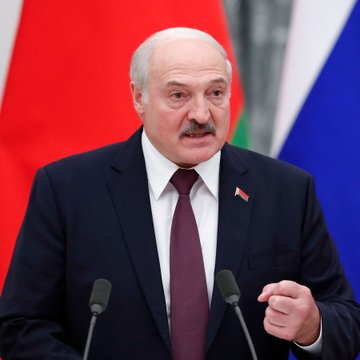
MINSK — Belarus has launched a major military exercise involving the combat use of nuclear weapons and nuclear logistical support, the Belarusian Defense Ministry announced on Monday. The drills are being conducted jointly with Russian forces and involve missile troops and aviation units .
The exercise, which began on May 18 under the direction of Belarusian Chief of the General Staff Pavel Muraveiko, aims to “improve the level of training of personnel, verify the readiness of weapons, military and special equipment for task execution, and organize combat deployment from unplanned areas” .
Exercise Scope and Objectives
The Belarusian Defense Ministry stated that a “key feature of the exercise is to check the preparedness of troops for accomplishing the tasks of combat use from unprepared areas across the entire territory of the Republic of Belarus” . Military units will practice “stealthiness, movement to considerable distances and calculations for the use of forces and capabilities” .
During the drills, Belarusian forces will work alongside the Russian side to “practice the delivery of nuclear munitions and their preparation for use” . The exercise involves:
| Component | Details |
|---|---|
| Participating Units | Missile troops and Air Force units |
| Command Structure | Chief of General Staff Pavel Muraveiko |
| Key Activities | Nuclear munitions delivery, preparation for use, covert long-distance movement |
| Geographic Scope | Entire territory of Belarus |
Belarusian and Russian Statements
The Belarusian Defense Ministry emphasized that the exercise “is a scheduled training event of the Union State, is not directed against third countries and does not pose a threat to security in the region” .
Belarus has hosted Russian tactical nuclear weapons since late 2023, when the transfer of such weapons was completed . Russian President Vladimir Putin has made clear that Moscow retains operational control of all nuclear weapons deployed on Belarusian territory .
Regional Reactions and Concerns
The drills come amid heightened tensions between Russia and the West, with the New START treaty limiting US and Russian nuclear arsenals having expired in February . Moscow last week tested its Sarmat intercontinental ballistic missile, a nuclear-capable weapon .
Ukrainian President Volodymyr Zelensky recently ordered troops to reinforce the border with Belarus, claiming Moscow is preparing a new offensive from Belarusian territory . Zelensky suggested possible scenarios include “aggressive operations targeting Ukraine’s Chernihiv-Kyiv direction or one of NATO’s member states” .
“Russia is considering plans for operations to the south and north of Belarusian territory — either against the Chernihiv-Kyiv direction in Ukraine or against one of the NATO countries directly from the territory of Belarus,” Zelensky said, citing intelligence reports .
Broader Strategic Context
The exercise follows other recent Russian nuclear-capable military activities:
- Oreshnik Deployment: Russia deployed its latest hypersonic, nuclear-capable Oreshnik missile to Belarus last year .
- Sarmat Test: Moscow tested its intercontinental ballistic missile days before the Belarus exercise .
- Treaty Expiration: The New START treaty’s expiration in February removed formal caps on US and Russian nuclear arsenals .
Belarus, a landlocked country ruled by close Putin ally Alexander Lukashenko for over three decades, remains deeply dependent on Moscow economically and militarily . Lukashenko allowed Russian forces to use Belarusian territory as a staging ground for the February 2022 invasion of Ukraine, though Belarusian troops have not directly participated in the fighting .
Western Monitoring
The West is closely monitoring the exercise. Last week, US President Donald Trump began cultivating closer ties with Lukashenko, who has long been treated as a pariah by Western nations, relaxing some sanctions in return for the release of 52 prisoners including political opponents .
US military officers reportedly observed part of a previous Russian-Belarusian exercise, Zapad, demonstrating continued but limited engagement between the parties .
Frequently Asked Questions (FAQs)
Q1: When did the Belarus nuclear weapons drills begin?
A: The drills began on Monday, May 18, 2026, according to the Belarusian Defense Ministry .
Q2: What does the exercise involve?
A: The exercise involves missile troops and aviation units practicing the delivery of nuclear munitions and their preparation for use in coordination with the Russian side. Units will test their readiness to operate from unprepared areas across the entire territory of Belarus .
Q3: Are the drills directed against any specific country?
A: The Belarusian Defense Ministry has stated that the exercise “is not directed against third countries and does not pose a threat to security in the region.” Officials describe it as a “scheduled training event of the Union State” .
Q4: Does Belarus control its own nuclear weapons?
A: No. Belarus hosts Russian tactical nuclear weapons, but Moscow retains full command and control over them. Russian President Vladimir Putin has made clear that Russia maintains operational authority .
Q5: How does this relate to the Ukraine war?
A: Ukrainian President Zelensky has expressed concern that Russia may use Belarusian territory to launch a new offensive against Ukraine, potentially toward the Chernihiv-Kyiv direction, or against NATO member states. Ukraine has reinforced its border with Belarus in response .
Q6: What other Russian nuclear-capable military activities have occurred recently?
A: Russia tested its Sarmat intercontinental ballistic missile last week and deployed the hypersonic Oreshnik missile to Belarus in 2025. The expiration of the New START treaty in February has removed formal restrictions on US and Russian nuclear arsenals .
This is a developing story. Reflecto News will continue to provide updates on the Belarus nuclear weapons exercise and regional security developments.
Questions people ask
What is China's current share of global manufacturing?
China now accounts for twenty eight percent of global manufacturing. This industrial output exceeds the combined manufacturing production of the United States, Japan, and Germany, making China the leading global industrial power according to recent reports.
Why were Andrew Tate and Tristan Tate arrested in Miami?
Andrew Tate and his brother Tristan Tate were taken into custody in Miami by the United States Marshals Service. They face thirty eight new charges in the United Kingdom, including rape and child pornography offences, and prosecutors are seeking their extradition.
What warning did Moscow issue about oil prices?
Kirill Dmitriev, the Chief Executive of the Russian Direct Investment Fund, warned that a tsunami of skyrocketing oil prices is approaching. Moscow describes this potential energy shock as a major threat to global markets.
What political shift is projected for Benjamin Netanyahu's coalition?
Political polls project that Prime Minister Benjamin Netanyahu's coalition is on track to lose its majority in the upcoming October election. This projection indicates a potential political shift in Jerusalem.
Why did a Russian military aircraft land in Tehran?
A Russian airborne command aircraft, widely known as a doomsday plane, landed in Tehran. The arrival of the aircraft represents a high stakes show of support from Russia for Iran during a period of heightened regional tensions.
What did President Masoud Pezeshkian claim about the United States and Israel?
Iranian President Masoud Pezeshkian claimed that the United States and Israel failed in a forty eight hour plan to topple the Iranian government. He made these statements during a televised address marking two years since his inauguration.