Reflecto News is an online news platform covering major international political events, global economic developments, and security conflicts. The site provides updates on topics such as Chinese manufacturing dominance, Middle Eastern political tensions, and high profile legal arrests. Readers can access current articles organized by categories like World News, Iran, and USA.
Washington demands a public pledge to stop shipping attacks after declaring ceasefire “over,” warning of “severe consequences” for non-compliance.
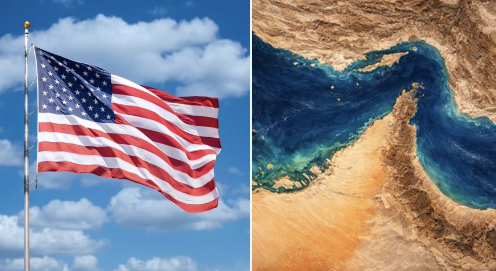
WASHINGTON — The Trump administration has issued an ultimatum to Iran, demanding that Tehran publicly commit to keeping the Strait of Hormuz open to international shipping and cease all attacks on commercial vessels by Saturday . The demand comes as a fragile ceasefire brokered just weeks ago teeters on the edge of total collapse.
The administration has warned of “severe consequences” if Iran fails to issue the statement immediately following a crucial meeting scheduled for Saturday in Muscat, where Iranian Foreign Minister Abbas Araghchi is expected to meet with Omani Foreign Minister Badr al-Busaidi .
The Core US Demands
The United States is demanding that Iran issue a public statement with three specific components: a commitment to stop attacking commercial ships, a recognition that all shipping channels in the strait are open, and confirmation that passage will be toll-free . US officials have also stated they want Iran to “explicitly, or at least implicitly, acknowledge that they screwed up” .
“If it is not their position [tomorrow], it is not gonna be a great day for them,” one U.S. official warned, according to Axios .
Why the Deadline Now
The ultimatum follows a week of escalating tensions in which Iran repeatedly attacked commercial vessels in the Strait of Hormuz, a strategic waterway through which roughly one-fifth of the world’s oil supplies pass . The U.S. argues that these attacks violated a Memorandum of Understanding signed just three weeks ago .
On Thursday, President Donald Trump formally declared the June ceasefire “over” at the NATO summit in Ankara . However, in a subsequent Truth Social post, Trump confirmed that the U.S. had agreed to continue “talks” with Iran despite the ceasefire’s collapse .
Private Admissions and Internal Iranian Dynamics
US officials told reporters that Iran has privately acknowledged making a mistake. “The Iranians told us, ‘We screwed up. We made a mistake. Let’s keep talking,'” one official said, describing private communications after Iranian attacks struck three commercial tankers .
The officials suggested that the attacks may have been carried out by hardline elements within the regime seeking to regain leverage after Oman aligned with the U.S. to open a southern shipping lane near its coast—a move that weakened Tehran’s negotiating position .
The Muscat Meeting and Nuclear Concerns
The Saturday deadline centers on the scheduled meeting in Muscat, where Araghchi is expected to discuss the Hormuz crisis with Omani officials . The U.S. is hoping that Oman, which has acted as a mediator in recent weeks, can help secure the public commitment Washington is demanding .
The standoff has raised serious doubts about Iran’s willingness to abide by any broader agreement, including a potential nuclear deal. U.S. officials have indicated that backdoor negotiations on the nuclear file had been making progress before the Hormuz crisis erupted .
What Happens Next
The Biden administration has already launched two rounds of retaliatory strikes on Iranian targets this week in response to the ship attacks . With the Saturday deadline looming, the region faces a stark choice: a return to diplomacy or a renewed military confrontation.
“We are negotiating with influential people in Iran who say they want a deal,” one official said . But Washington is also actively developing contingency plans should the talks collapse .
Frequently Asked Questions (FAQs)
Q1: What exactly is the U.S. demanding from Iran?
The U.S. is demanding that Iran issue a public statement committing to stop attacking commercial ships in the Strait of Hormuz, acknowledge that all shipping channels are open, and confirm passage will be toll-free . US officials also want Iran to acknowledge its actions were a mistake .
Q2: What is the deadline for Iran’s response?
The deadline is Saturday, July 11, 2026. The statement is expected to be issued immediately following a scheduled meeting in Muscat between Iranian and Omani diplomats .
Q3: Has the ceasefire between the U.S. and Iran collapsed?
President Trump declared the ceasefire “over” on Thursday, although he agreed to continue talks with Iran at Tehran’s request . The U.S. argues Iran violated the agreement by attacking commercial ships .
Q4: What will happen if Iran does not comply?
US officials have warned of “severe consequences.” One official stated: “If it is not their position tomorrow, it is not gonna be a great day for them” . The U.S. has already launched two rounds of retaliatory strikes against Iranian targets .
Q5: Why is the Strait of Hormuz so important?
The Strait of Hormuz is one of the world’s most critical shipping chokepoints, through which approximately 20% of global oil supplies pass . Any disruption has immediate and significant effects on global energy markets and prices.
Q6: What role is Oman playing in the crisis?
Oman is acting as a mediator between the U.S. and Iran. The Saturday meeting in Muscat is seen as a critical moment to de-escalate tensions. Oman has also aligned with the U.S. by opening a southern shipping lane near its coast, which angered Tehran .
This is a developing story. Reflecto News will continue to provide updates on the situation in the Strait of Hormuz and the US-Iran diplomatic standoff.
Questions people ask
What is China's current share of global manufacturing?
China now accounts for twenty eight percent of global manufacturing. This industrial output exceeds the combined manufacturing production of the United States, Japan, and Germany, making China the leading global industrial power according to recent reports.
Why were Andrew Tate and Tristan Tate arrested in Miami?
Andrew Tate and his brother Tristan Tate were taken into custody in Miami by the United States Marshals Service. They face thirty eight new charges in the United Kingdom, including rape and child pornography offences, and prosecutors are seeking their extradition.
What warning did Moscow issue about oil prices?
Kirill Dmitriev, the Chief Executive of the Russian Direct Investment Fund, warned that a tsunami of skyrocketing oil prices is approaching. Moscow describes this potential energy shock as a major threat to global markets.
What political shift is projected for Benjamin Netanyahu's coalition?
Political polls project that Prime Minister Benjamin Netanyahu's coalition is on track to lose its majority in the upcoming October election. This projection indicates a potential political shift in Jerusalem.
Why did a Russian military aircraft land in Tehran?
A Russian airborne command aircraft, widely known as a doomsday plane, landed in Tehran. The arrival of the aircraft represents a high stakes show of support from Russia for Iran during a period of heightened regional tensions.
What did President Masoud Pezeshkian claim about the United States and Israel?
Iranian President Masoud Pezeshkian claimed that the United States and Israel failed in a forty eight hour plan to topple the Iranian government. He made these statements during a televised address marking two years since his inauguration.